Committee advances bill to classify and regulate high‑powered ‘e‑moto’ devices, add dealer and registration requirements
Loading...
Summary
The committee adopted compromise amendments and advanced SF4186 to clarify that high‑power two‑wheel electric devices above statutory thresholds should be treated as motor vehicles (motorcycles or motorized bicycles), require point‑of‑sale registration for some devices and require sellers to register as motor vehicle dealers in Minnesota to curb online sales of unsafe devices.
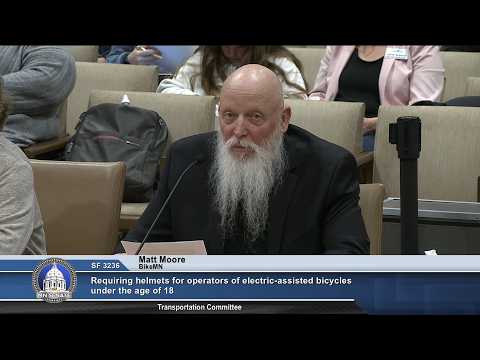
Senate File 4186, presented to the Transportation Committee by Sen. Abler (for Sen. Coleman), would clarify statutory classifications and add sales and registration requirements for high‑powered, fast two‑wheel electric devices often marketed online as bicycles. Supporters said the bill’s purpose is to prevent dangerous devices marketed to children and to make dealers and manufacturers follow vehicle‑safety and registration rules. Christian Franzen of BikeMN summarized the bill as distinguishing low‑power, statutory e-bikes from higher‑powered, throttle-driven devices "not to be conflated with Minnesota's 3 class electric assist bikes."
The bill’s A3 amendment — described in testimony as a negotiated compromise between advocates, industry and safety groups — updates definitions, clarifies where motorized bicycles and e-motos fit within existing categories (motorized bicycle up to 30 mph; motorcycles above that threshold), and adds manufacturer/dealer and electrical safety certification expectations. Tony Bullis (Amateur Rider Motorcycle Association) and Kyle McCartis (Motorcycle Industry Council) told the committee they supported the compromise. The authors and supporters emphasized the goal of treating high‑power electric devices like comparable gas‑powered vehicles: requiring registration, licensing and safety certification where appropriate, and restricting online sellers who lack a Minnesota dealer presence.
Opponents and some senators raised concerns about enforcement, cross‑border purchases and the practical effect on local businesses; proponents pointed to similar measures adopted or considered in other states and to safety concerns raised by hospitals and emergency departments. After debate and adoption of the A3 compromise, the committee recommended the bill to pass as amended and referred it to the Environment Committee (the chair noted some environmental implications).