Get Full Government Meeting Transcripts, Videos, & Alerts Forever!
Get email alerts on the Detention Financing topic
No spam. Unsubscribe anytime.
Detention facility: board weighs $300M retrofit plan against a possible 2026 ballot for broader public‑safety package
Summary
Commissioners spent an extended study‑session segment reviewing options for a decades‑old detention facility: staff proposed issuing Certificates of Participation (COPs) for a ~ $300M retrofit as a fiscally constrained 'plan B'; the sheriff and some commissioners discussed accelerating a ballot measure for a larger package (detention replacement plus behavioral health/detox/reentry services). The board asked staff to evaluate co‑occurring ballot options while moving ahead with COP planning.
Adams County commissioners devoted a long study‑session block to options for addressing the county detention facility, which officials described as aging and out of compliance in places.
Staff recapped the plan approved in the fall: allocate $10 million in 2026 planning funds and issue Certificates of Participation (COPs) later in the year to finance a roughly $300 million program of retrofits and renovations to bring the facility toward compliance. Finance staff said the county’s COP capacity for capital facility work is roughly $275 million under current assumptions and that COP issuance requires preconstruction planning and a legal/financial process of roughly 3–6 months.
Sheriff Claps urged the board to consider a broader referendum to fund replacement or expanded services (detox, mental‑health crisis center, reentry programming) that might ultimately be cheaper or provide more functional capacity than piecemeal retrofits. He reiterated that some retrofit options would reduce usable bed space inside the existing shell and that adding new treatment and reentry facilities — whether adjacent to the site or as part of a campus — is necessary to address recidivism and operational needs.
Commissioners debated trade‑offs: (a) proceed with COP‑funded retrofits now (board’s current plan) to avoid immediate compliance and safety failures; (b) pause and pursue a ballot measure this year for a larger package that could reduce COP debt but risks voter rejection; or (c) pursue concurrent approaches: advance COP preconstruction and design work while preparing polling and a narrower ballot question focused on behavioral health, detox and reentry services (a modular approach) that could complement retrofit work if approved.
Staff noted polling done in 2024–25 showed support levels varied by question wording and rose when proposals emphasized public safety and cost‑effectiveness; education campaigns were budgeted in the current plan and an RFP for a public‑affairs/education consultant is in procurement. Finance staff said that if voters approved a ballot revenue source, the county could scale back COP borrowing; if a ballot failed, pausing COPs would delay critical retrofit work and likely increase costs.
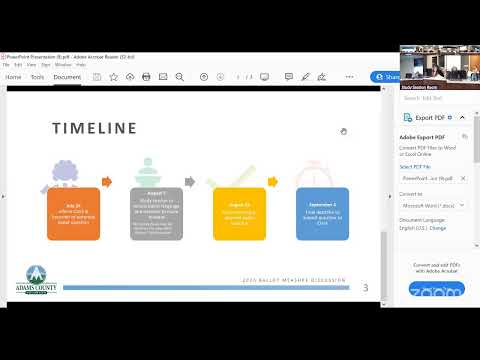
The board directed staff and finance to return in a few weeks with: (1) an analysis of ballot packaging options that would be materially distinct from the COP retrofit scope and (2) financial scenarios showing COP timing and debt service versus a voter‑funded path. Commissioners emphasized continued progress on the $300M retrofit work while staff explores whether a narrowly‑scoped 2026 ballot question could be viable alongside the COP timeline.