Get Full Government Meeting Transcripts, Videos, & Alerts Forever!
Get email alerts on the Education Technology topic
No spam. Unsubscribe anytime.
Parents and advocates press LAUSD board for tighter controls on classroom screens and ed‑tech spending
Summary
Dozens of public commenters urged the Los Angeles Unified School District Board of Education to adopt enforceable limits on screen time, block distracting platforms like YouTube, and increase oversight of tech purchases and vendors, citing student well‑being and a need for transparency.
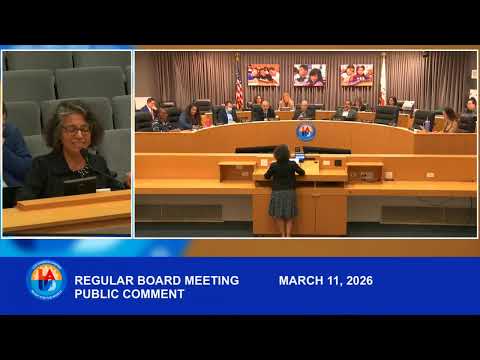
The Los Angeles Unified School District Board of Education heard a wave of public comment March 11 urging the board to curb classroom screen time and demand stronger oversight of educational technology.
Supporters of a draft "using technology with intention" resolution — including parents, teachers and child‑development advocates — told the board the district should adopt clear, enforceable limits on daily device use, require stronger blocking of distracting platforms, and publish detailed procurement and performance data for ed‑tech vendors.
"We need oversight, transparency, and accountability," said Dylan Marder, a former LAUSD student, who called for an investigation into how tax dollars are being spent on technology that he described as "harmful and likely ineffective." Dr. Diana Eichenstein, a child psychologist and member of Schools Beyond the Screen, praised the measure but warned against symbolic actions that are not implementable: "We need to make sure this is an actual policy change with language that can be implemented."
Speakers asked for specific measures. Katie Pace, a parent, cited Chromebook browsing data she said showed a child averaging 12 hours a week on YouTube during school hours and urged the board to produce a districtwide opt‑out plan and robust blocking policies. Claire Marter of Schools Beyond Screens told the board decades of classroom experience convinced her that "screens are unchecked" and that LAUSD could be a national leader if it sets clear limits.
Several commenters tied the technology push to concerns about procurement and vendor influence. Dylan Marder and others referenced recent controversies involving district leaders and tech companies and asked the board to publish vendor performance and spending data so parents and teachers can judge effectiveness.
Board members did not take a final vote on the resolution during the public‑comment period. The speakers generally urged that any policy include measurable controls (several asked for numerical caps such as no more than two hours per day for secondary students), a clear opt‑out mechanism, technical requirements for blocking content and a public reporting requirement for contracts and outcomes. Dr. Eichenstein also cited third‑party data about safety and misuse of generative AI on district devices to argue the board must account for emergent risks.
The board recessed into closed session and later reported out decisions on separate items; no formal board action adopting or rejecting the technology resolution was announced in the report out.
What happens next: speakers urged the board to convert the draft resolution into binding policy language, publish vendor and spending data and tie oversight functions to the district's inspector general or independent analysis unit.