Get Full Government Meeting Transcripts, Videos, & Alerts Forever!
Get email alerts on the Carbon Sequestration topic
No spam. Unsubscribe anytime.
Senate committee advances bill giving counties a formal say over out‑of‑county carbon storage
Summary
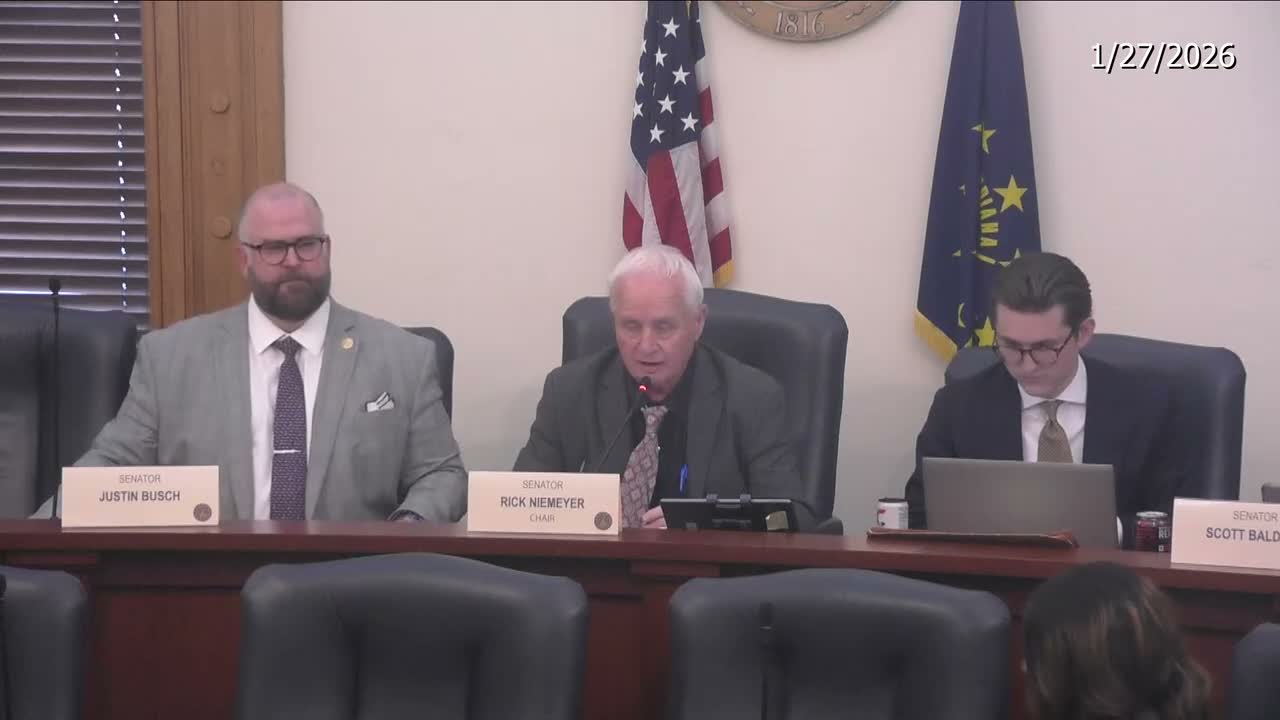
The Senate Environmental Affairs committee voted 7–3 to advance Senate Bill 7, a measure that would require notice to and approval by county legislative bodies when carbon sequestration projects bring CO2 storage into a county from elsewhere. Supporters cited local control and safety concerns; industry and state officials warned added local veto power could deter investment and duplicate federal and state permitting.
The Senate Environmental Affairs committee advanced Senate Bill 7 after a day of divided testimony that pitted county officials and environmental advocates against industry representatives and state economic advisers.
Chair of the committee, speaking as sponsor of the bill, opened the hearing by describing the measure’s purpose and history and said the bill is narrowly aimed at projects that would bring carbon storage into a county from outside. The chair said the bill does not affect on‑site projects or federal pipeline authority and is intended to preserve local land‑use control where storage wells would be sited.
The bill’s proponents emphasized local voice and property‑use concerns. William Peebles, Vermillion County commissioner, read a statement from his county board in support: "Senate Bill 7 impacts or respects local control and ensures decisions are made with community input," he told the committee. Kerwin Olsen of the Citizens Action Coalition likewise urged hearings in each county that a pipeline or storage project may traverse, calling the practice of moving industrial waste into another county "completely appropriate" for local review.
Technical testimony from Jeff Stein, introduced to the committee by the chair, urged caution on safety grounds. Stein described metallurgical and geologic risks he says are associated with injecting supercritical CO2 — including concerns about wellhead pressures, acidification of carbonate rock and migration along existing fractures and mine workings — and argued some engineering and monitoring details in past applications were redacted from the public record. "When you put carbon dioxide together with water, you have carbonic acid," Stein said, arguing that could dissolve carbonate formations and mobilize contaminants.
Industry and administration witnesses warned the bill would add regulatory uncertainty. Mark Schublak of CountryMark cautioned that the bill could conflict with long‑standing state natural‑resource policy and said DNR and IDEM have technical expertise to vet permits. Ashton Eller, vice president for governmental affairs at the Indiana Manufacturers Association, said SB 7 would "introduce a restrictive regulatory framework that threatens the operational viability of Indiana's industrial base" and warned that multilayered review could drive multibillion‑dollar projects to other states. Luke Wilson, chief policy officer for energy and natural resources in the administration, said injection wells are long‑established and "extensively regulated" by federal and state agencies and highlighted projected job and tax benefits of such projects.
Committee members pressed both sides on specifics. Sen. Baldwin repeatedly asked whether the county governments could perform tests or provide technical review distinct from the EPA/IDEM class‑6 permitting process; Baldwin characterized some testimony as driven by fear more than by the particular data shown to EPA. Industry witnesses replied that the state and federal permitting processes provide technical review, while proponents said permitting documents and public outreach had not reached affected local residents in some cases.
After testimony and questions, the committee moved the bill. Several senators offered brief explanations of their votes on the floor: Senator Jackson said he would vote no without an amendment; Senator Naskoski also opposed the measure citing completed permitting in some cases; Senator Taylor and others said they supported giving local residents a voice but wanted robust consideration of technical facts. The committee recorded seven ayes and three nays and reported the bill passed out of committee 7–3.
What happens next: SB 7 was advanced from the committee and will proceed to the next stage of legislative consideration. The committee did not adopt a final amendment on the floor; sponsors said they would continue work on language prior to second reading.
Sources: Committee testimony and roll call at the Environmental Affairs committee meeting on SB 7. The hearing record included testimony from county commissioners, technical witnesses, industry representatives and an administration policy official.