Get Full Government Meeting Transcripts, Videos, & Alerts Forever!
Get email alerts on the Commissioner Redistricting topic
No spam. Unsubscribe anytime.
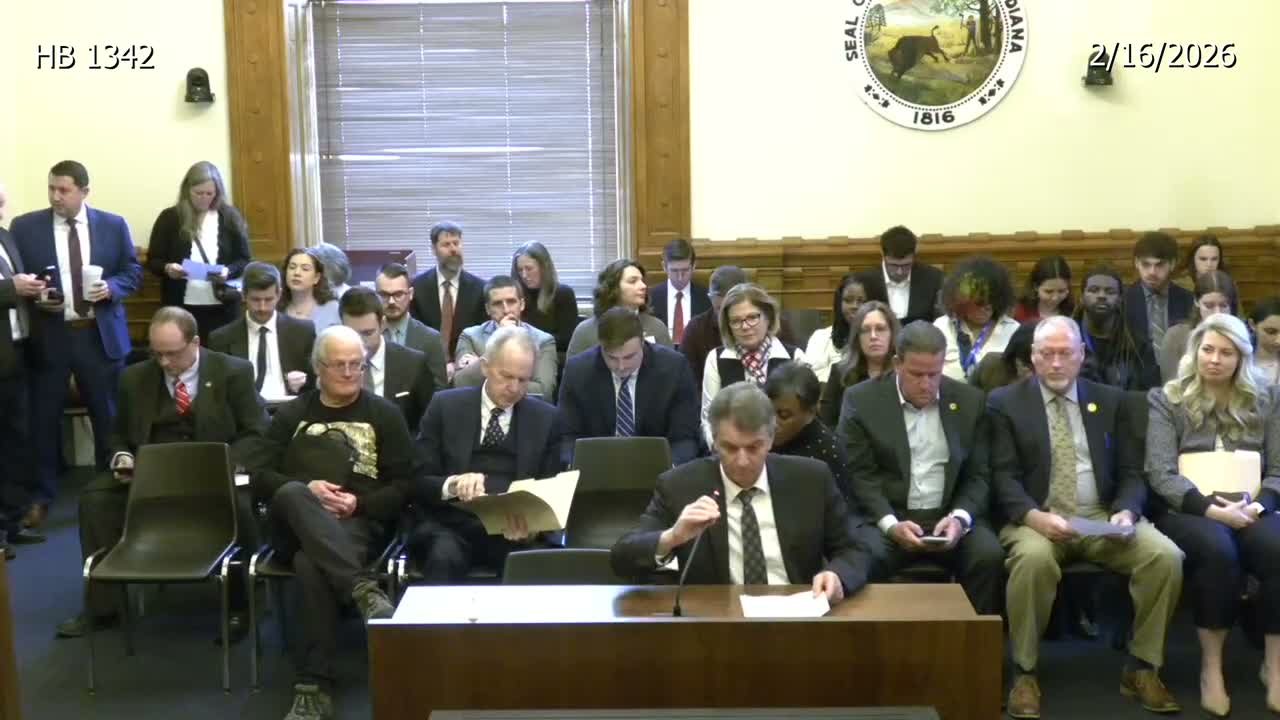
Senate Elections Committee advances bill requiring public hearings on county commissioner redistricting
Summary
The Senate Elections Committee voted 7–2 to advance House Bill 13‑42, which would require county executives to publish proposed commissioner district boundaries and hold a public hearing after the next census; supporters said it increases transparency, opponents warned it could dilute rural representation.
The Senate Elections Committee advanced House Bill 13‑42 on a 7–2 vote after a day of testimony that split county officials, election administrators and citizens.
Representative Yocom, the bill’s author, told the committee the measure would require county executives, after Dec. 31, 2030, to publish proposed commissioner district boundaries and hold a public hearing during a regular meeting before adopting an ordinance. He emphasized the bill only requires a public meeting and does not mandate specific map outcomes: “It’s a simple bill to bring transparency to elected officials,” he said in closing remarks.
Supporters, including a representative of the Secretary of State’s office, urged the panel to approve the transparency requirement. Keegan Prentice of the Secretary of State’s office said the office’s outreach and GIS review found substantial population deviations in commissioner districts in some counties—“100, 150, 200% in some cases”—and described the bill as a modest step that “does not require them to only consider population, just that they may take population into account” while preserving townships and communities of interest.
Brad King, Republican co‑director of the Indiana Election Division, gave a hypothetical to illustrate the concern: if only a handful of residents lived in some districts, those voters could effectively control a board’s composition. He argued the legislature should require counties to consider those distortions when drawing districts.
Opponents included county officials and associations who said counties already provide public forums for redistricting and warned that a population‑centric approach could weaken rural representation. Johnson County Commissioner Brian Baird said his county’s commissioners ensure representation by subject matter rather than strictly by population and that adding a population component could “over represent city population” and dilute rural voices. Tyler Warman, executive director of the Indiana County Commissioners Association, said the public typically shows little interest in commissioner district drawing at the county level and that most counties already keep townships and communities of interest intact.
Citizen witnesses from Clay County and others described large variances in their counties and urged stricter standards. Jody Lorman said Clay County’s commissioner districts had a 63% variance and argued the law should produce more equal candidate pools and board appointments.
Committee members debated potential amendments and many signaled an intent to work on second‑reading changes. The committee moved and seconded the bill and then recorded a roll call; the motion to advance HB 13‑42 passed 7–2. The committee discussion and votes do not in themselves change law; the bill will go to the Senate floor where additional amendments and votes are possible.
Next steps: HB 13‑42 was reported out of the Senate Elections Committee and will proceed to second reading on the Senate calendar for further consideration and any potential amendments.