Get Full Government Meeting Transcripts, Videos, & Alerts Forever!
Get email alerts on the Straight Ticket Voting topic
No spam. Unsubscribe anytime.
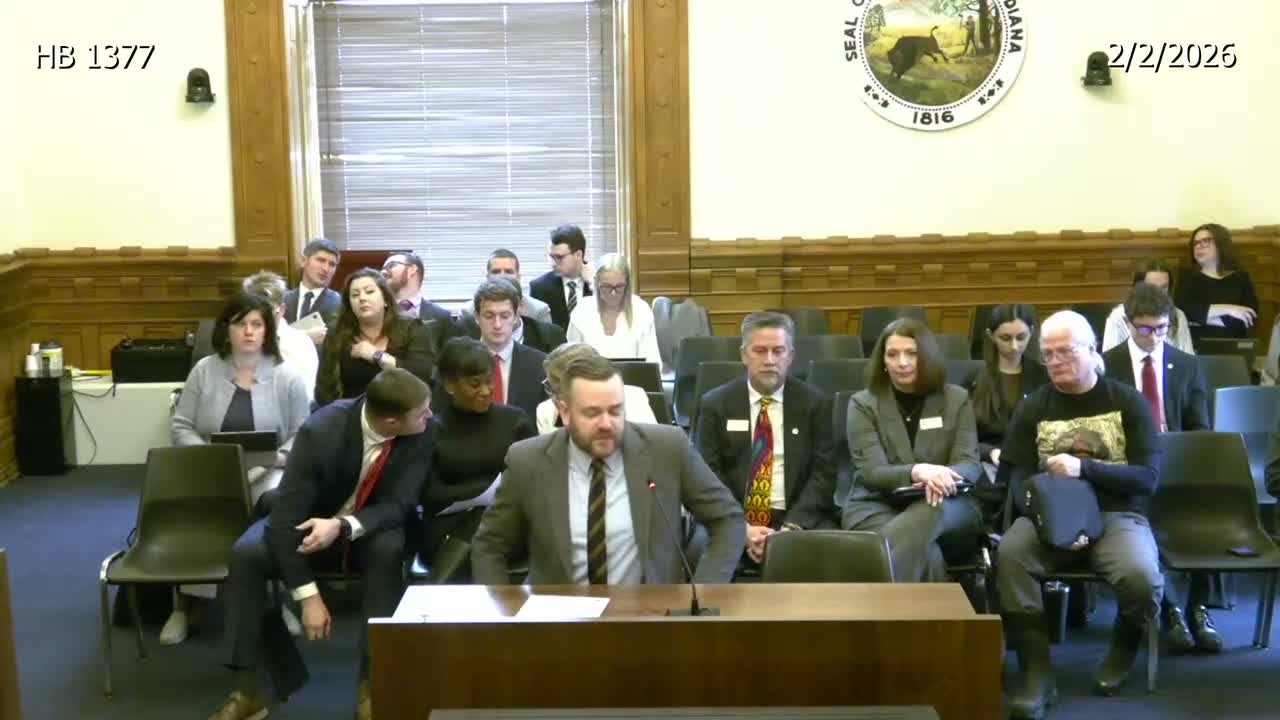
Rep. Payne seeks to apply straight‑ticket votes to at‑large races; senators press for clearer ballot instructions
Summary
Rep. Payne said House Bill 13‑77 would make straight‑ticket selections apply to at‑large races; senators and election officials pressed for statutory language and ballot‑instruction changes to avoid voter confusion and undervotes.
Representative Payne told the committee that House Bill 13‑77 would make a straight‑party selection apply to at‑large races where multiple candidates are chosen, reversing a 2016 change that excluded such races. "If this bill is signed into law, the straight party vote will apply to those races. It's that simple," Payne said.
Committee members asked whether the change could create voter confusion and cause undervotes. Senator Ford posed a scenario in which a voter selects a straight ticket and then manually selects a candidate of another party in an at‑large race; lawmakers and testifiers explained that manually marking a different candidate for a race would override the straight‑ticket selection for that race and that instructions should make that effect clear. "If you vote straight party and then you go over and you cross the ticket ... your straight party no longer applies to that race," Payne said.
The Election Division advised how to reduce confusion. Matthew Kochiver suggested amending the ballot instruction statute (Indiana Code 3‑11‑2‑10) or the ballot‑layout rules so printed instructions clearly state when straight‑ticket votes do or do not apply to multi‑seat (at‑large) contests. He said changing the statutory instruction text or ballot layout is the most effective way to inform voters.
Testimony included clerks and election officials describing high undervote rates in at‑large contests and urging clarity in ballot layout and instructions. Committee members asked the author to work with colleagues and election administrators to refine wording and ballot instructions; no final vote was taken and the committee continued with testimony and discussion before adjourning.
The committee adjourned without voting on the measure.