Get Full Government Meeting Transcripts, Videos, & Alerts Forever!
Get email alerts on the Medical Debt Senate Bill 85 topic
No spam. Unsubscribe anytime.
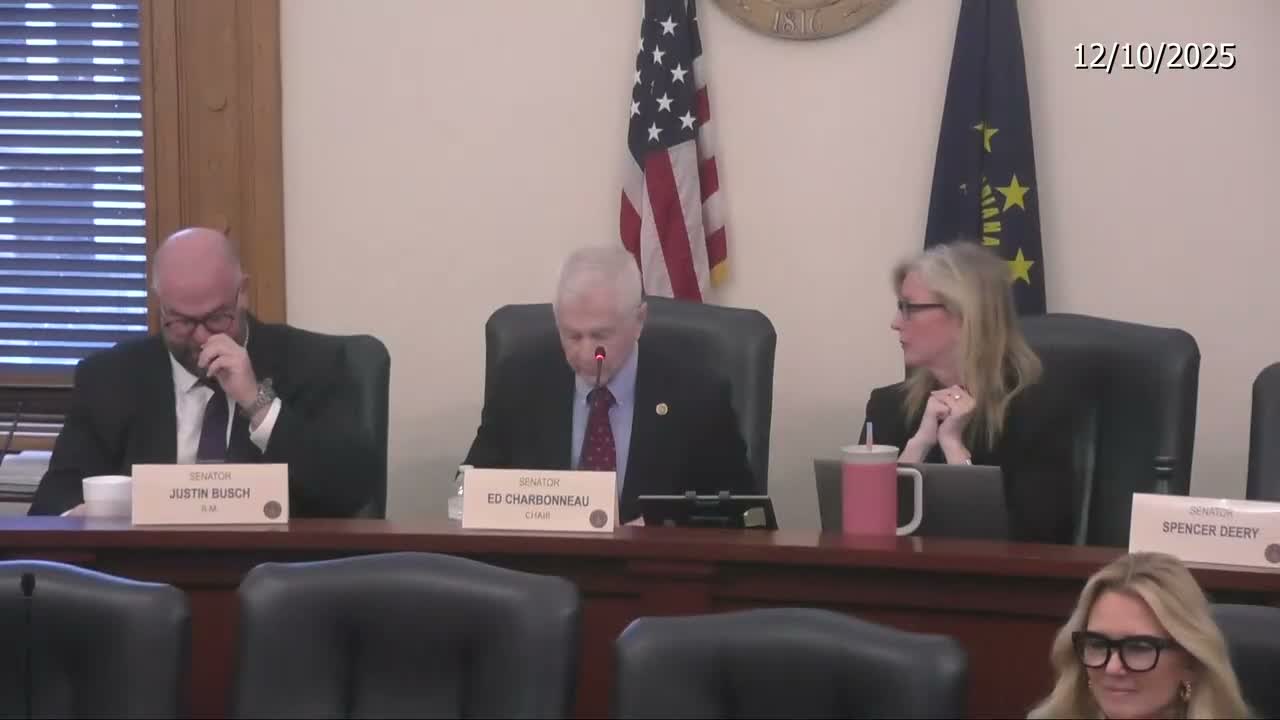
Senate Health Committee hears testimony on SB 85 to limit medical-debt garnishments and liens
Summary
Senate Bill 85 would require hospitals to offer payment plans for patients under income thresholds, narrow protections to medically necessary care, protect primary residences from liens, and limit wage garnishments for low-income Hoosiers. Supporters said debt forces patients to skip treatment; collection agencies and hospitals warned of practical and market consequences.
Senate Bill 85, a testimony-only measure to restrict some garnishments and liens for medical debt, received hours of testimony before the Senate Health Committee on Jan. 1, 2026.
Sponsor Senator Kidora described the bill as a calibrated response to widespread medical debt in Indiana and said it would add the attorney general as an enforcement mechanism for wage-garnishment and leave protections. "We estimate based on research that there are more than $2,000,000,000 worth of medical debt in the State of Indiana alone," he told the committee, and said the bill narrows protections to bills for "medically necessary procedures" and removes a previously proposed credit-reporting restriction because of pending federal litigation.
The bill would require hospitals to offer payment plans to patients with incomes up to 400% of the federal poverty level and would protect workers who earn less than 200% of the federal poverty level (about $31,000 a year for an individual, as cited by a testifier) from wage garnishment beyond limited percentages. It would also prohibit liens on a patient's primary residence for covered medical debt.
Advocates framed the proposal as a health-and-financial protection. "They told us they were making treatment decisions based on the medical debt that they had," said Dave Almeida, government affairs director for Blood Cancer United and a representative of the American Cancer Society Cancer Action Network, summarizing patient research and urging committee support. Aaron Macy, a program representative with a community-action network, described personal and constituent experiences with cancer-related bills and said the bill creates "breathing room" by pausing collection while insurance appeals proceed and by improving access to charity care.
Legal and implementation questions drew sustained attention. Judy Fox, a retired law professor, said the bill's narrow definition of "medical debt" may be difficult for courts and clerks to apply in routine garnishment proceedings and recommended either a broader statutory definition or procedural safeguards so judgments can be designated as medical at entry. "If you don't expand the definition of medical debt, you'll need to have some provisions in the act that require the court to designate a judgment as a medical judgment," she said.
Opponents from the collections industry argued the bill would invite gaming and shift costs. A collection-agency owner testifying for the American Collections Association said the bill's income thresholds lack verification and could leave hospitals or other payers absorbing uncompensated balances, with potential knock-on effects on insurance premiums and hospital viability. "The bill encourages gaming of the system," the witness said, warning of unintended consequences for rural providers and the broader insurance market.
Hospital representatives urged additional operational clarifications. Luke McNamee of the Indiana Hospital Association said the bill's mandatory payment-plan terms and timing could reduce hospitals' flexibility and strain cash flow, and he urged inclusion of all sources of medical debt and clearer language about documentation and emergency care procedures.
Connor Wong of the Indiana Bankers Association said banks are neutral and asked for clarifications so lending products are not inadvertently affected. Heather Gill, who described customary timelines for uncompensated-care review and collections, told the committee hospitals typically provide months of outreach before debt is referred to agencies.
The committee did not hold a vote. Senator Kidora told colleagues he welcomes feedback and will work with members on clarifying language; he asked the committee to read the bill "letter by letter" and offered to revise wording on items such as the scope of the 400% payment-plan reference. The hearing ended with no action taken and the committee adjourned.
The next step is for sponsors and stakeholders to exchange suggested amendments and for the committee to consider revised language in a future session.