Get Full Government Meeting Transcripts, Videos, & Alerts Forever!
Get email alerts on the Campaign Finance topic
No spam. Unsubscribe anytime.
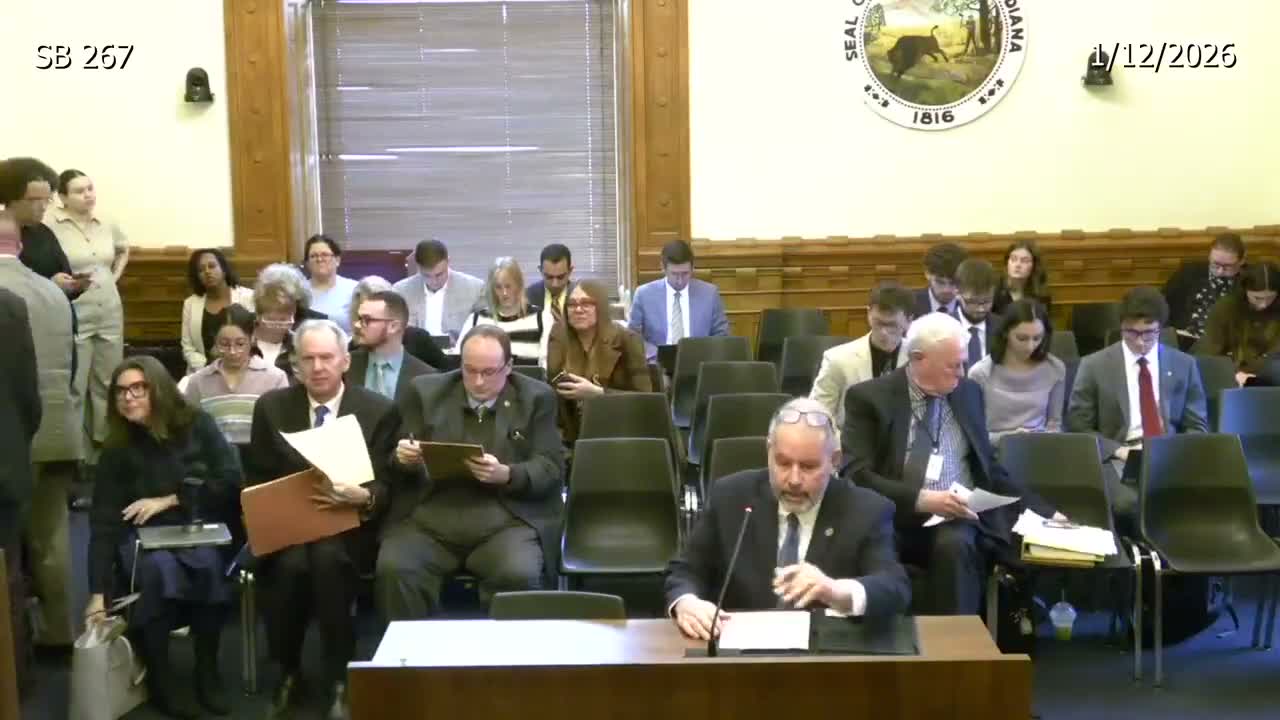
Committee advances bill to require disclosure for paid advocacy after sharp First Amendment warnings
Summary
SB 267 would require disclosure within 24 hours when a person provides $500 or more to induce someone to engage in an 'influence campaign.' The bill drew strong opposition from civil‑liberties groups and the Indiana Lobby Registration Commission, which warned of enforcement and staffing issues; the committee advanced the bill 6–3 with commitments to revise.
Senate Bill 267, introduced by Senator Alexander, would require anyone who provides $500 or more to another person to encourage participation in an "influence campaign" to file a written report with the Indiana Lobby Registration Commission within 24 hours. The report would include donors of $25 or more, who ran the campaign, targets and how funds were spent.
Proponents described the bill as a transparency measure aimed at paid protesters, foreign influence and other paid advocacy intended to sway legislators. "We're trying to get some transparency...to the public and to legislators," Senator Alexander said.
Opponents, including the League of Women Voters, the ACLU of Indiana and community organizers, warned SB 267 is unworkable and raises serious First Amendment concerns. Samantha Bresnahan of the ACLU told the committee that the bill's broad definition of "influence campaign" and the immediate 24‑hour reporting requirement could chill protected political speech and associational activity. "When disclosure requirements are this immediate and this detailed, especially when tied to protests and public pressure, they create a chilling effect on speech and association," she said.
Ed Ferguson, executive director and general counsel of the Indiana Lobby Registration Commission, said the ILRC had little time to evaluate the bill and that the commission's modest staffing likely cannot absorb a 24‑hour reporting regime. He also flagged a potential separation‑of‑powers concern if the ILRC is charged with regulating executive‑branch influence activities.
Several senators pressed the author on definitions and enforcement mechanics — for example, whether a resident who takes out a paid ad or a newspaper selling space would trigger reporting — and asked for clearer carve‑outs for journalists and for ordinary private citizens. Senator Walker and others said the topic is important but the bill needs substantial work to avoid chilling ordinary civic activity.
The committee voted to move SB 267 forward by a 6–3 vote, with several senators emphasizing the need for substantial revisions on second reading to narrow definitions, set practical reporting thresholds and clarify enforcement authority.