Get Full Government Meeting Transcripts, Videos, & Alerts Forever!
Get email alerts on the Alzheimers Education topic
No spam. Unsubscribe anytime.
Senate panel advances bill to add Alzheimer's and dementia education to state health campaigns
Summary
Representative Porter's House Bill 10-29 would direct the Indiana Department of Health to include Alzheimer's and dementia information in existing public-health campaigns; the committee voted 11-0 after supporters said the measure is low-cost and builds on existing partnerships.
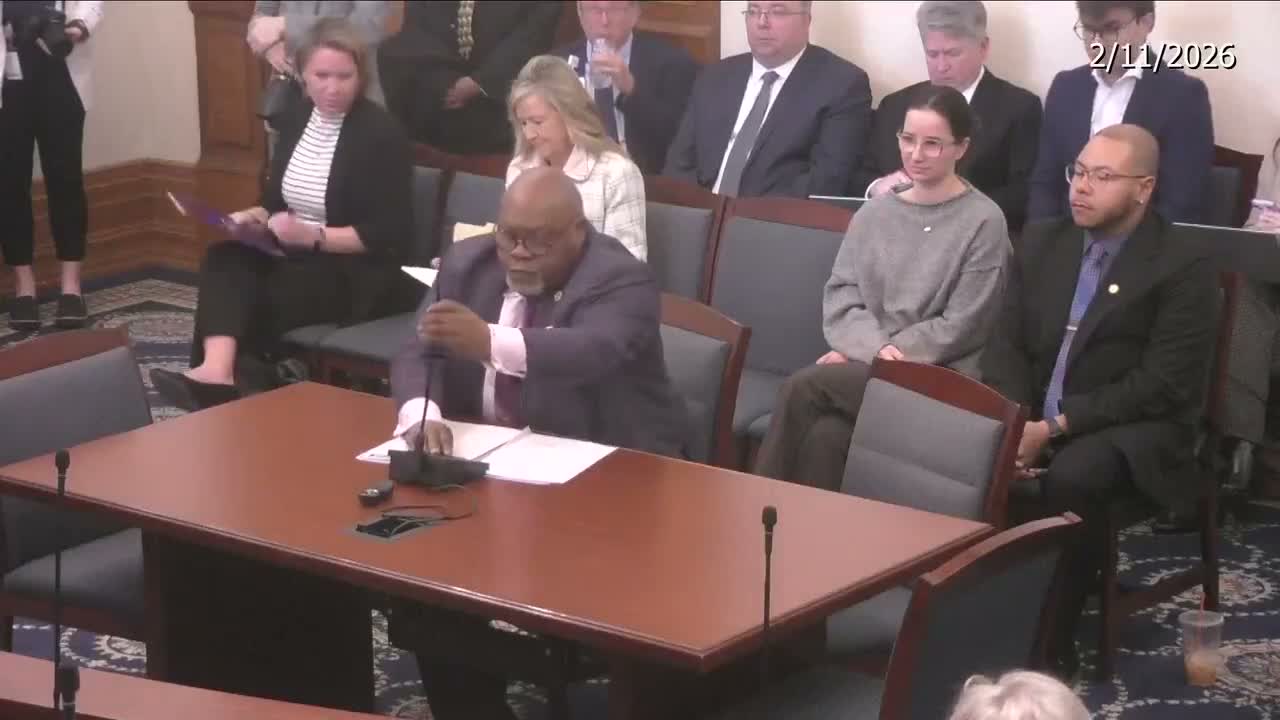
Representative Porter presented House Bill 10-29 on behalf of sponsors and asked the Senate committee to advance the measure, saying it would continue the state's work addressing Alzheimer's and dementia by adding targeted information to current public-health campaigns.
The bill directs the Indiana Department of Health to include Alzheimer's and dementia content in its existing awareness work and to collaborate with the National Alzheimer's Dementia Education Organization and community partners. "This bill is another significant step in enhancing the well-being of those with dementia," Representative Porter said in opening remarks.
Sarah Donsbaugh, director of government relations for the Alzheimer's Association in Indiana, told the committee that roughly 121,000 Hoosiers live with Alzheimer's and dementia and that the condition already costs the state an estimated $1.3 billion a year, largely through Medicaid and long-term care. "This offers a practical and low-cost solution by directing the Indiana Department of Health to include Alzheimer's and dementia in those existing health campaigns," she said.
Dr. Carrie Davis, a dermatologist speaking for the Indiana State Medical Association, urged lawmakers to support early recognition and coordinated education so patients can receive treatment and services sooner and remain in their homes longer. "Early recognition and accurate diagnosis are critical," Dr. Davis said.
A committee member asked whether the state's dementia strategic plan remains active; Donsbaugh said the plan is housed at FSSA with Department of Health participation and that stakeholders provide a required annual report to the legislature.
Representative Porter closed and the committee took a roll call. The committee recommended the bill do pass on an 11-0 vote. The bill will be reported to the floor for further consideration.