Gonzaga team outlines heat-and-smoke resilience work, highlights grant that paid for electric mowers
Loading...
Summary
Gonzaga Climate Institute staff told the Spokane Parks Foundation that a state grant funded replacement of diesel mowers and blowers with electric equipment and that the institute's outreach tools (a Spokane cooling-resources map and resilience plan) are helping target cooling and clean-air resources to vulnerable residents.
Dante Jester, climate resilience program manager at the Gonzaga Climate Institute, told the Spokane Parks Foundation on April 9 that the institute has been working with Spokane Parks to reduce heat- and smoke-related risks and to connect residents to cooling and clean-air resources. "We saw over 150 lives lost in Washington during that time, 19 of which were in Spokane County," Jester said of the 2021 Northwest heat dome, framing the urgency behind the work.
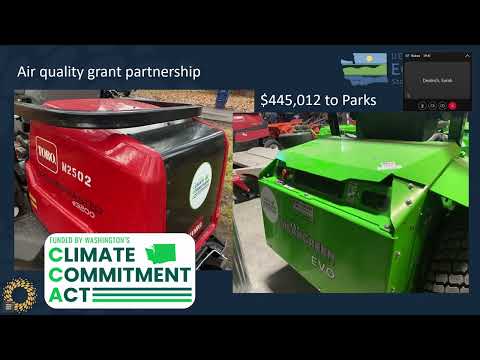
Jester said a Washington State Department of Ecology grant, funded through the Climate Commitment Act, supported a partnership with the City of Spokane Parks to replace diesel-powered mowers and leaf blowers with electric equipment, and that some charging-station installations remain to be completed. "We're really excited about how this transition can reduce some of our local air pollution in our parks," she said. Faculty partner John Isakoff added that the grant also helped pay for distribution of 300 portable air cleaners for lower-income households.
The institute maintains an interactive Spokane Regional cooling-resources map that lists cooling centers, pools, parks, drinking fountains and splash pads; Jester said her students update the map each summer by visiting more than 100 sites across Spokane and Spokane Valley, checking shade levels and fountain status and compiling a consolidated list of park repairs submitted to 311.
Jester highlighted collaborative work with community groups such as the Karl Maxey Center and SNAP to reach priority populations and to help partners pursue funding for infrastructure and education. She also described the Spokane Community Resilience Collaborative, a 17-member group that published citywide extreme heat and wildfire smoke resilience plans; Jester said a revised combined plan will be released in June and includes three park-related action items: expanding tree canopy, increasing community-garden availability, and improving park accessibility.
Board members asked how the institute narrows outreach to households and whether senior centers are included as resources. Jester said the institute acts largely as a connector, directing residents to partner organizations and funding programs (including a portable air-conditioner program run by SNAP and local distributions of air cleaners). "We're working on an education campaign for this summer called Smoke Ready Spokane," she said, noting expanded focus on older adults.
Jester closed by inviting board members to contact the Climate Institute or attend Resilience Collaborative meetings, and the board thanked the presenters.