Lifetime Citizen Portal Access — AI Briefings, Alerts & Unlimited Follows
Committee advances bill to prioritize kinship placement and require written court findings
Loading...
Summary
Senate Bill 171, which prioritizes relative and significant-relationship placements, limits unnecessary placement changes, and requires written judicial findings and a judicial-performance filter, was advanced by the committee after testimony urging additional clarifications and amendments.
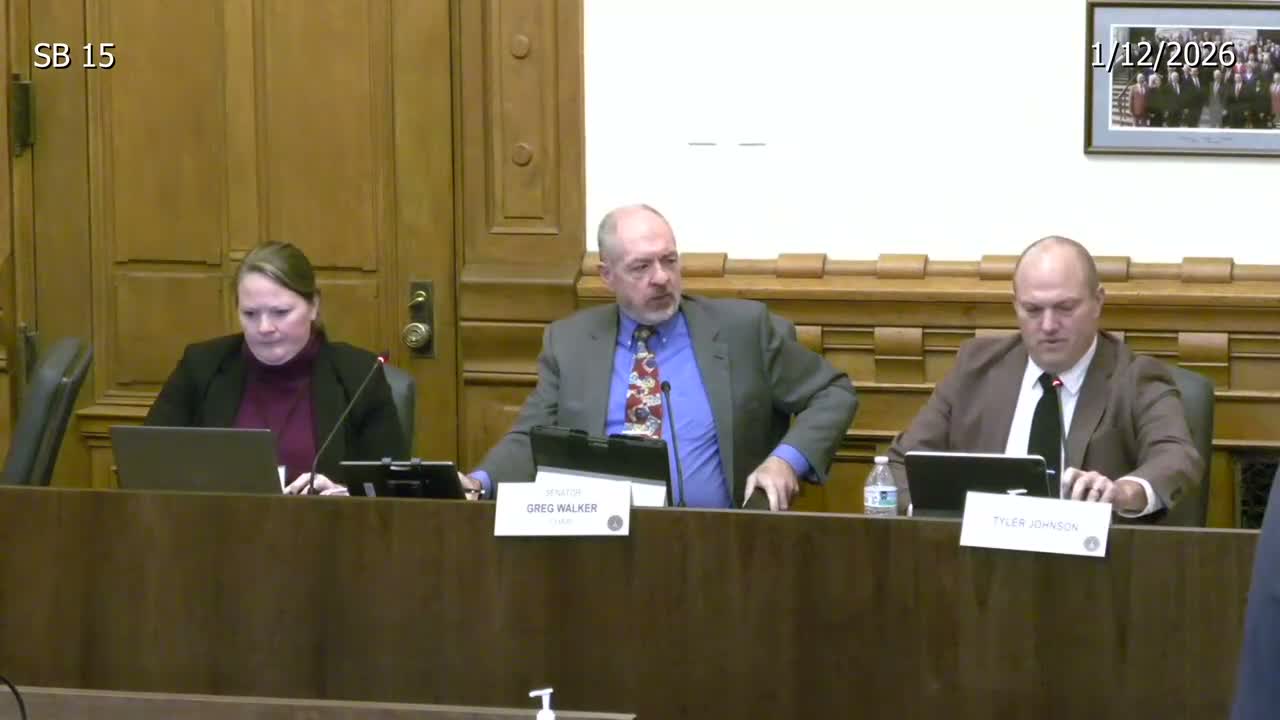
Senate Bill 171 was presented to the Senate Family and Children Services committee as a package of changes intended to increase placement stability for children in the child-welfare system and to increase judicial transparency in dependency and juvenile cases.
Senator Johnson, the bill’s sponsor, said the measure focuses on family and juvenile law to improve permanency timelines and kinship placement, including a presumption recognizing significant existing relationships after 12 months and a request for clearer written court opinions. He also asked to remove a last-page judicial-administration disclosure provision from the bill language for further work, saying he would bring a clearer amendment on second reading.
Multiple witnesses with lived experience and child-welfare roles supported the bill while urging additional safeguards. Deonye Dior Valentina, a former foster youth and executive director of Strength Over Struggle, said SB 171 would reduce instability but recommended three amendments: require written justification when the Department of Child Services bypasses kinship placement, set firm timelines for placement evaluations to avoid delay, and explicitly require consideration of youth voice when age-appropriate. Valentina said those fixes would strengthen accountability and protect children from avoidable harm.
Shelby Waugh, a court-appointed special advocate and foster parent, recounted a case in which a child suffered abuse, continued court-ordered visits despite professional recommendations to stop, and ultimately required private counsel and an adoption petition that was undercut by other actors in the system; Waugh said the family incurred roughly $60,000 in legal costs and urged the committee to pass reforms to prevent similar harm.
Braylon Yerington, founder of Champions for Children, described a pattern in which some judges’ reputations for removing or moving children can discourage attorneys from filing adoption petitions and urged careful amendment work to address bad-faith actions. Michael Moore of the Indiana Public Defender Council praised the bill’s checklist for court consideration of relative placement and requested care with the 12-month restriction tied to adoption petitions, stressing that the legal standard remains the child’s best interest.
The author and committee members indicated support for separating some decisions and for additional amendment work on second reading. The committee reported advancing SB 171 by a recorded committee outcome reported as 8-0.
The bill will move forward for additional committee review and possible amendments to address the recommended clarifications and implementation concerns.