Get Full Government Meeting Transcripts, Videos, & Alerts Forever!
Get email alerts on the CFO Permitting topic
No spam. Unsubscribe anytime.
Committee approves bill to speed confined‑feeding approvals, sets refund timeline
Summary
House Bill 13-55, as amended, establishes a pre-application meeting process and a timeline for confined‑feeding operation approvals (30‑day pre‑app review, 45‑day resubmission window, then a 90‑day permit decision window with a $175 fee refund if the department misses the deadline). The committee passed the amended bill 7–0.
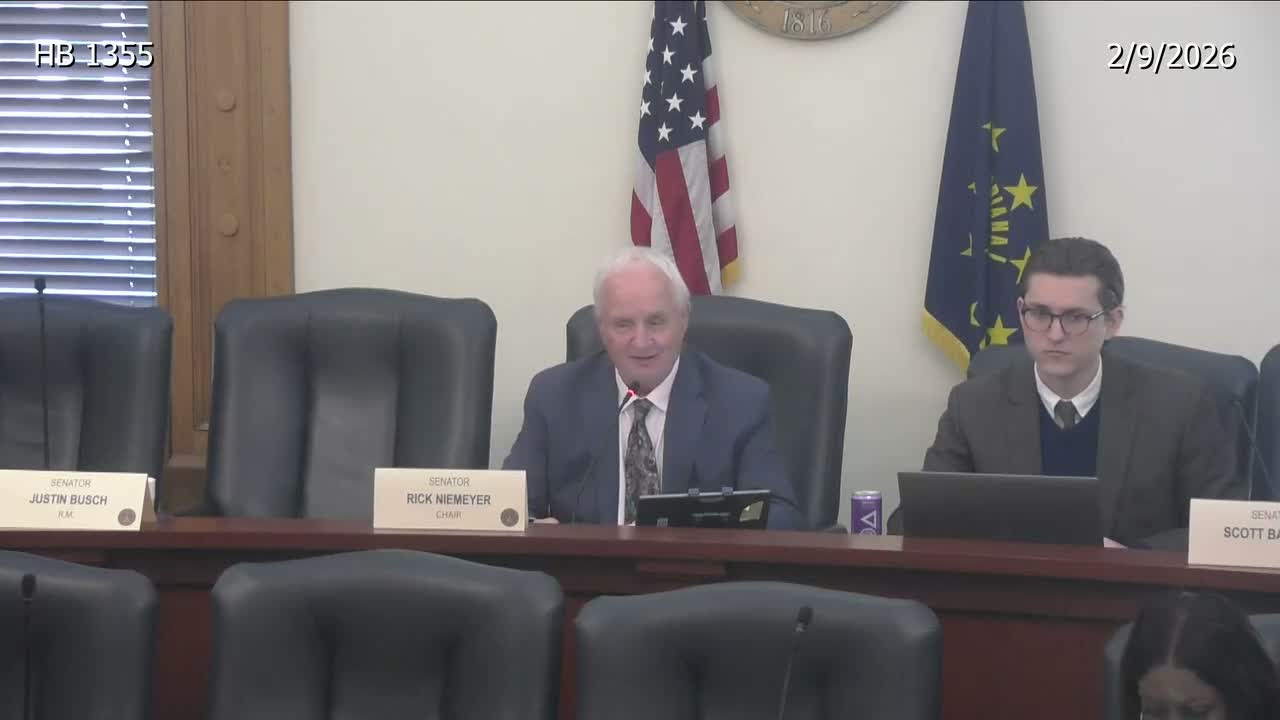
Representative Koppen presented House Bill 13-55 with Amendment 3, which creates a pre‑application process for confined feeding operation (CFO) approvals, a defined review timeline and a refund mechanism if the department fails to meet the 90‑day decision window. The Senate Environmental Affairs Committee debated the measure, heard neutral and opposing testimony from environmental groups and municipal engineers, and passed the bill as amended on a 7–0 vote.
What the bill does: the amendment calls for an optional pre‑application meeting; if held, the department has 30 days to review pre‑application materials, the applicant then has 45 days to resubmit any requested changes, and after proper notification to adjoining landowners the department has 90 days to issue a determination. If the department does not issue a determination within that 90‑day window, the applicant is entitled to a refund of the permit fee (testimony placed the fee at $175). The bill also prevents the department from requiring design changes to existing permitted facilities when an addendum or expansion does not affect prior designs.
Support and concerns: Rebecca Yonishkan (Indiana State Poultry Association, also speaking for Indiana Pork and the Indiana Farm Bureau) told the committee she supported the bill but suggested refining statutory language so IDEM 'makes a determination' rather than 'approve' to reflect administrative practice. Toby Days of the Hoosier Environmental Council opposed the refund provision and urged that agency technical review remain robust, warning that a refund requirement could deprive the agency of funds and create an incentive to rush reviews.
Jim Hellman, a city public‑works engineer, emphasized that environmental and hydrologic variation across sites requires careful IDEM technical review and cautioned against 'rubber stamping' submissions even when prepared by licensed engineers. Shannon Anderson of Earth Treader Indiana urged a no vote on concerns that strict timelines and fee refunds could create unfunded mandates and weaken environmental protection.
Closing and next step: the sponsor and the chair said the pre‑application meeting and single departmental contact are meant to streamline review while preserving necessary checks. The committee voted to pass HB 13-55 as amended, 7–0, sending it onward in the legislative process.