Get Full Government Meeting Transcripts, Videos, & Alerts Forever!
Get email alerts on the Regional Sewer Districts topic
No spam. Unsubscribe anytime.
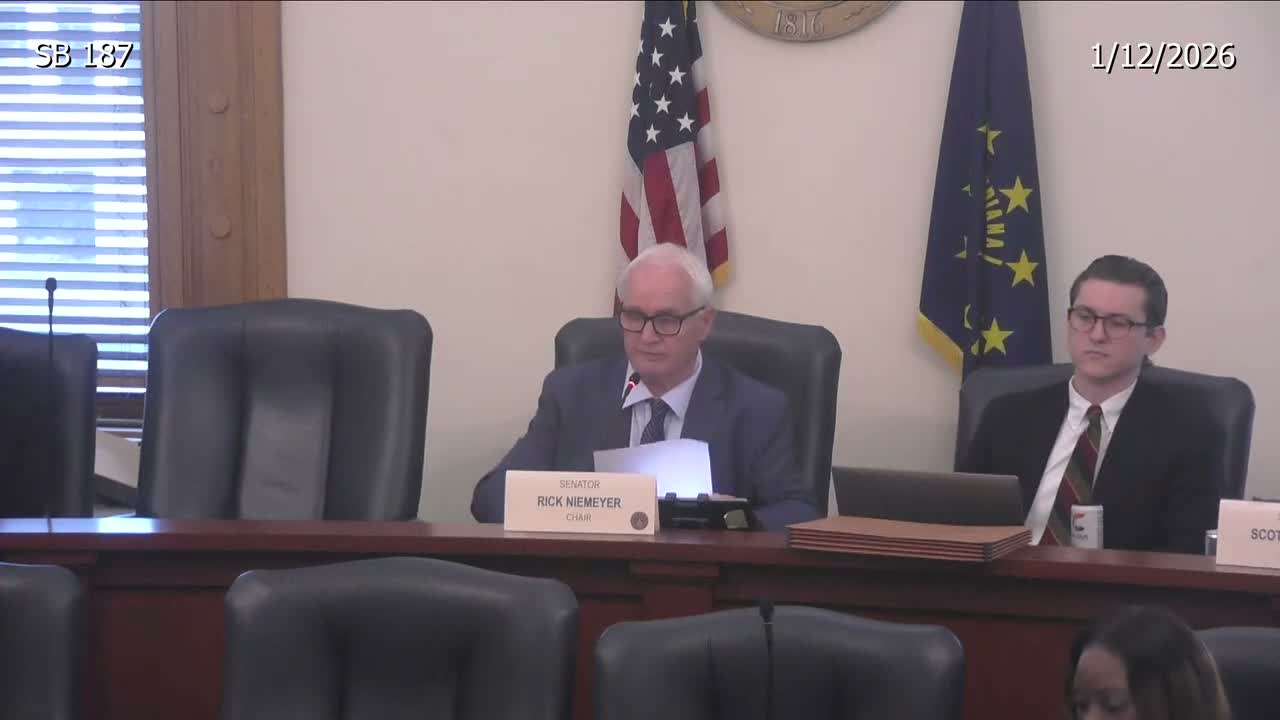
Committee advances SB187 to tighten oversight of regional sewer districts after Marshall County case
Summary
A Senate committee amended and recommitted SB187 after testimony that a Marshall County SOAR district incurred large bond costs and pursued litigation. The bill’s sponsor said the measure would limit debt approvals for districts created after 06/30/2026 and provide a fail‑safe for appointing authorities; committee voted 6–2 to recommit to tax and fiscal.
A Senate committee on Jan. 6 advanced an amended bill designed to add oversight to appointed regional sewer (SOAR) districts after lawmakers heard testimony about one district that issued a bond anticipation note and later faced unexpectedly high costs.
The sponsor introduced Senate Bill 187 and an amendment to change two effective dates so tighter debt approval rules would apply to districts "created after 06/30/2026," saying the bill is not meant to stop regional sewer districts but to create a safety valve when unelected boards incur debt that could be unaffordable for local taxpayers. The committee accepted the amendment by consent and later voted to recommit the bill to tax and fiscal (6–2).
Why it matters: Supporters said SOAR districts can be an important development tool where counties lack bonding capacity, but the Marshall County example — where a bond anticipation note funded planning and roughly $1.5 million was spent before the project’s true costs were known — convinced the sponsor that the statute needs guardrails. The sponsor described estimated household impacts in that case of about $200 per month in sewer fees plus potential hookup costs up to $10,000.
What supporters and local officials told the committee: Martin Wessler, a licensed professional engineer who works with regional utilities, said some statutory cross‑references in the draft would effectively force district boards to "consult" county councils on a broad slate of operational matters and that requirement could be redundant or onerous for districts whose boards already include elected officials. Steve Dodd, general manager of Patoka Lake Regional Water and Sewer District, urged carve‑outs for multi‑county utilities that already have elected officials on their boards and warned that requiring multiple county approvals could impede functioning multi‑county systems.
Key drafting questions: Committee members pressed the sponsor on several specific terms. Lawmakers asked whether "consult with the district authority" is advisory or a condition precedent to action, whether "indebtedness" should be broadened to include long‑term leases and other financing instruments, and how to measure the bill’s "more than 50% of the district service area" threshold (geographic area, parcel count, population or connections). The sponsor said the amendment is intended to target bond indebtedness (bond instruments) and that drafting clarifications would be made during recommitment.
IDEM and county exposure: The commissioner of the Indiana Department of Environmental Management, who testified in support of clarifying roles, noted that IDEM currently has statutory duties related to creation and dissolution of districts and offered agency assistance in drafting. Lawmakers also raised whether counties would ultimately be on the hook for BAN/bond costs; the sponsor said in the Marshall County case the county intended to use rainy‑day funds to address about $1.5 million of BAN proceeds already spent.
Next steps: The committee voted to move SB187 as amended and recommit it to tax and fiscal, creating another opportunity to refine definitions and limit county review to the initial debt issuance or other narrowly targeted checkpoints. The sponsor and members signaled willingness to work on language to protect well‑functioning districts while adding a public‑facing oversight mechanism.
Ending note: The committee’s action preserves the bill’s trajectory but leaves open several substantive drafting issues — consult, indebtedness, and the service‑area metric — that lawmakers told IDEM and counsel they intend to clarify before final passage.