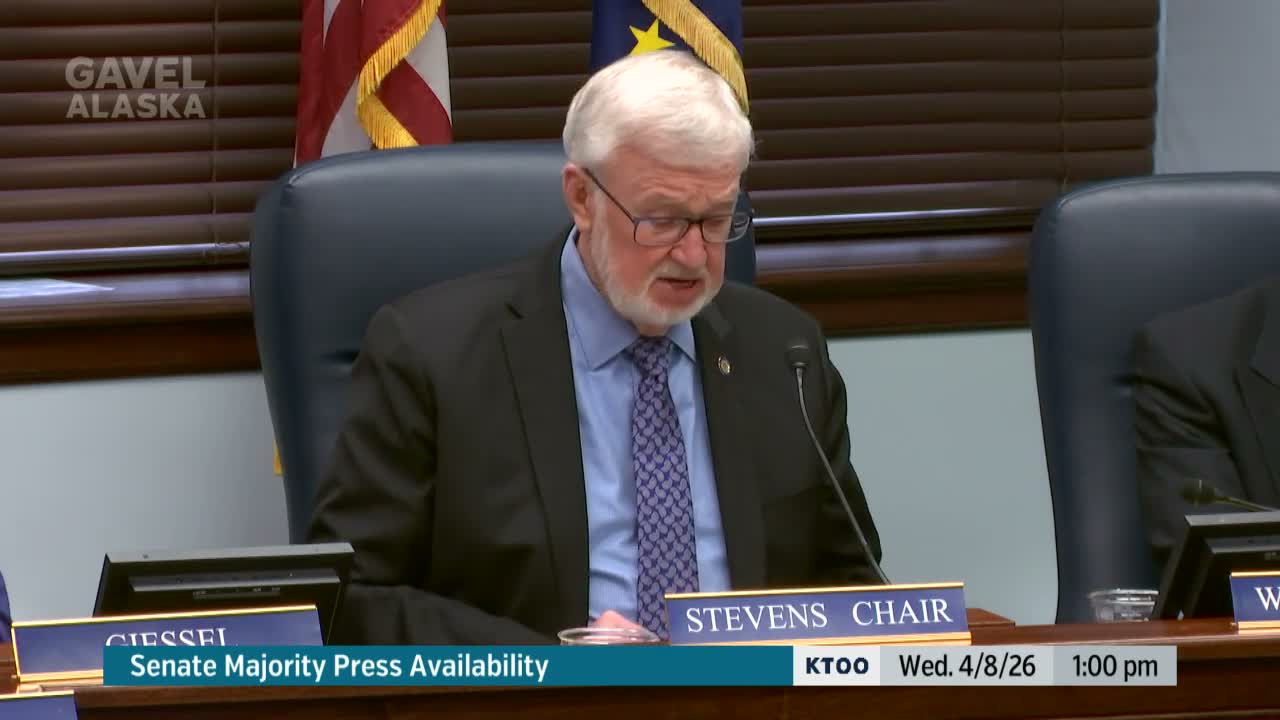
Senate panel to spend three weeks vetting governor's gas-line plan as questions mount over tax abatements
Loading...
Summary
Sen. Giesel said the Senate Resources Committee will meet daily for about three weeks to scrutinize the governor's gas-line proposal (SB 280/HJR 18), raising questions about broad tax-abatement language and a volumetric tax trigger that would impose a 6-cent-per-MCF levy after a 1,000,000,000-cubic-foot threshold.
Sen. Giesel said the Senate Resources Committee will meet every day for roughly three weeks to complete a thorough review of the governor's gas-line legislation and related House Joint Resolution 18.
The committee chair said committee members are "scouring the bill" and have heard from project developers and mayors who raised concerns about who will pay impacts as they pass through local districts. Giesel singled out language in section 6 (pages 5—6) that she said creates broad, unclear tax abatements during construction, operation and maintenance. "How broadly does this apply? Is it only in the area where the pipeline is going or does it apply statewide?" she asked, noting the statute lists abatements that could cover taxes on oil and gas production, pipeline property, gross or net income tax, licenses, excise taxes, fees and other charges.
Giesel also cited a volumetric trigger written into the bill, saying "when we hit 1000000000 cubic feet, that then a 6¢ tax would go into place," and questioned whether a 6-cent-per-MCF rate meaningfully accounts for inflation or long-term operation and maintenance needs. She said the committee will press the Department of Revenue next week to clarify the geographic scope and practical application of the abatements.
Sen. Giesel said the panel's aim at the end of its multiweek review is "a finished product with a majority of our questions answered and sufficient protection for Alaskans, in terms of the revenue that we're giving up, the expenditures that we're making into this project itself." She emphasized the state has already invested more than $1 billion in earlier pipeline work and that a pipeline is not the only option to monetize North Slope gas, noting past proposals to export gas directly.
The committee will also review a separate structural proposal, Senate Bill 275, that addresses policy issues separate from the tax provisions. The Resources Committee's findings and any committee substitute will determine whether and how the Senate advances the governor's plan to the floor.