Tech groups urge caution as Alaska committee considers human-operator requirement for commercial autonomous vehicles
Loading...
Summary
Industry witnesses told the House Community and Regional Affairs Committee that HB 217would require a human safety operator in commercial autonomous vehicles, effectively blocking driverless truck deployments and testing; committee set an amendment deadline of April 13 and requested clarifying notes on testing implications.
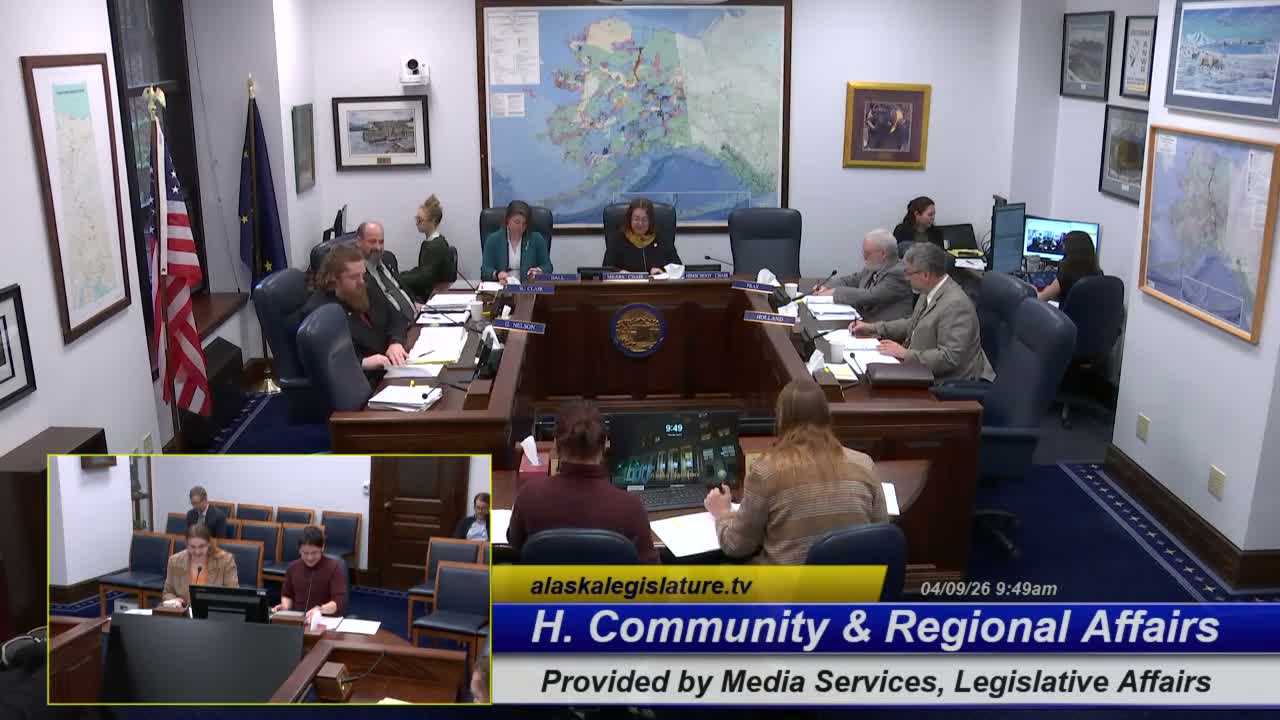
Industry and trade witnesses told the House Community and Regional Affairs Committee on April 9 that House Bill 217, which would require a human safety operator in commercial autonomous vehicles used in interstate commerce, risks foreclosing testing and deployment in Alaska.
Sponsor Representative Ashley Carrick described HB 217 as a regulatory measure targeting commercial AVs used for interstate goods and passengers and said the bill would require a human safety operator in those vehicles. Robert Singleton, senior director of policy and public affairs at Chamber Progress, testified in respectful opposition, saying a blanket human-driver requirement would operate as a de facto ban and block safety and workforce benefits. “By hard coding a human driver requirement to every commercial AV operation with no pilot program, no permit pathway, and no sunset clause, Alaska will be the only state in the country to impose such a requirement,” Singleton said.
Rose Feliciano, introduced as executive director for TechNet (Northwest), warned the committee the bill could restrict testing in Alaska, raise liability concerns by placing presumptive fault on an on-board human operator, and eliminate opportunities for jobs tied to AV operations such as fleet operations, maintenance and remote assistance. Renee Gibson of the Autonomous Vehicle Industry Association also testified in opposition, saying AV deployments have accumulated hundreds of millions of autonomous miles and that a human-operator mandate would make Alaska an outlier and jeopardize potential benefits.
Representative Mike Prox asked testifiers to point to specific bill language that would prevent testing; he asked witnesses to provide a written note to the committee explaining where testing would be blocked by the bill. The chair said committee staff would accept clarifying emails at hcra@akleg.gov. The committee set the amendment deadline for HB 217 at noon on Monday, April 13 and left the bill pending for further consideration.