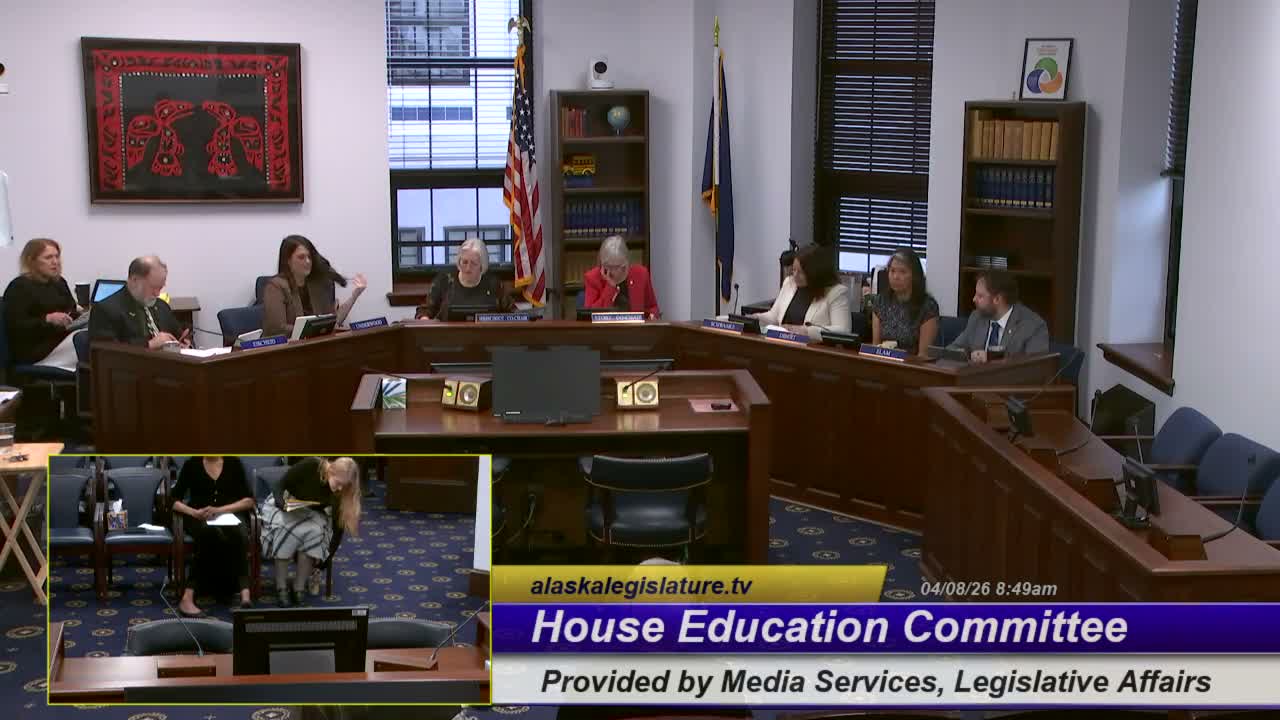
Committee hears bill to require schools to offer CPR and AED instruction; witnesses describe video‑based options for rural areas
Loading...
Summary
Senator LB Grama Jackson and staff told the committee Senate Bill 20 would require public schools to offer CPR/AED instruction with DEED setting grade levels; EMS educator Brian Webb and others said modern programs are video‑based, can be led by teachers as facilitators, include AED instruction, and can be adapted for rural and correspondence students at low cost.
Senator LB Grama Jackson asked the House Education Committee on April 8 to consider Senate Bill 20, which would require public schools to offer instruction in cardiopulmonary resuscitation (CPR) and AED use and assign the Department of Education and Early Development (DEED) duties for implementation. "This bill has the potential to transform that trauma into a positive outcome," Senator Grama Jackson said, describing evidence that timely CPR increases survival when emergency response times are long.
Denali Zantop, staff to the senator, and invited witnesses — including Brian Webb, an EMS educator and long‑time CPR instructor from Anchorage, Heather Cavanaugh (American Heart Association volunteer), and a representative from the American College of Cardiology — answered committee questions. Webb told the committee that public‑access CPR programs are now largely video‑based with short instructional vignettes, designed so a teacher or local facilitator can run the lessons while local EMS, fire departments, or village health aides provide subject‑matter support where available.
Members asked whether the bill would make CPR a graduation requirement; staff said schools must offer the curriculum in the grades DEED designates but students would not be prevented from graduating if they do not attend the instruction. The bill’s language requires schools to provide instruction for adopted grades, with DEED helping districts determine feasible grade levels and implementation plans for rural schools.
Committee members raised concerns about rural delivery, internet access for video content, access to mannequins for skills practice, and costs to small districts. Witnesses and sponsors described low‑cost options — using pillows or simple classroom simulations, borrowing equipment from local EMS or fire agencies, and leveraging free online videos — and emphasized that DEED and local partners would help districts adapt instruction. Brian Webb confirmed AED awareness and basic use would be included in the instruction and that simulation and short AED vignettes exist in free access materials.
The committee did not vote on SB 20 and set it aside for a future meeting; staff and witnesses said they will provide additional implementation details in follow‑up.