Get Full Government Meeting Transcripts, Videos, & Alerts Forever!
Get email alerts on the Intelligent Speed Assistance topic
No spam. Unsubscribe anytime.
Advocates urge courts be given authority to require speed‑limiting devices; committee hears testimony but takes no action
Summary
Patty Avery of Families for Safe Streets told the committee Senate Bill 235 would allow courts to order intelligence speed assistance (ISA) devices for high‑risk or repeat speeders; lawmakers questioned overrides, shared vehicles and costs and the committee opted not to move the bill this session.
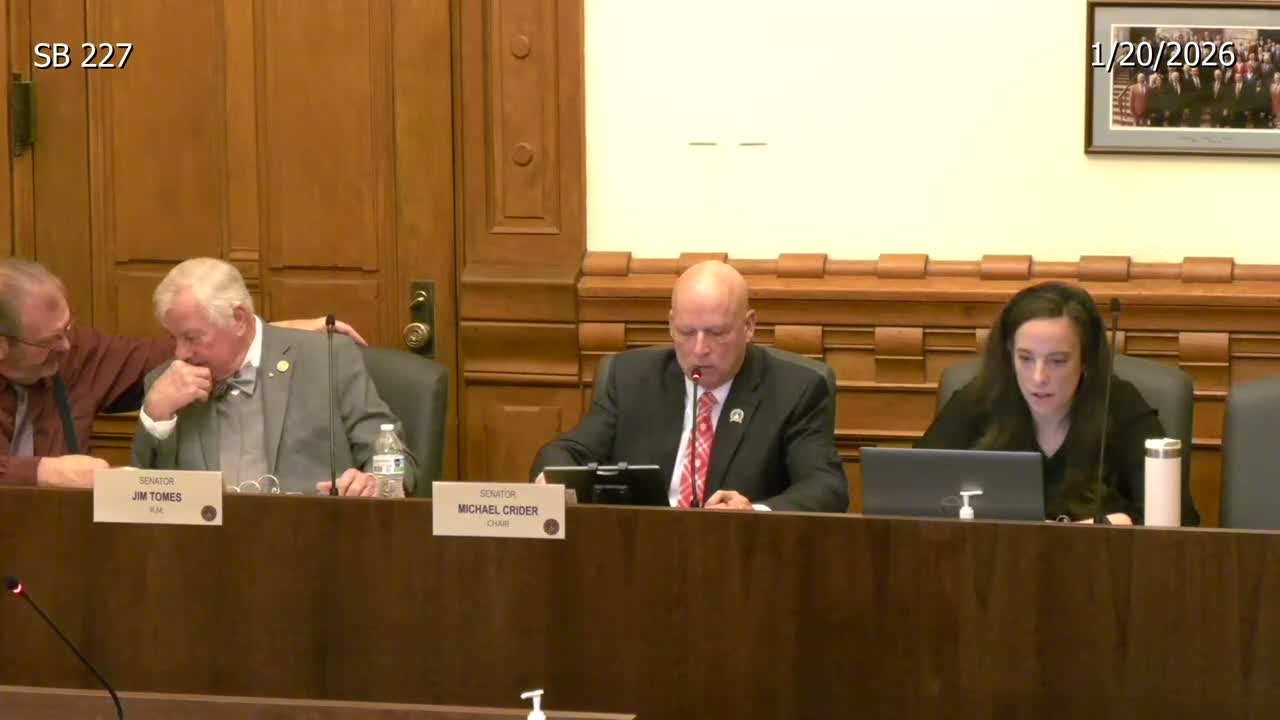
The Homeland Security and Transportation Committee heard emotional testimony and technical questions on Senate Bill 235, which would permit courts or licensing authorities to require the installation of intelligence speed assistance (ISA) devices on vehicles used by high‑risk or repeat speed offenders.
Patty (Patricia) Avery, a national executive committee member of Families for Safe Streets, urged lawmakers to adopt the device as a narrowly targeted tool to reduce speed‑related deaths. She cited 2023 crash data from the Indiana Criminal Justice Institute — which she said showed a state death rate of 13.5 per 100,000 (higher than the national 12.2) and that more than 26 percent of 2023 traffic deaths were attributed to speed — and described personal losses, including her daughter Bethany’s death in a speeding collision.
Avery said ISA systems can prevent a vehicle from exceeding a preset threshold and noted that other states have used the devices for fatal or repeat cases. She described an audible, auditable override used in other states for emergencies and said vendor certification and restricted licensing (so the court‑ordered driver can only operate vehicles with the device) are common implementation approaches.
Committee members asked practical questions about overriding the device for safety maneuvers, how the system works in shared vehicles, who would install and certify vendors, and the likely costs to individuals (Avery said installation is roughly $100 with about $3 per day in lease fees, similar to ignition interlock programs, and costs could be waived for indigent defendants). Senator Buck outlined complementary proposals to increase criminal penalties for fleeing law enforcement and emphasized public safety concerns about pursuits.
Chairman Kreider said the committee would not move the bill this session and that lawmakers would continue discussions next year, including work in other committees if the measure is routed to criminal code or courts panels. No committee vote was recorded on SB 235 during the session.
Supporters framed ISA as a narrowly targeted corrective tool for the small group of drivers responsible for disproportionate speed‑related harm; opponents and implementation skeptics raised questions about cost, driver restrictions and technical reliability that committee members said warrant more study.