Get Full Government Meeting Transcripts, Videos, & Alerts Forever!
Get email alerts on the Consumer Finance Consolidation topic
No spam. Unsubscribe anytime.
Committee reviews bill to consolidate Indiana's consumer-finance rules; industry seeks transition relief
Summary
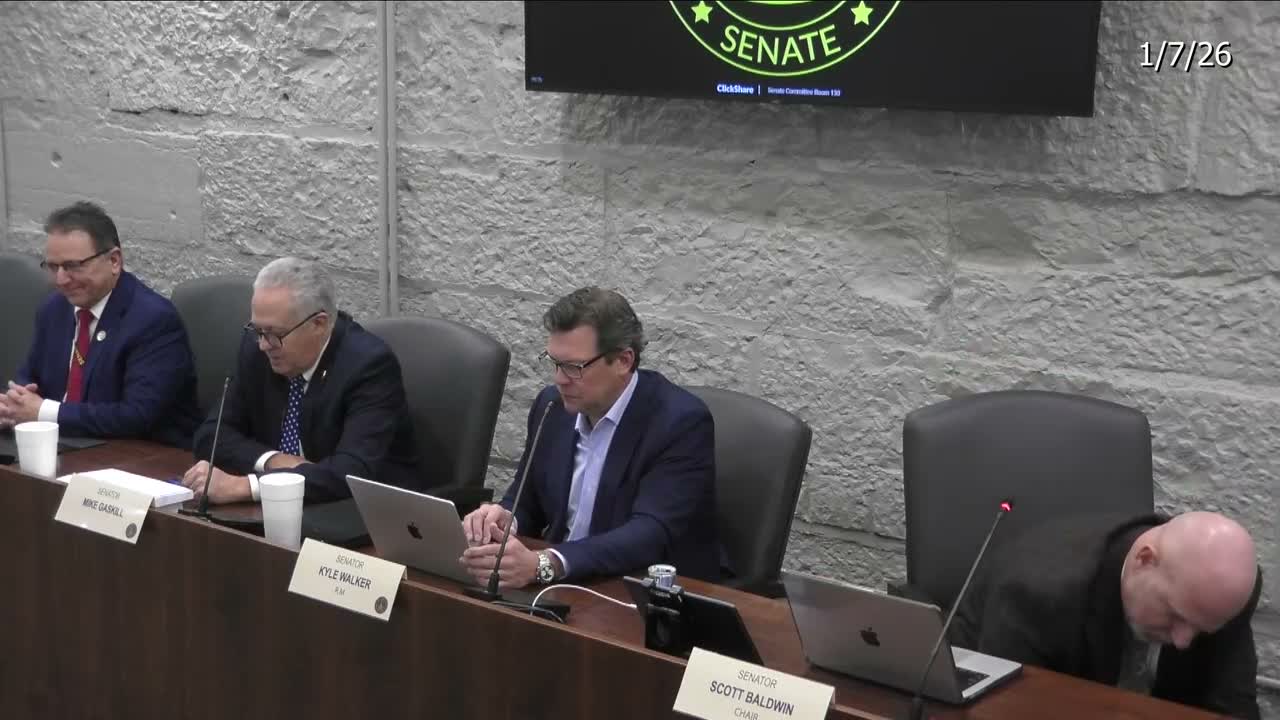
The Senate Insurance and Financial Institutions committee heard testimony on Senate Bill 169, a reorganization of consumer-finance statutes intended to improve readability. The Indiana Bankers Association said it is neutral but urged the committee to address effective-date and contract-validity issues; the committee plans amendments and a vote next week.
The Senate Insurance and Financial Institutions committee heard testimony on Senate Bill 169, a consolidation of existing consumer-transaction provisions in Indiana Code. The committee chair described the measure as a reorganization intended to improve the code's readability and said it is not intended to change substantive law.
The bill's author explained the measure pulls related definitions and provisions into a single title to make the law easier for practitioners and consumers to navigate, and said any apparent substantive changes should be treated as scrivener's errors. The chair emphasized the bill is not intended to become a vehicle for unrelated policy changes.
Connor Wong of the Indiana Bankers Association testified that the association is "neutral, cautiously so," and asked the committee to consider delaying the bill's effective date or adopting alternative language to preserve the validity and enforceability of existing loan documents. "We have a lot of loan agreements and documents with references to Indiana code," Wong said, adding that many forms are produced by third-party vendors and that updating them can be a longer process than institutions anticipate.
The chair and Wong discussed a potential non-code amendment drafted by staff to address contract enforceability rather than changing the statutory effective date. The chair noted that changing the effective date could require the Legislative Services Agency to publish the bill twice and that staff were preparing amendment language to address stakeholders' concerns.
Senator Randolph raised concerns about whether any substantive provisions were omitted during consolidation, noting the bill's length and asking whether consumer protections or duties from repealed sections were left out. The chair responded that mortgage- and property-rights provisions in Title 32 (including mortgage-lien codifications) were intentionally left in place and not moved into the consolidation.
There were no votes or final actions at the hearing; the committee concluded the session and indicated it would take up the bill and additional measures next week for further consideration and likely votes.
The committee's next steps include drafting and reviewing the proposed non-code amendment to address contract validity and coordinating with stakeholders, including bankers and credit unions, on transition timing. A formal vote on the bill is expected during the committee's next meeting.