House Finance hears DEED outline of Berger committee changes to school project scoring
Loading...
Summary
Department of Education and Early Development officials told the House Finance Committee the Berger (BRGR) Committee approved FY28 changes to CIP scoring that shift from building age to a facility condition index and increase emphasis on life-safety and access, while DEED said it will provide more support to smaller and rural districts to improve equity in applications.
The Alaska House Finance Committee on April 9 heard Department of Education and Early Development officials describe proposed changes to how the state evaluates school capital projects, with an emphasis on measuring building condition and prioritizing life-safety needs.
"Our role is to provide the resources, structure and oversight that ensure students have safe functional environments where learning can occur every day," Heather Heineken, director of finance and support services for the Department of Education and Early Development (DEED), told the committee during a presentation on the Bond Reimbursement and Grant Review Committee, commonly called the Berger Committee.
Heineken said the Berger Committee — a nine-member panel established by statute and implemented under 4 AAC 31 — recommended several updates for the FY28 CIP (capital improvement project) application. The most significant change is shifting from a weighted-average building-age metric to a facility condition index to better capture actual building needs, she said. The committee also plans to increase the priority for projects that address structural deficiencies, code violations and other life-safety concerns.
The department also plans to redistribute application points to make the process more equitable, Heineken said. That redistribution would award more points for earlier design milestones (for example, concept or 35 percent schematic design) so districts that cannot finance advanced design stages or completed reimbursable projects are not disadvantaged.
"We are introducing more consistent analysis of space utilization to ensure facilities are appropriately sized for the student population," Heineken said, adding the goal is to help smaller and rural districts compete more effectively for funding.
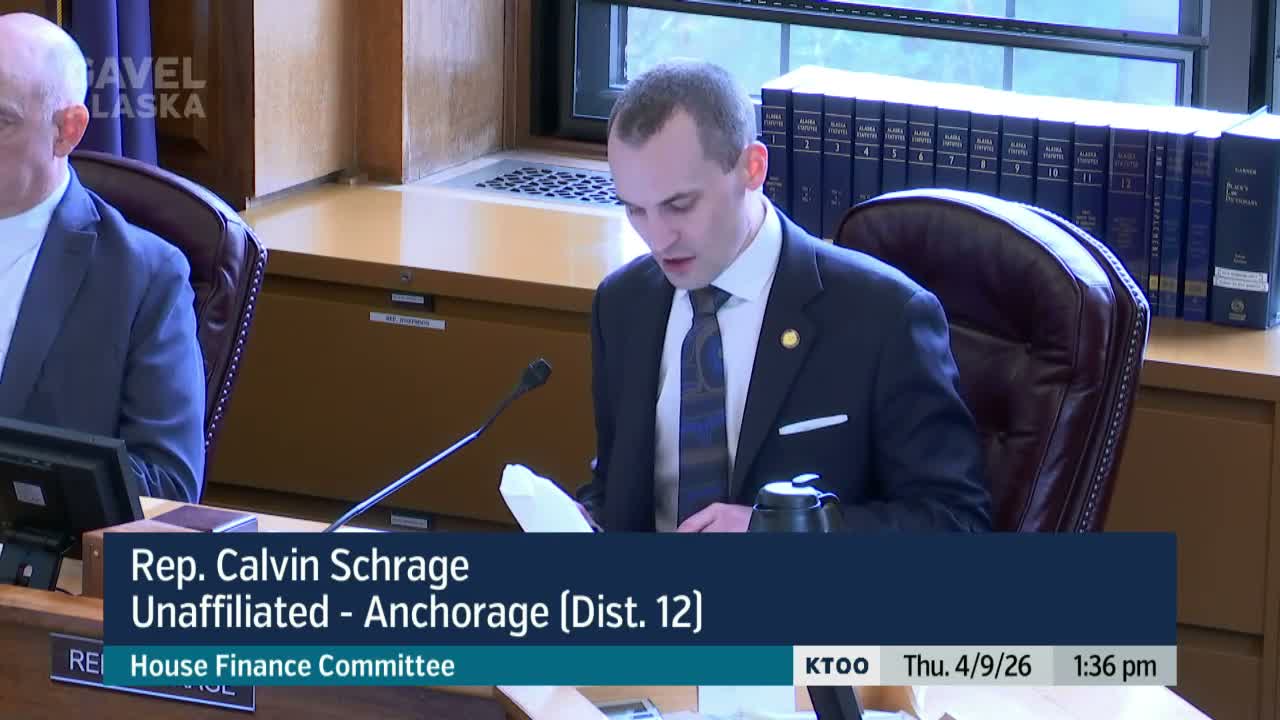
Committee members pressed DEED on the agency’s capacity to support districts that lack technical expertise. Co-chair Shrage asked whether the department or Berger Committee offers hands-on help to prepare applications; Heineken said the department runs CIP application workshops each spring, maintains regular Q&A through the September 1 application deadline and provides outreach, while the Berger Committee members can assist districts as needed.
Representative Bynum expressed concern that some districts lack the capacity to prepare applications, asked whether DEED has evaluated separating non-educational community uses of school space from the foundation formula, and whether DEED has formally researched the cost implications. Heineken said DEED relies primarily on district-provided data and has not performed a statewide formal study of separating community-use costs but can gather information in response to a formal request. She also noted staffing constraints limit the department’s ability to conduct proactive, statewide facility surveys.
Heineken said the Berger Committee reviews the CIP application annually each April and that the committee voted on the FY28 changes at last week’s meeting. DEED plans to roll out the revised application and training at CIP training sessions in Anchorage at the end of April and will accept applications through the department’s September 1 deadline.
The presentation framed the updates as a combination of data-driven scoring (the facility condition index), increased stakeholder engagement and technical guidance. "These efforts have created a system that is both structured and adaptable over time," Heineken said.
The committee thanked DEED staff for the briefing. The meeting adjourned at 2:40 p.m.; the House Finance Committee will meet again April 10 at 9 a.m., when it will hear HB 193.