Senate Finance Committee amends HB 78 to limit municipal cost shift, adopts other pension changes
Loading...
Summary
The Alaska Senate Finance Committee approved amendments to HB 78 that raise the non‑state PERS employer cap from 22% to 24% to reduce a projected cost shift to the state, adopted changes to benefit‑continuity and employee‑contribution rules, and set the bill aside for further stakeholder input.
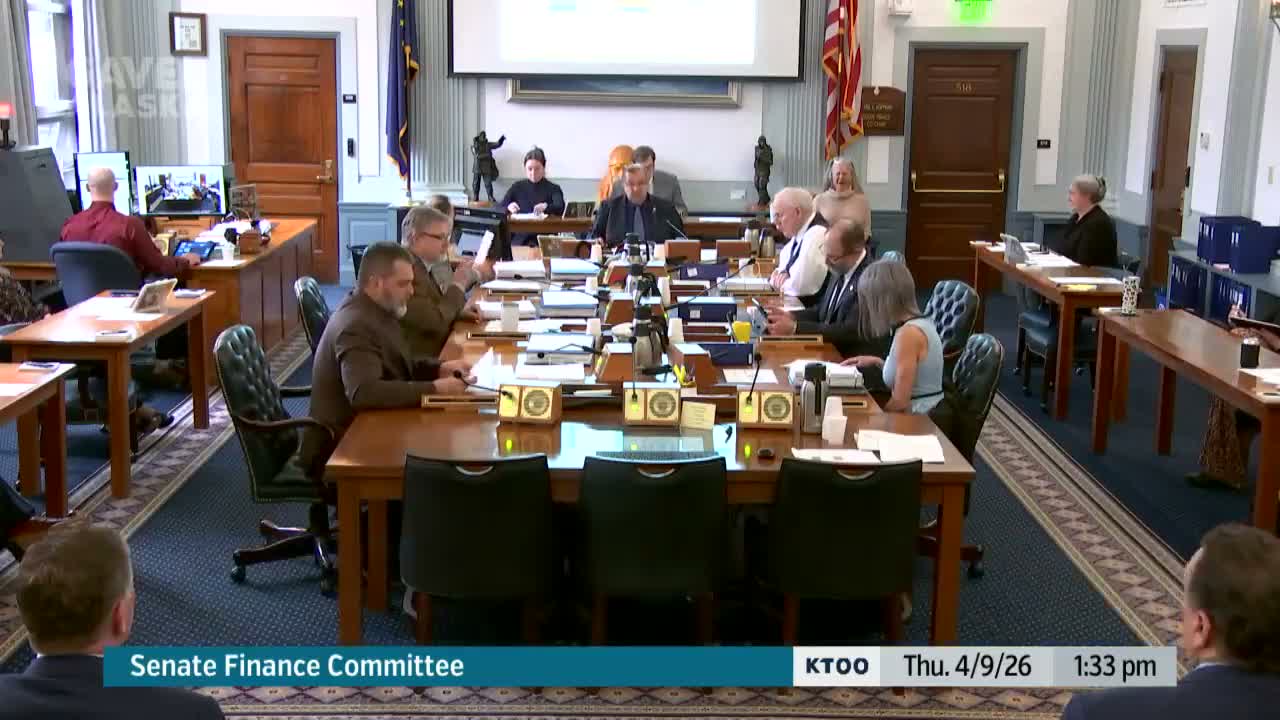
The Alaska Senate Finance Committee approved several amendments to House Bill 78 during a session in the Senate Finance Room at the State Capitol, including an amendment that raises the non‑state PERS employer contribution cap from 22% to 24% to blunt a projected cost shift from municipal employers to the state.
Peter Eklund, staff to Sen. Hoffman and the committee, told senators that actuarial modeling from Gallagher showed the bill as written would reduce the non‑state employer share of unfunded liability and shift dollars to the state. "That $22,000,000 would shift above the 22% cap line to the state of Alaska," Eklund said, citing a FY2030 example. He also presented a multi‑year projection showing a cumulative shift of about $394,500,000 from FY2027 through FY2039 under the bill without the amendment.
Sen. Stedman moved Amendment 1 to change the cap to 24%, saying the change would roughly balance the state and non‑state employer shares over the period the actuary examined. Gallagher actuary David Kirschner, who joined the hearing online, said the analysis used the 2024 valuations and the fiscal‑note assumptions. "Increasing the cap from 22 percent to 24%...we increase the non‑state employer contributions to the defined benefit plan by about $417,000,000 based on projected payroll, and the additional state contributions for the state would decrease by about $403,000,000," Kirschner said.
Opponents, including Sen. Keel, said the change shifts costs to municipalities and local taxpayers. "If you raise the muni contribution cap from 22 to 24, the munis costs go up. It's sales tax dollars, and it's property tax dollars," Keel said, urging the committee to reject the amendment. Supporters countered that the amendment "unmasks" costs the bill otherwise hides and gives municipalities clearer information about their obligations.
After debate and a roll call, the chair announced that Amendment 1 passed. The committee then considered additional changes to HB 78:
• Amendment 2 (adopted). Sen. Kaufman moved and withdrew objection to an amendment reinstating a 12‑month return‑to‑work requirement for certain retirees to preserve continuity of service for the defined‑contribution health‑care component. Kaufman said the change follows an ARM board recommendation and is intended to avoid an "unintended consequence" that could allow people to qualify without continuity of service; the committee adopted the amendment by unanimous consent.
• Amendment 5 (adopted). Sen. Kaufman offered an amendment to remove a 12% ceiling on adjustable employee contribution rates. The sponsor said actuarial modeling indicates the lever would rarely, if ever, be triggered; supporters argued removing the cap helps manage unfunded‑liability risk. Opponents warned that abandoning the ceiling creates "unlimited downside sharing" for employees. The transcript records the committee approving the motion (vote recorded in the hearing as six ayes and one nay).
• Amendment 7 (failed). Sen. Kaufman proposed raising a retirement‑age threshold from 60 to 65 for most employees (excluding firefighters). Multiple senators expressed concern about fairness and consistency with other tiers; the motion failed on roll call.
Following the votes, the committee set HB 78 aside for further consideration, saying it will invite affected parties back for input before taking the bill up again. The chair noted a committee meeting scheduled for 9 a.m. the next day and then adjourned.
The committee proceedings centered on actuarial projections, the distribution of unfunded pension liabilities between the state and non‑state employers, and tradeoffs between limiting state exposure and increasing local employer costs. Committee staff and the actuary repeatedly emphasized that the committee’s calculations rely on the 2024 valuations and specified fiscal‑note assumptions; speakers cautioned that future market experience may differ and that any long‑term projections carry uncertainty.