Senate committee adopts changes and advances companion bills targeting AI-generated CSAM and deepfakes
Loading...
Summary
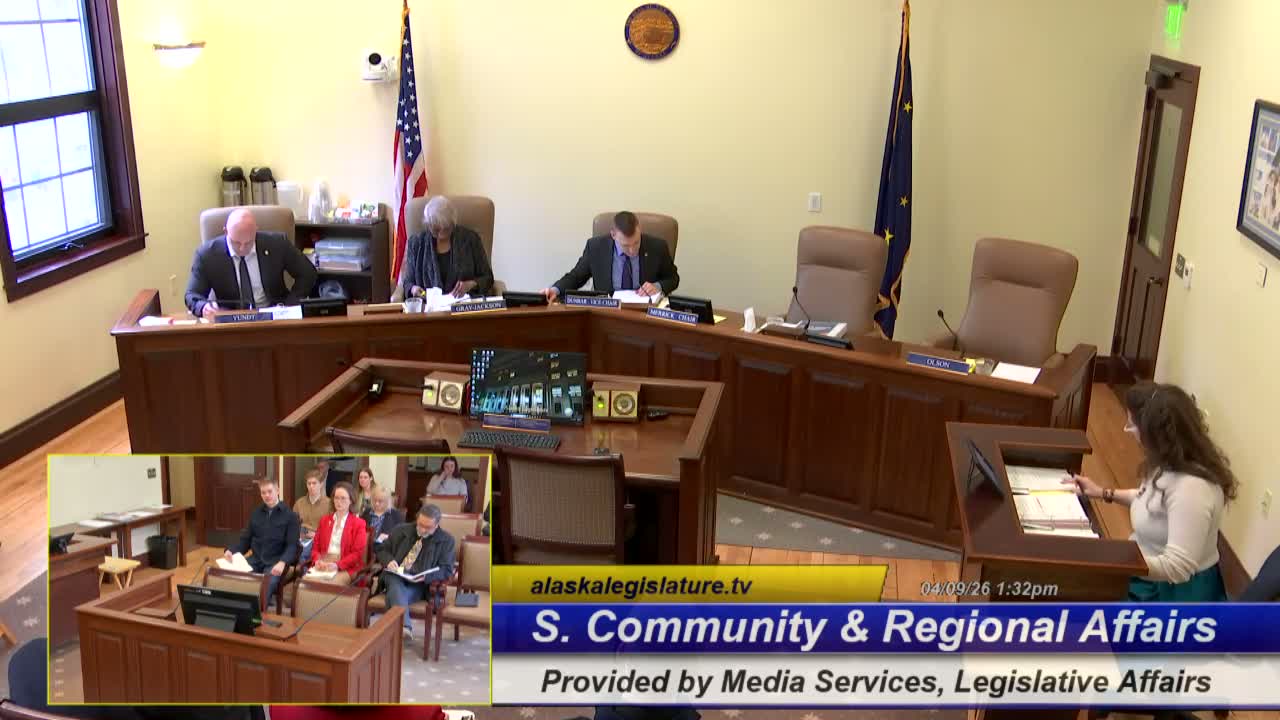
The Senate Community and Regional Affairs Committee adopted committee substitutes and moved Senate Bill 247 and House Bill 47 from committee after a first hearing on HB47. Sponsors and witnesses said the bills criminalize nonconsensual AI-generated sexual images, update adult deepfake and forged-likeness crimes, and (in the House version) have removed contested social-media provisions at the committee's request.
The Senate Community and Regional Affairs Committee on April 9 adopted committee substitutes and voted to move forward two companion measures that target AI-generated child sexual abuse material (CSAM) and certain adult deepfakes.
Representative Sarah Vance, sponsor of House Bill 47, told the committee the bill "criminalizes the creation or distribution of forged digital likenesses and AI-generated depictions without consent, including explicit images involving minors." Vance said the bill updates criminal statutes, creates civil penalties for facilitating CSAM in some provisions, and aligns statutes so that generated CSAM is included among registrable offenses.
Sorsha Hazleton, staff to the committee chair, summarized changes made to harmonize the House and Senate drafts and said, at the Department of Law's recommendation, the bills add conduct such as "causing a child to come into contact with [obscene material]" and add possession and distribution of generated CSAM to registrable offenses.
Testimony shown to the committee included an externally produced video and materials citing organizations such as the Internet Watch Foundation and the National Center for Missing and Exploited Children; the recording described rapid increases in AI-generated child sexual material and the real-world harms victims report. In committee discussion, Vance and staff explained the bill uses the Miller obscenity test as a constitutional safeguard for prosecuting obscene material while reducing First Amendment conflicts.
The committee also addressed previously added social-media provisions in the House version (age verification, parental access, advertising restrictions, curfews and a private right of action). At the committee's request and following legislative-legal review, the House committee substitute adopted in this committee removes the social-media provisions and a civil-penalty section, with Hazleton saying those elements raised constitutional and practical concerns and could be revisited in a different venue.
Public commenters offered mixed perspectives. Rose Feliciano, Executive Director of Northwest TechNet, said her organization supports HB47 and appreciated removal of constitutionally problematic provisions while asking the committee to protect entities that proactively identify and report CSAM from being treated as distributors. Remy Spring of the Sterling community urged narrower statutory language, arguing in testimony that criminalizing possession of purely fictional AI-generated images without an identifiable child could raise First Amendment issues and posed the risk of prosecuting someone for privately held, fictitious images.
Casey Schroeder, Senior Assistant Attorney General for the Criminal Division, was present to answer legal questions about criminal provisions; she told the committee the civil-law aspects such as curfews may be outside her criminal practice and pointed to the legislative memo in the committee packet for additional analysis.
Formally, the committee adopted the committee substitute for SB247 and reported SB247 from committee with individual recommendations and accompanying fiscal notes. The committee also adopted the committee substitute for HB47 (removing the social-media and civil-penalty provisions) and reported HB47 from committee with individual recommendations and fiscal notes.
What happens next: both measures will proceed to the next committee or floor assignment specified by legislative process; legislative legal services were authorized to make conforming changes. The committee did not take final floor votes on the measures today; it reported them from committee for further consideration.