DEED outlines CIP changes; senators press that very large projects can displace rural maintenance needs
Loading...
Summary
At an April 9 Senate Finance Committee briefing, DEED said the BRGR committee will shift to a facility condition index (FCI) and increase life‑safety weighting in the CIP application; senators warned that very large projects such as a $36 million Galena proposal can push many smaller maintenance projects down the statewide rankings.
The Alaska Department of Education and Early Development on April 9 told the Senate Finance Committee it will propose replacing a weighted‑average‑age metric in the CIP application with a facility condition index and increase emphasis on life‑safety to ensure structurally urgent projects rise in statewide rankings. The presentation came from Heather Heineken, DEED’s director of finance and support services, and members of the Bond Reimbursement and Grant Review (BRGR) committee.
Heineken told the committee the BRGR was established in statute in 1993 (cited in testimony as AS 14.11.014) to review CIP priorities, recommend grants and bond reimbursements, and set facility and energy‑efficiency standards. "Our role is to provide the resources, structure and oversight that ensure students have safe, functional environments where learning can occur every day," she said, framing facilities work as foundational to student outcomes.
Senators pressed DEED on how the proposed facility condition index (FCI) would be compiled and who would prepare assessments. "The facility condition index is based off of the renewal and replacement schedule that we provide as a resource to the school districts," said Michael Budicoffer, DEED’s facilities manager. He said districts can calculate FCI using their renewal/replacement schedule and procurement records or commission condition assessments from architects and engineers when higher‑fidelity data are needed.
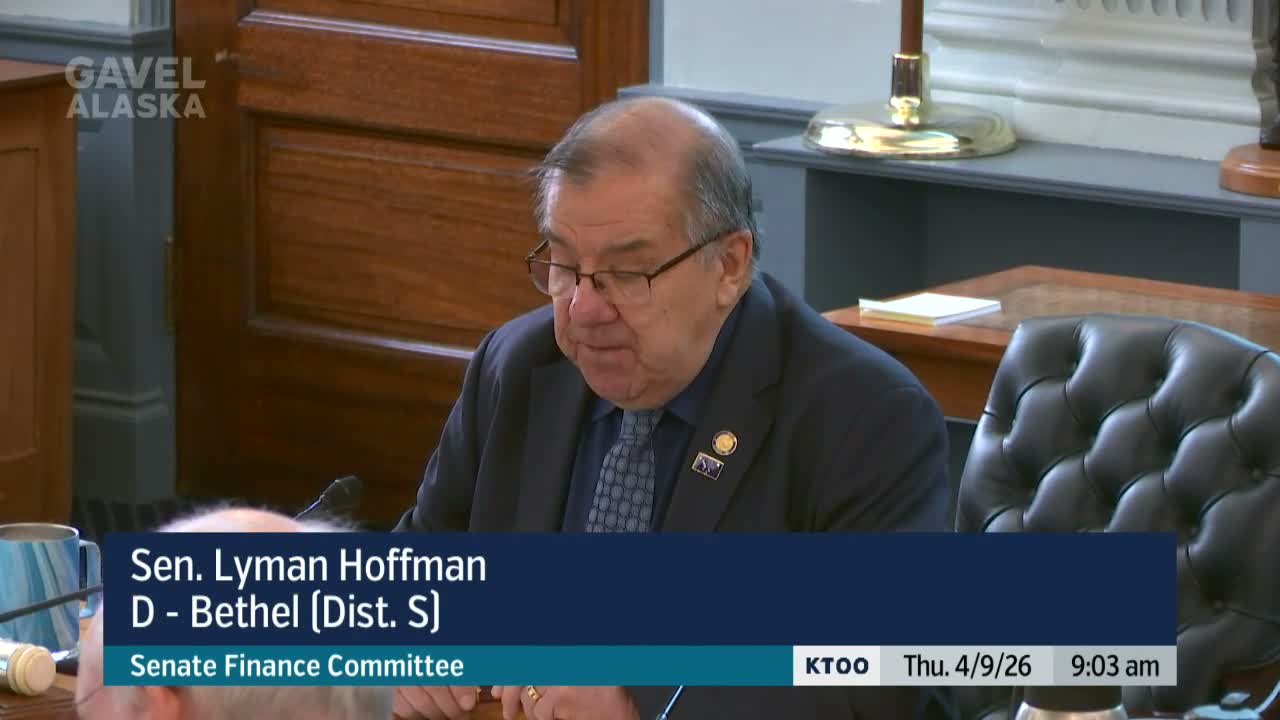
Several senators raised equity concerns about district capacity to prepare strong applications. Senator Stedman said he was concerned wealthier districts that can pre‑fund construction — or that submit fully developed replacement projects — can score higher and displace smaller, long‑waiting maintenance projects. "All of a sudden we've got this $35,000,000 plug in number 2 position and it just moves everybody down the scale," he said, citing a Galena project testimony identified as $36,000,000 and noting other large projects named in the hearing.
Heineken and Budicoffer said the application changes and redistributed scoring points are intended to level the playing field for districts that lack the resources to produce later‑stage designs. Heineken acknowledged the system is imperfect but said DEED is "working to improve the system" and tries to balance objective, data‑driven scoring with limited state resources.
Committee members also asked procedural and transparency questions. Senator Stedman asked for the DOT statewide deferred‑maintenance list to be shared with the finance committee for context; Heineken clarified DEED’s six‑year school facilities plan is a separate list and that the BRGR’s purview is school construction and major maintenance applications submitted by districts. He said DEED publishes the six‑year plan and the CIP application lists online (applications published in November and finalized in March each year).
BRGR members participating online described efforts to keep the process transparent and suggested additional tactical changes: Kevin Lyon and Bransley Onondia said the committee has redistributed points to help smaller districts and that baseline funding or other policy changes could improve equity. Senator Kaufman and others discussed prototypical school designs and modular construction as possible cost‑reduction strategies, while Senator Cronk urged centralized systems and energy efficiency to reduce long‑term operating costs.
Heineken said reviewers evaluate applications to determine whether a request should be classified as major maintenance or school construction and that statute gives DEED authority to reclassify as appropriate. She also said lapsed or supplemental funds in 2026 allowed DEED to fund projects beyond the initial appropriation, enabling funding through project No. 6 on the major maintenance list this year.
The committee did not take formal votes on policy changes during the briefing. The DEED presentation concluded with an offer to provide additional documentation (the statewide six‑year plan and year‑on‑list information) and to continue work on refining the CIP application for FY 2028. The Senate Finance Committee adjourned and scheduled a 1:30 p.m. follow‑up meeting to take up House Bill 78 (retirement systems).