House committee advances resolution urging federal support for marine debris cleanup and backhaul in Alaska
Loading...
Summary
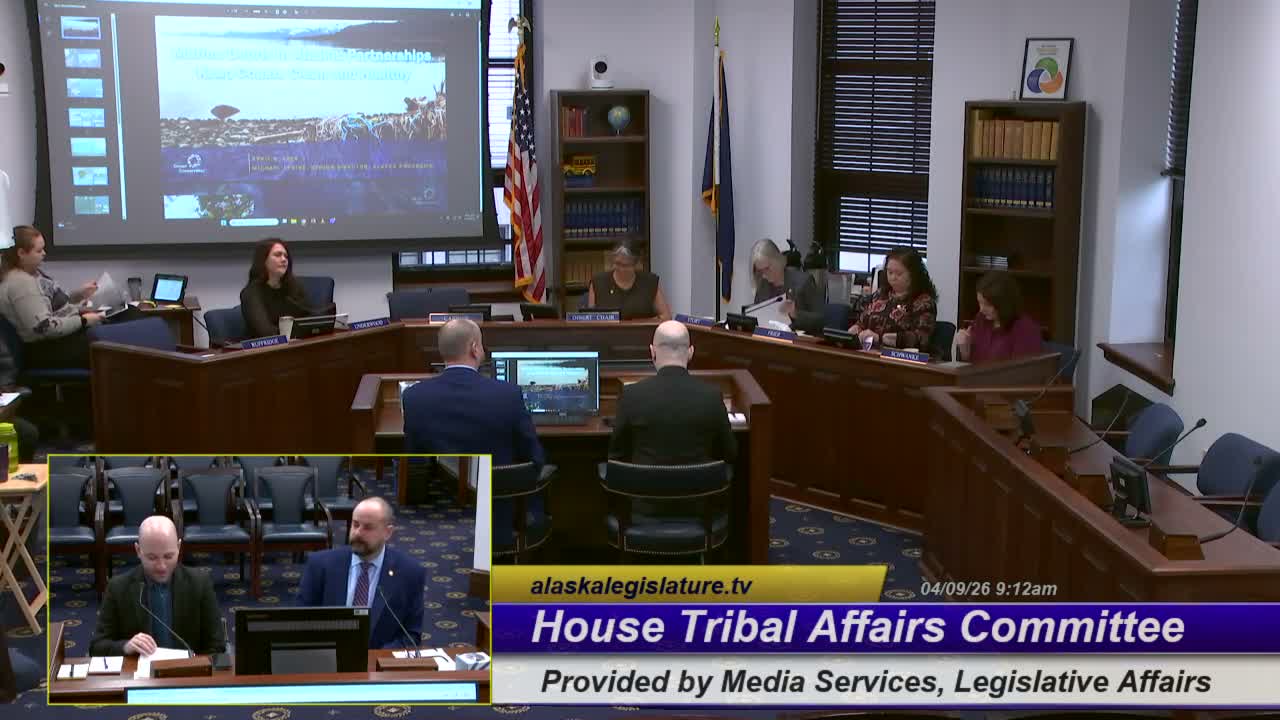
The House Tribal Affairs Committee voted HJR 37 out of committee by unanimous consent after testimony from Ocean Conservancy and regional groups describing large debris loads, backhaul costs and obstacles for rural communities; committee members discussed adding EPA and NOAA to distribution and encouraged industry engagement.
The House Tribal Affairs Committee advanced House Joint Resolution 37 on Thursday, a nonbinding resolution urging expanded federal funding and coordination to remove and prevent marine debris along Alaska’s extensive coastline.
Representative Jeremy Bynum introduced HJR 37, which "expresses the legislature's support for efforts to remove, prevent, and clean up marine debris from Alaska's shoreline and encourages coordination across all levels," staffer Trevor Shaw told the committee. The resolution cites impacts to wildlife, fisheries and subsistence economies and asks for improved access to federal programs for tribes and rural communities.
Witnesses described scale, costs and barriers
Michael Levine, senior director for Ocean Conservancy in Alaska, told the committee the majority of debris found on Alaska beaches is derelict fishing gear and plastic and that large cleanups require boats, aircraft and technical capacity. "The vast majority of the debris that we find on beaches in Alaska is derelict fishing gear," Levine said, and he urged continued federal funding for large-scale cleanup and backhaul efforts.
Dr. Lynn Bender (Backhaul Alaska / vendor environmental health) and regional nonprofit staff described case studies: communities hiring local crews for multi-week cleanups, training on safety and sorting, the equipment and logistics needed to backhaul debris to southern recycling and disposal hubs, and how preparedness helped a community respond more quickly after Typhoon Murbak.
Anama Shannon, representing a Nome-based corporation, described rotating regional cleanups in the Bering Strait and Norton Sound and said backhaul and recycling costs are a major barrier to sustainable solutions.
Committee discussion and action
Members asked about barriers for rural communities (grant complexity, staffing, distance, and equipment). Trevor Shaw said the resolution was drafted as a companion to a Senate measure and that the authors are considering amendments to broaden the distribution list to include the EPA administrator and NOAA’s head. Representative Schwanke and others urged engaging industry in funding and cleanup partnerships.
Vice Chair Story moved HJR 37 out of committee with an attached fiscal note and recommendations; with no objection, the chair declared HJR 37 passed from committee by unanimous consent.
Ending
The committee signed the committee report and adjourned; authors said they will pursue follow-up discussions and potential amendments in the next reference committee.