DEED outlines staffing, literacy-screeners and implementation steps after HB 26 transfer of Alaska Native Languages Council
Loading...
Summary
DEED officials briefed the House Tribal Affairs Committee on implementing HB 26, reporting that funding transferred from Commerce in November 2024, DEED has created a full-time position (awaiting hire approval) plus recruitment for a 0.5 position, and that literacy screeners and K–12 standards are being expanded to support revitalization.
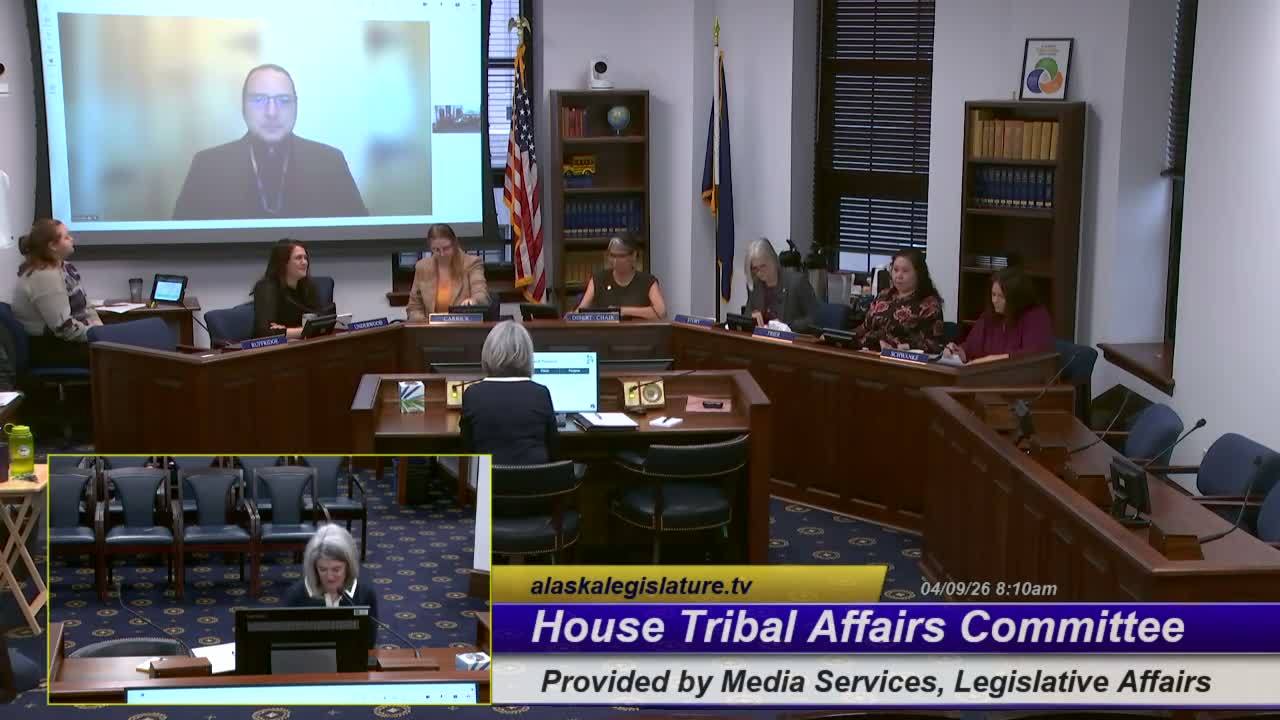
Department of Education and Early Development officials on Thursday told the House Tribal Affairs Committee they are moving forward on implementation steps after HB 26 transferred the Council for Alaska Native Languages to DEED.
"The bill passed in May 2024. It was signed into law in June 2024, and the funding for the position officially transferred to DEED in November," said Dr. Monica Goyette, DEED's director of innovation and education excellence. She told the committee DEED has created a full‑time position and is awaiting approval to make an offer, and is also recruiting for an existing 0.5 Alaska Native language position vacated in December.
The presentation traced the law’s intent and practical next steps. Dr. Joel Isaac, who teleconferenced from Kenai, said HB 26 both expanded the list of officially recognized Alaska Native languages and repositioned the council to better align language preservation with K–12 instruction. "One of the things HB 26 did was add additional languages to the list of official native languages in the state," Isaac said, noting the bill recognized finer distinctions among language varieties such as Middle and Lower Tanana and added languages like Chupik and Wetaaf.
Why it matters: committee members and presenters said aligning the council’s work with the education division will help connect language revitalization with curriculum, assessments and teacher supports. The department highlighted four strategic priorities and a draft strategic plan shaped by input from language workers, tribes, districts and university partners.
Key program elements and deadlines
- Staffing and recruitment: DEED said funding from the Department of Commerce supported a research-analyst position but the department established a new full‑time role to meet its implementation needs. The department expects hire-approval from the Department of Administration this month.
- Standards and assessment: DEED has added Alaska Native Language Arts K–12 standards and is developing literacy screeners (LSAIL) in partnership with the University of Oregon. Isaac said LSAIL is being tested in Yupik, Shupik (Yup'doon), Inupiaq and Linguette in four districts, and expanded in 2026 to include Gwich'in and Dena'ina, with a long‑term target of 10 languages.
- Guidance on waiver processes: DEED and partner consortia are developing a readiness framework to align with the Reads Act and to advise districts on waiver procedures where English screeners do not apply.
Committee questions and clarifications
Committee members asked about the Alaska Native Language Center (ANLC) at the university and whether recent university restructuring weakened research and preservation capacity. Representative Kerrick said the ANLC's perceived downsizing has raised concern; Isaac replied that partnerships with the language center and archive have been ‘‘somewhat of an organic process’’ and that clearer institutional focus and designated staff or director roles are important for producing research and publications.
Members also pressed for details on which districts participate in the literacy-screener pilot; Isaac named the Lake and North Slope Borough districts (LKSD), Nome, Juneau and said he would follow up on the fourth pilot district "to avoid giving wrong information".
What DEED will do next
DEED said it will continue recruitment, finalize the hire approval for the full‑time position transferred with HB 26 funding, expand literacy-screener implementation, facilitate a native-language community of practice, and support the Alaska Native Language Summit on April 30, 2026, at the Dena’ina Wellness Center.
The committee scheduled follow-ups with DEED and with university partners to clarify staffing, training and enrollment data.
Ending
DEED concluded its presentation and the committee moved to questions; the chair then transitioned to a separate agenda item on marine debris and HJR 37.