Get Full Government Meeting Transcripts, Videos, & Alerts Forever!
Get email alerts on the Probate Guardianship topic
No spam. Unsubscribe anytime.
Committee hears broad probate and guardianship reforms; technical corrections bill passes unanimously
Summary
Lawyers and bar association representatives detailed SB 71’s proposed guardianship task force, higher minor settlement threshold ($25,000), UTMA payout flexibility and technical trust law fixes; the committee also approved a technical corrections bill (SB 80) by unanimous voice/roll call.
The Senate Judiciary Committee on the same agenda considered two bills affecting probate and guardianship law and a short technical corrections bill.
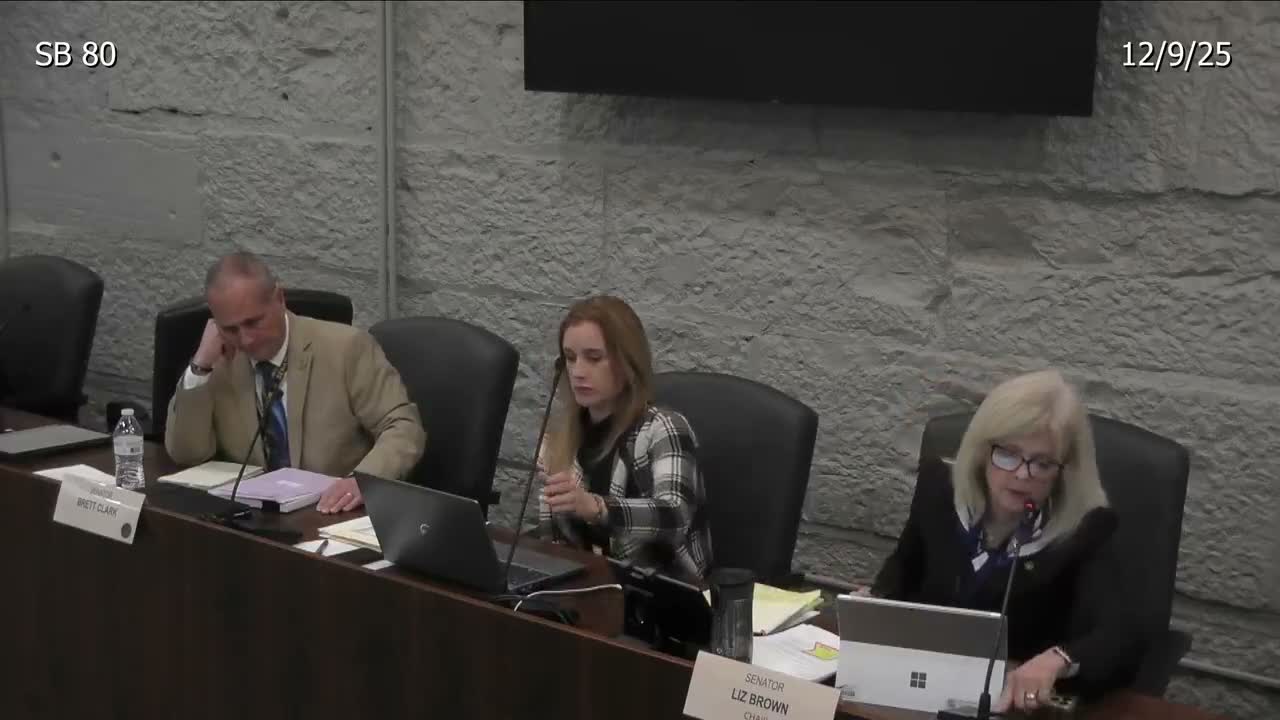
Senate Bill 80, described as a technical corrections measure, was moved by Senator Greg Taylor and passed on a unanimous committee roll call (8–0). Chair Liz Brown said SB 80 contains only technical changes.
Senate Bill 71, presented by Jeff Bridal of Frost Brown Todd on behalf of the Probate, Trust and Real Property section of the Indiana State Bar Association, lays out six discrete proposals to modernize and clarify existing guardianship and probate provisions. Bridal told the committee the bill’s longest portion would create a Guardianship Code Revision Task Force to study and recommend recodification of Indiana’s guardianship statutes (many dating from 1988). The task force, Bridal said, would represent judges, social‑service agencies, elder‑law and probate attorneys and legislators and could file a first status report by November 1, 2027 (with a second reporting option if more time is needed, allowing introduction in 2028 if appropriate).
On minor settlements, Bridal explained that current Indiana law lets a parent or custodian settle an unliquidated, undisputed amount of $10,000 or less without court involvement — a figure unchanged since 2001. SB 71 would raise that ceiling to $25,000 and add cross‑references making custodial UTMA accounts an explicit settlement option; the bill retains court approval when amounts are disputed.
Bridal also described amendments to the Indiana Uniform Transfers to Minors Act (UTMA) to allow custodians greater flexibility to disburse funds before age 21 to education savings plans, appropriate special‑needs trusts and pooled trusts (including Master Trusts used by disability service providers) and ABLE accounts for qualifying disabilities. He argued those options would spare families unnecessary court filings while protecting beneficiaries’ eligibility for public benefits where appropriate.
The bill includes technical fixes to rule‑against‑perpetuities language to avoid unintended estate‑tax consequences where powers of appointment are exercised — changes the bar association recommended to avoid what Bridal called “a trap for the unwary.” SB 71 would also narrow an expansive 2024 prohibition on predatory long‑term residential real estate service agreements by adding a twelfth exception for limited family/guardian/attorney arrangements designed to preserve homeownership while allowing for care and upkeep under constrained circumstances.
Committee members asked detailed questions about judicial hearing requirements for minor settlements, the effect of raising the $10,000 ceiling to $25,000, and the practical options judges would have for safeguarding a minor’s funds (UTMA custodial accounts, trusts that last past age 21, or other protective orders). Bridal indicated the bill maintains court oversight for disputed claims and provides options where a guardianship is not necessary.
The committee moved SB 71 and — after some scheduling/hold time while a member returned — recorded the measure as 8–0 in committee. Supporters emphasized that these are largely technical and modernization changes shaped with input from the probate study committee and the bar association.
Next steps: SB 71 will proceed to the next stage per committee rules; sponsors said they will continue stakeholder engagement before possible floor introduction in the specified session window.