Get Full Government Meeting Transcripts, Videos, & Alerts Forever!
Get email alerts on the Immigration Enforcement topic
No spam. Unsubscribe anytime.
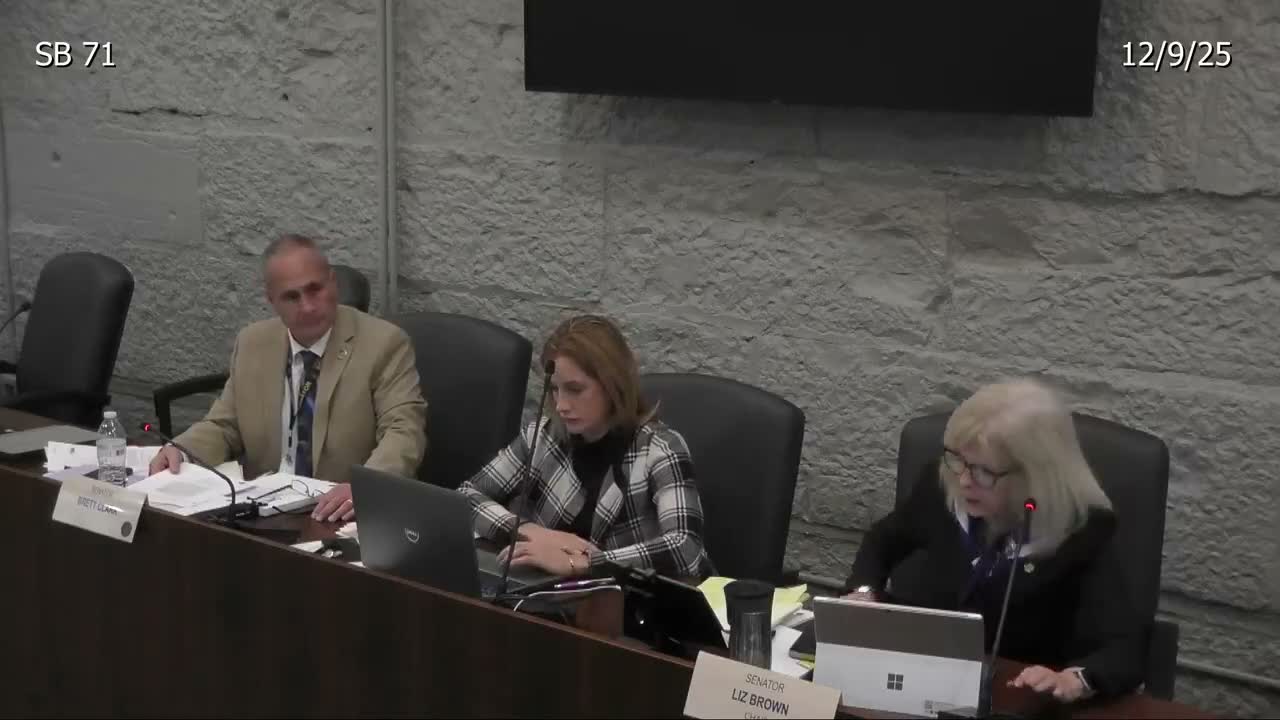
Senate Judiciary Committee advances amended immigration enforcement bill after hours of testimony
Summary
After hours of public testimony and legal questions from the Attorney General’s office and immigration lawyers, the Senate Judiciary Committee advanced SB 76 in amended form on a 6–2 vote; supporters emphasized training and standardization, opponents warned of constitutional and privacy conflicts.
The Indiana Senate Judiciary Committee on a largely party‑line 6–2 vote advanced Senate Bill 76, an immigration enforcement measure amended in committee after hours of public testimony and legal pushback.
Chair Liz Brown opened the hearing by describing the bill’s intent: to coordinate state and local enforcement with federal immigration authorities, require annual reporting on benefit usage by agencies, and place training oversight for detention and jail procedures with the Department of Corrections. “What we’re asking here today is that we follow the laws that are on the books,” Chair Brown said during debate on the floor of the committee.
Immigration lawyers and civil‑rights groups urged the committee to reject or substantially rewrite SB 76. Rachel Van Tile, director of legal services at Exodus Refugee Immigration and chair of the Indiana chapter of the American Immigration Lawyers Association, said a key disclosure provision (Section 9) would violate federal program confidentiality rules and HIPAA if the data were used for immigration enforcement. “Medicaid immigration status is generally seen as protected health information,” Van Tile testified, and the use of SNAP and Medicaid data for enforcement, she argued, is not consistent with federal program administration limits.
The Attorney General’s office, through Erin Tuttle, formally opposed the bill and suggested it risked constitutional or preemption challenges if left in its current form. Tuttle told the committee that the state’s preferred alternative — the so‑called Fairness Act — contains employer‑focused enforcement mechanisms she viewed as more constitutionally sustainable. “By imposing civil penalties and enforcement frameworks that federal law likely preempts, this bill would be litigated and we would likely lose,” Tuttle said, urging lawmakers to consider alternatives that use license sanctions and other mechanisms recognized by courts.
Local law enforcement and county officials testified in support, pressing for training, consistent standards, and clearer procedures for detainer requests and jail inspections. Bob Goldsmith, president of the Indiana Sheriffs Association and Tippecanoe County sheriff, said the bill would create uniformity and provide training that many local jails lack. “This will put everybody on the same page,” Goldsmith said, urging standardization and DOC oversight for training.
Public commenters offered sharply divergent views. Advocates from immigrant‑serving organizations warned SB 76 would undermine trust in police and chill reporting of crimes and services—Carolina Castoreno of ALMA warned it would turn schools and local police into “extensions of federal immigration enforcement.” Conversely, speakers who support stricter measures argued the bill must close perceived loopholes in employer enforcement and allow state officials to inspect and report on use of state benefits.
Committee debate focused on two linked themes: whether the bill’s disclosure and enforcement provisions conflict with federal law, and whether the state can or should expand local agency duties without additional resources or statutory clarification. Several senators said they supported the bill’s training and oversight language but asked for further narrowing to avoid federal preemption and to protect due‑process rights.
After debate, the committee adopted an amended version and advanced SB 76 on a recorded roll call of 6 in favor and 2 opposed. The committee inserted DOC training and jail inspection language, and included reporting requirements intended to be anonymized for legislative counsel review. The committee’s amendment also adjusted implementation and oversight provisions; sponsors said they will continue to work with the Attorney General’s office and state agencies on specific language before later floor action.
Next steps: the amended SB 76 was reported out of committee and may be scheduled for further floor action; sponsors and critics indicated additional amendments were likely as the bill proceeds through the legislative process.