Get Full Government Meeting Transcripts, Videos, & Alerts Forever!
Get email alerts on the Unsheltered Homelessness topic
No spam. Unsubscribe anytime.
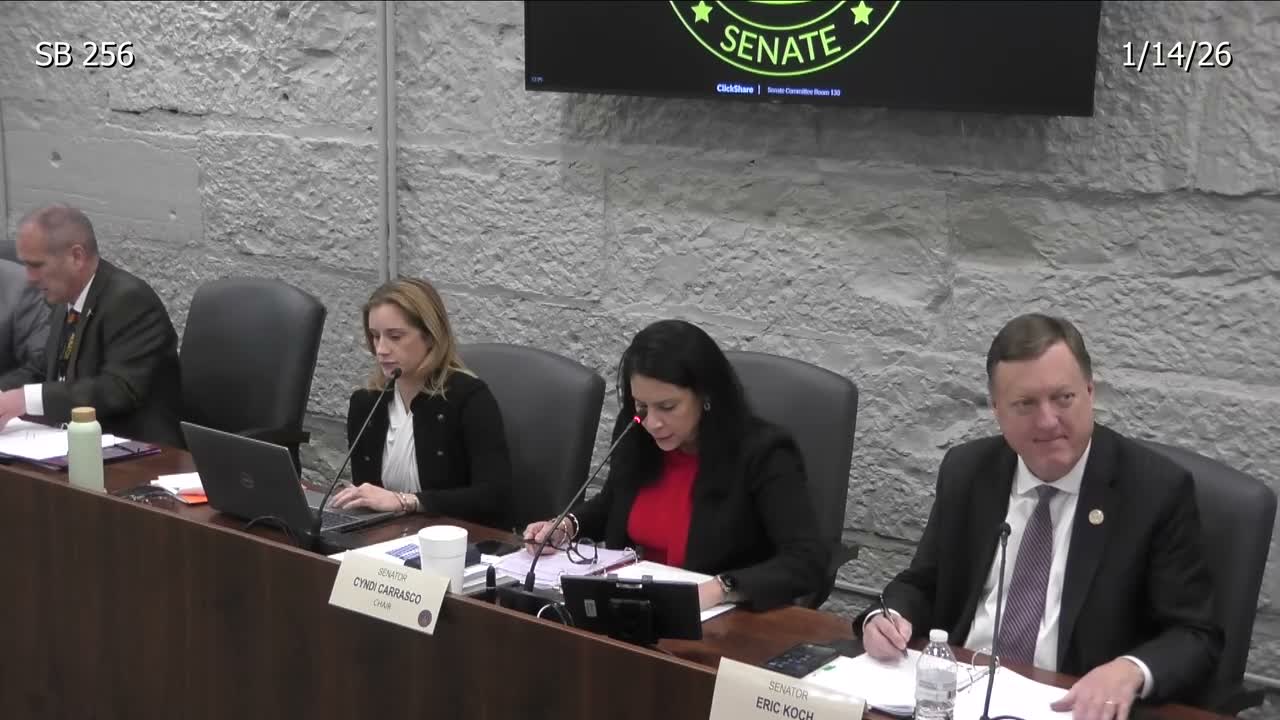
Chair Carrasco's homelessness bill advances after hours of testimony and amendments
Summary
SB 285, introduced by Chair Carrasco, would make public camping unlawful while prescribing outreach, reporting, and a misdemeanor enforcement process designed to compel services for the chronically unsheltered; witnesses split sharply, amendments extended the required move time to 48 hours, and the committee advanced the bill 8–2.
Chair Carrasco introduced Senate Bill 285 as a statewide response to unsheltered and chronic homelessness, saying the measure prioritizes outreach and intervention while setting statewide rules on camping in public spaces. "This bill is structured so that initial interactions are focused on intervention rather than punishment," the chair said, adding the bill includes misdemeanor provisions intended as a last-resort tool to create moments for outreach and diversion.
Opponents from service organizations, faith groups and providers urged rejection. Brian Moschel of Indiana United Ways warned SB 285 would divert limited public and philanthropic funding to enforcement and short-term cleanups rather than housing-first solutions, saying fines and criminal records impede long-term exits from homelessness. Rabbi Aaron Spiegle and Chelsea Herinkosi (CEO, CHIP Indy) described local initiatives—Streets to Home Indy among them—that pair rapid outreach, housing navigation and intensive services and said those models reduce homelessness without criminalization.
Service providers and advocates repeatedly flagged capacity constraints: Emmy Hildebrand of HVAF and other providers said shelter and program openings are limited and that many veterans and unsheltered people are already engaged with providers. They warned misdemeanor charges and fines would disrupt trust between outreach workers and clients and could increase barriers to housing placement.
Supporters including Michael McQuillan (IHCDA), Paul Webster and Devin Kurtz (Cicero Institute) argued the bill improves accountability and data collection, allows the state to track the effectiveness of Continuum of Care funding, and would protect public safety and vulnerable people in dangerous encampments. McQuillan described new data-sharing and reporting requirements for IHCDA and the state's continuum of care programs intended to measure program effectiveness.
The committee adopted two sponsor amendments by consent: one clarifying prosecuting-attorney language and a second extending the mandated turnaround time for a move from 24 to 48 hours. During discussion senators pressed on local preemption, jail and court impacts, funding and whether the bill would hinder existing local models. Chair Carrasco and supporters said the intent is to target a small subset of repeat encounters and to preserve local programs and outreach.
After debate the committee voted to advance the amended bill on an 8–2 roll call. Sponsors and opponents said further drafting and funding discussions will be needed as the bill moves forward.