Get Full Government Meeting Transcripts, Videos, & Alerts Forever!
Get email alerts on the Foreign Influence topic
No spam. Unsubscribe anytime.
Sen. Sarah Garten pitches bill to register agents paid by hostile foreign powers
Summary
Sen. Sarah Garten told the Judiciary Committee SB 256 would force individuals and lobbyists funded by China, Russia, Iran or North Korea to register with the attorney general, disclose payers and file quarterly reports; supporters called it transparency, critics said the definition is too broad. The committee advanced the bill 8–2.
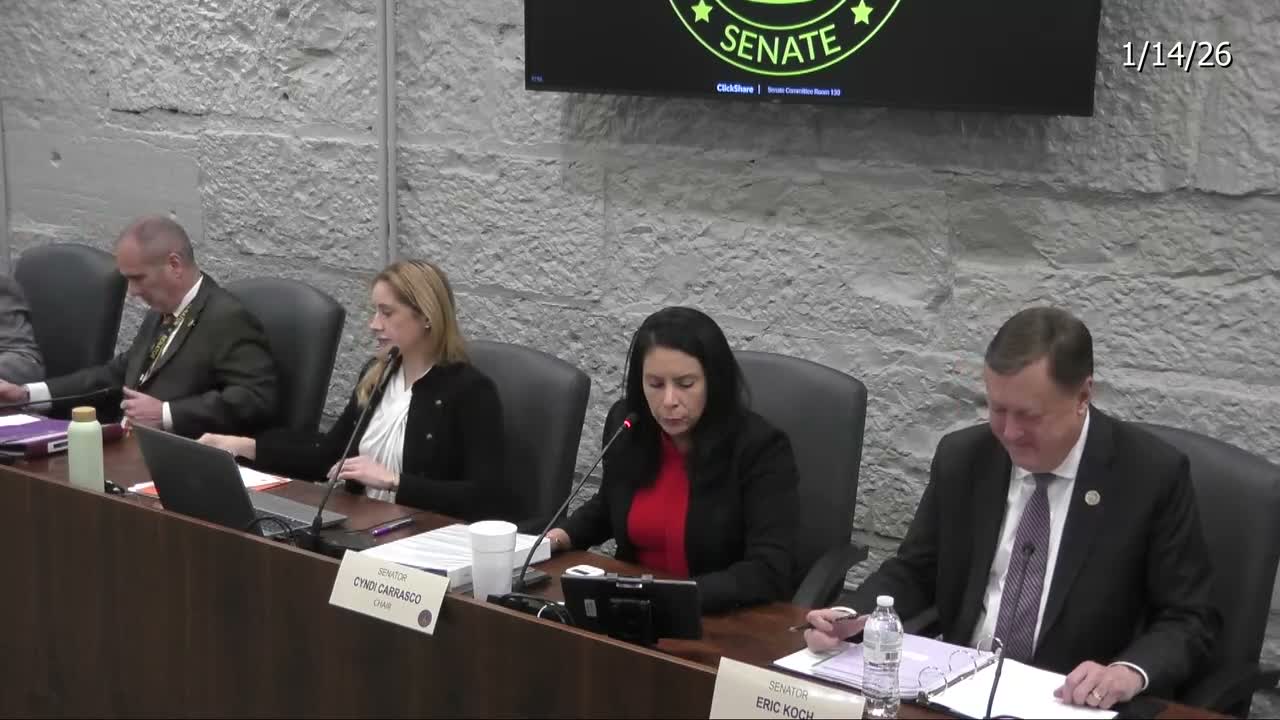
Sen. Sarah Garten urged the Indiana Senate Judiciary Committee to approve Senate Bill 256, which she described as a ‘hostile foreign agent registration act’ that would require anyone paid by a specified hostile foreign principal to register with the attorney general and disclose the source and purpose of that funding. “If you're on the payroll of a hostile foreign regime, you do not get to lobby this state in secret,” Garten said during her presentation.
Garten told the committee the bill targets actors tied to adversaries the federal government identifies—China, Russia, Iran and North Korea—and would require quarterly reports and disclosure of who is paying an agent and what they seek to achieve. The measure includes civil penalties (Garten cited up to $10,000) and, in willful or repeated violations, a civil process that could bar an individual from lobbying in Indiana.
Proponents framed the bill as a transparency tool. Matt Bell, a principal at Catalyst Public Affairs Group appearing for State Shield, said the measure brings foreign-directed political activity into the open: “This bill is simply about transparency and disclosure,” Bell said, and urged the committee to support rules that let Hoosiers know who is being paid to influence state policy. Erin Tuttle, speaking for Attorney General Todd Rokita, described the AG's role as administrative and civil—receiving and supplementing registration statements and enforcing truthful disclosure rather than regulating viewpoints.
Opponents and some senators raised drafting concerns about scope and definitions. Senator Brown asked how the bill's definition of “political activity” would apply to everyday business interactions and whether firms or their employees could be swept in. Senator Glick posed a practical example: a farmer whose business has a contract with a Chinese corporation while a spouse sits on a county council. Garten replied the bill applies where an individual is engaged in political activity at the direction of or financed by a hostile foreign principal and said the author and stakeholders are open to clarifying language to limit unintended reach.
The committee debated whether existing lobbying disclosures already cover some activity and whether the bill's definition is sufficiently narrow to avoid ensnaring ordinary commercial actors. Several senators said they support the intent but want tightening of the language.
The committee voted to move SB 256 forward on an 8–2 roll call after discussion. The bill will proceed for additional consideration and any drafting corrections the committee requests.