Get Full Government Meeting Transcripts, Videos, & Alerts Forever!
Get email alerts on the Housing Policy topic
No spam. Unsubscribe anytime.
Committee advances sweeping housing bill after marathon testimony from towns and developers
Summary
House Bill 10‑01, amended to convert many provisions to opt‑out and to add reporting requirements, advanced from committee after more than 20 witnesses testified for and against the measure. Local officials warned it would preempt local zoning and strain infrastructure; builders and advocates said it would increase supply and reduce regulatory cost drivers.
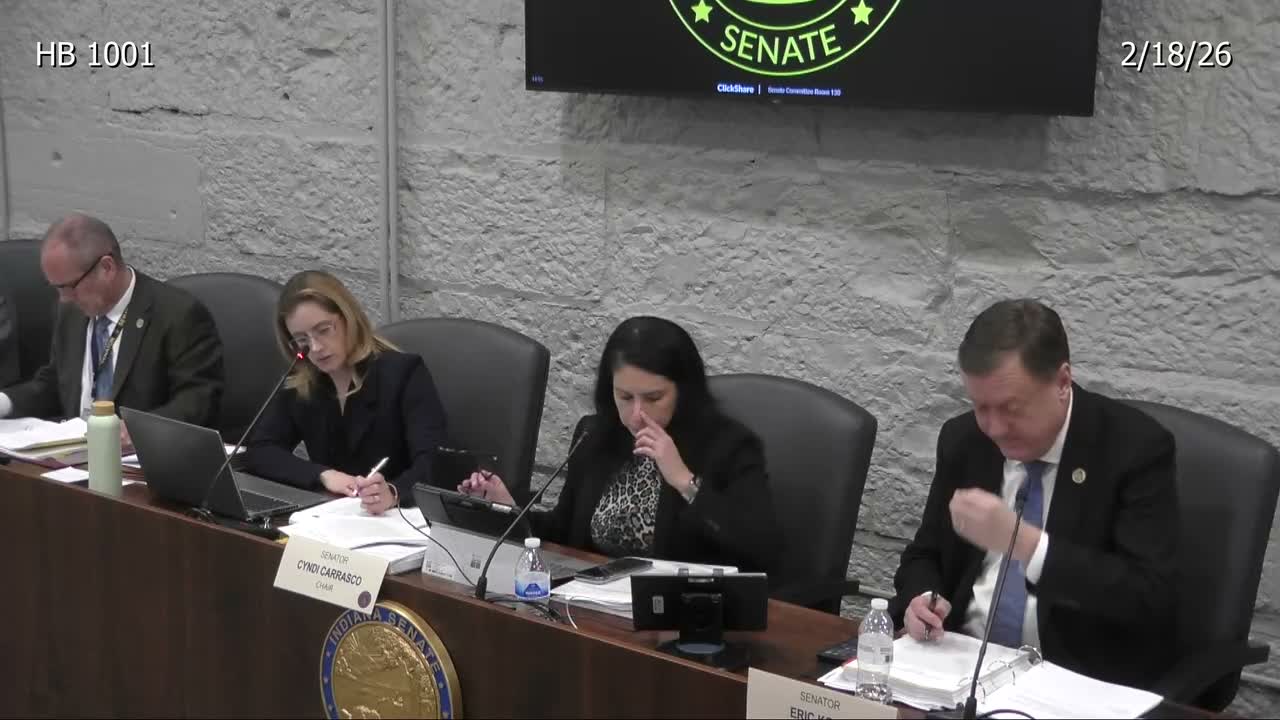
The Senate Judiciary Committee spent a large portion of the hearing on House Bill 10‑01, an administration‑backed housing bill amended in committee (notably amendment 8) to make many provisions opt‑out and to add a housing‑progress reporting mechanism.
Representative Miller, the bill’s sponsor in the House, said the amendments "make provisions opt out" so local governments can retain discretion but that statewide reporting and permitted‑use changes are needed to accelerate housing production. He described permitted uses (for example, allowing at least two single‑family dwellings or a duplex by‑right in residential zones, and conversion of commercial to residential in some areas) and said the measure removes certain regulatory barriers while preserving local opt‑outs.
Local elected officials and planning professionals provided extended opposition testimony. Susie Weierk, president of the Indiana County Commissioners, told the committee Elkhart County opposes the bill even with amendments, arguing the measure would "remove that process" of local zoning and eliminate public input; she urged rejection and asked for more specificity on reporting and savings passed to buyers. County commissioners and mayors repeatedly raised infrastructure concerns (septic, wastewater, road capacity), limits on impact fees and restrictions on local fee authority, and the removal of public hearings for some projects.
Representatives of the home‑building industry, Habitat for Humanity, the Indiana Apartment Association and the Indiana Association of Realtors supported the bill’s goals, saying regulatory costs add to development expense and that the state needs tools to increase production. The Apartment Association said regulatory requirements make up a large share of development cost and applauded the opt‑out reporting approach.
Representative Miller explained the housing progress report would require local units to submit application and approval counts, processing days, and impact‑fee details to the Legislative Services Agency so the state can track whether the reforms produce additional units. After hours of testimony and questions, the committee voted to move the bill to the floor on a close roll call (transcript records a 6–5 committee vote to advance the bill).
What happens next: The bill advances to the Senate floor; sponsors said they would continue stakeholder discussions and use the reporting requirements to identify needed refinements.