Get Full Government Meeting Transcripts, Videos, & Alerts Forever!
Get email alerts on the Civil Rights topic
No spam. Unsubscribe anytime.
Panel hears ICRC director as committee advances bill clarifying commission’s role
Summary
The committee advanced House Bill 11‑93, which clarifies the Indiana Civil Rights Commission’s investigatory and representational role and adds an explicit retaliation investigation provision; Director Philip Clay testified supportively and members sought assurances that federal contracts (HUD) would not be jeopardized.
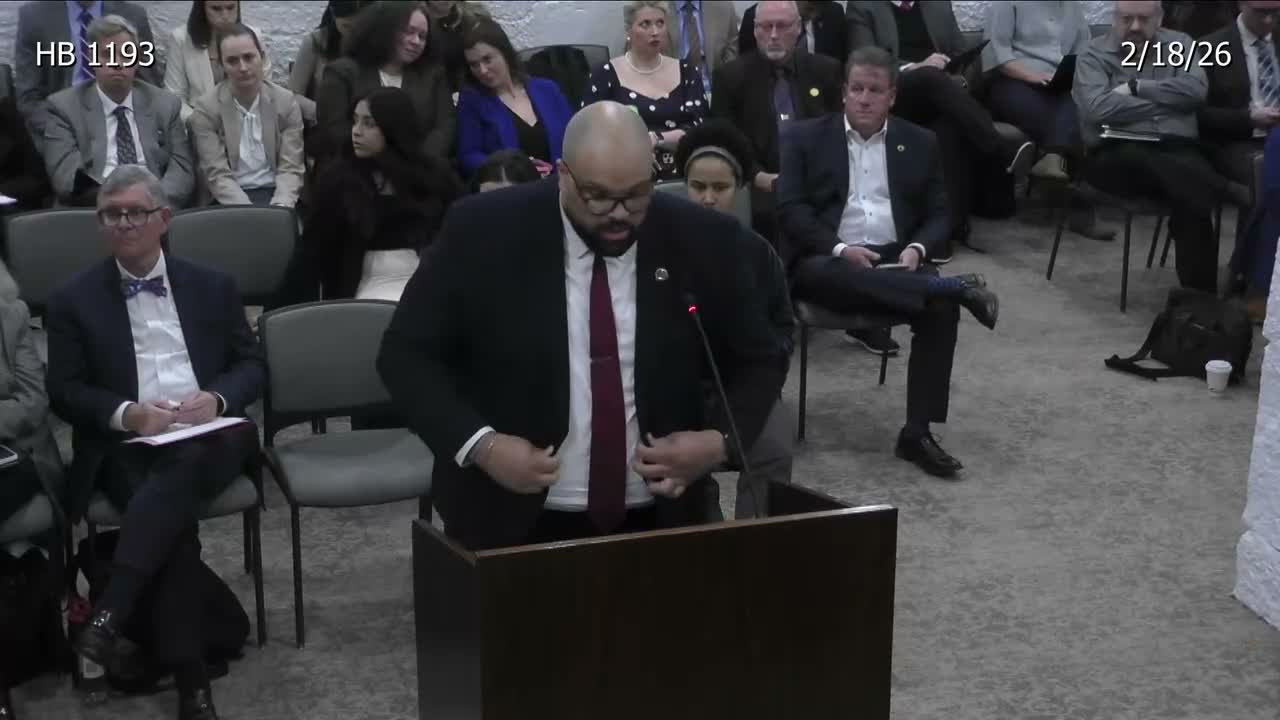
The Senate Judiciary Committee heard testimony from Philip Clay, executive director of the Indiana Civil Rights Commission, and approved House Bill 11‑93 after clarifying amendments.
Director Clay said HB 11‑93 "brings needed clarity, structure, and accountability to how the commission fulfills its responsibilities" and emphasized that the bill "makes it clear that the commission does not act as private legal counsel for individuals in court" while preserving the commission’s ability to enter into interagency memoranda of understanding.
Committee members expressed concern that placing the practice in statute could imperil federal reimbursements for certain dual‑filed cases (for example, HUD partnerships). Clay and the commission’s general counsel, Scott Bridal, repeatedly told senators that the measure codifies current practice: the commission pursues the public interest and examines retaliation claims while federal partners retain jurisdiction where appropriate.
After questioning and a brief exchange about the commission’s intake and adjudicatory processes, the committee took the amendment by consent and advanced the bill on roll call (committee recorded vote noted in the transcript, 9–2 for the amendment and subsequent approval to advance). Committee members requested additional explanatory language for the record and the sponsor said staff would follow up if any federal‑contract language needed tailoring.
What happens next: HB 11‑93 moves to the Senate floor; committee sponsors have indicated willingness to refine statutory language on second reading if necessary to address federal‑reimbursement concerns.