Get Full Government Meeting Transcripts, Videos, & Alerts Forever!
Get email alerts on the Child Welfare topic
No spam. Unsubscribe anytime.
Committee advances bill clarifying children’s ordinary independence is not neglect
Summary
The Judiciary Committee voted unanimously to advance House Bill 10‑35, which would clarify that age‑appropriate independent activity (walking, biking, brief periods alone, outdoor play) by children is not, by itself, evidence of neglect unless it amounts to recklessness that endangers safety.
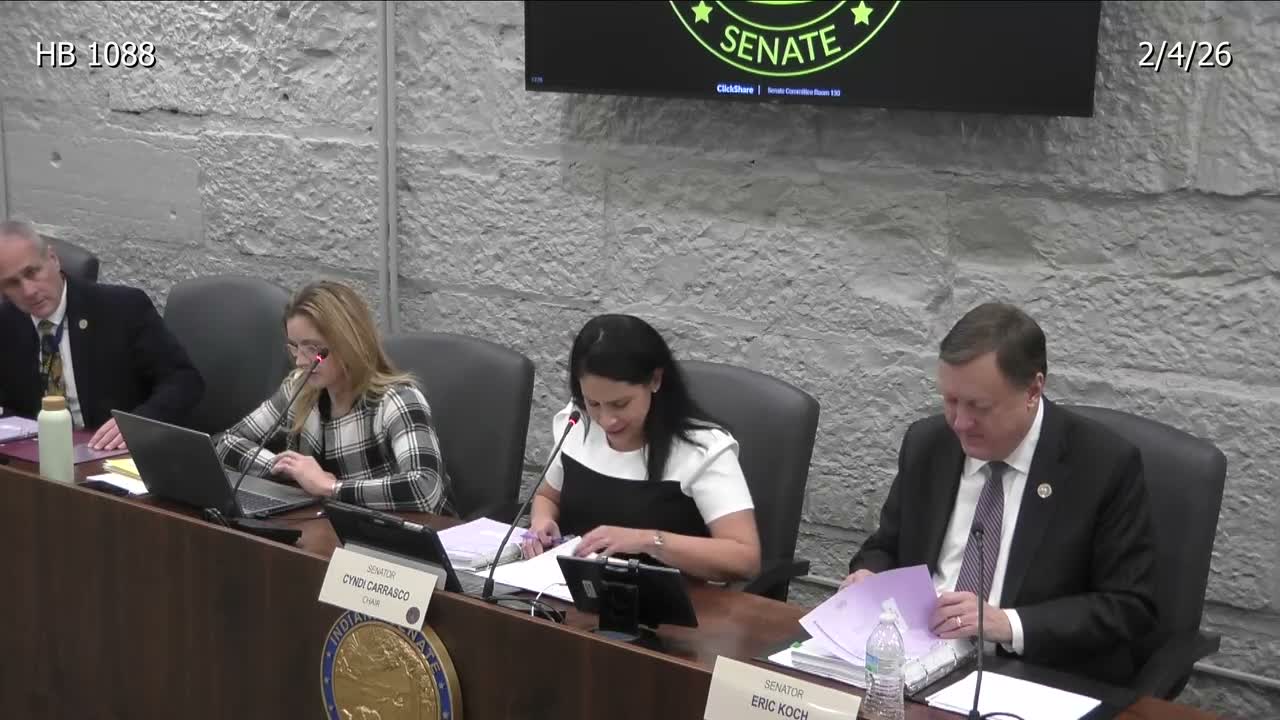
House Bill 10‑35, introduced by Representative Teschka, cleared the Judiciary Committee on a 10–0 vote after a day of testimony that included educators, family‑policy advocates and defense counsel.
Representative Teschka told the committee the bill aims to replace a vague supervision standard with a clearer recklessness/danger test so parents can reasonably know when state intervention is warranted. “The standard should always be danger, not disapproval,” Teschka said, adding the measure is not intended to expand parental immunity or weaken neglect statutes.
Cindy Long, testifying for the Indiana Association of School (self‑identified), said educators are mandated reporters who sometimes must file investigations when ordinary independence is treated as danger. “House Bill 10‑35 helps to clarify and correct that assumption by making it clear that independence alone does not constitute neglect,” Long said, arguing the change would reduce unnecessary referrals while preserving safeguards for genuinely dangerous situations.
Corinne Youngs of the Indiana Family Institute spoke in support, saying the bill reserves state intervention for “situations involving real danger, not fear, speculation, or subjective disagreement about parenting decisions.” Zach Stock of the Indiana Public Defender Council also voiced support for the clarification.
Committee members asked clarifying questions about how the bill defines independent activity and its interaction with existing Department of Child Services (DCS) practice. Representative Teschka said the bill sets a concrete definition including walking, biking and brief unsupervised periods, and applies a recklessness standard that accounts for a child’s maturity and ability.
With bipartisan support, the committee moved and seconded the bill and recorded a unanimous roll call. The committee now sends the measure to the next stage of consideration.