Get Full Government Meeting Transcripts, Videos, & Alerts Forever!
Get email alerts on the Reproductive Health topic
No spam. Unsubscribe anytime.
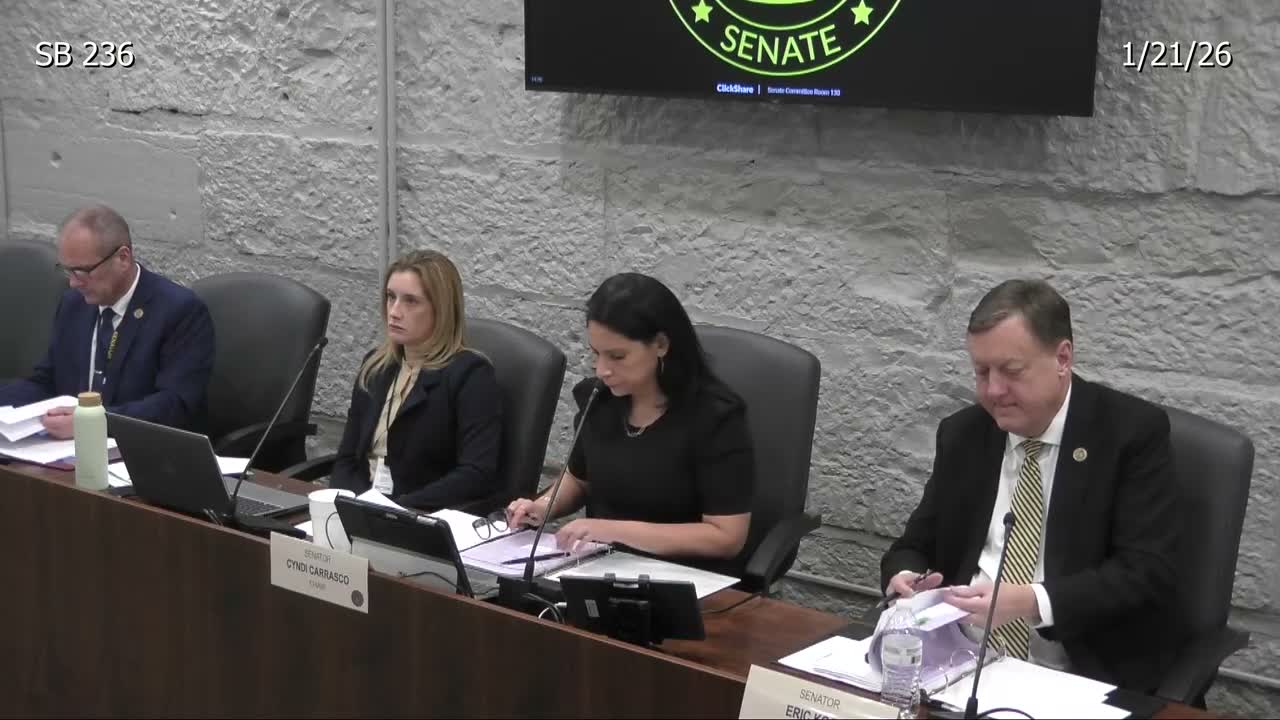
Committee advances sweeping bill on abortion drugs, reporting and private enforcement after hours of testimony
Summary
Senate Bill 236, which would restrict distribution of abortion-inducing drugs, create new private civil liability related to their distribution and revise where termination-of-pregnancy reports are sent, advanced out of committee after extensive testimony from medical professionals, advocates, carriers and legal experts; the committee recorded a 7-4 vote to move the bill forward.
Senate Bill 236, a broad measure addressing the distribution of abortion-inducing drugs, termination-of-pregnancy reporting and a private right of action, advanced from committee after several hours of testimony and extensive questioning.
Sponsor Senator Johnson said the heart of the bill is section 15's effort to close what he described as a perceived loophole related to mailing and shipping chemical abortion drugs into Indiana and to create civil liability for actors who distribute such drugs outside specified exemptions. He said the bill would exempt licensed Indiana physicians and certain other categories but would create specific civil remedies and defined damages for violations.
Witnesses were sharply divided. Dozens of medical professionals warned the bill would create confusion about clinical definitions and could delay or deter clinicians from providing emergency or medically necessary care. Dr. Nicole Scott, an OB-GYN and residency program director, said the measure "attempts to redefine the term abortion in a way that does not align with how pregnancy complications are diagnosed and treated in practice," and warned that conflict with Department of Health guidance could worsen access in maternity deserts. Dr. Erin Lipps, a gynecologic oncologist, described a patient whose care was delayed and said the change in statutory definitions could intimidate clinicians and increase morbidity and mortality in some clinical cases.
Several witnesses urged confidentiality for termination-of-pregnancy reports (TPRs) and abortion-complication reports. Victim advocates and clinicians emphasized that TPR content can be identifying in rural communities and that routing reports to the Inspector General raised privacy concerns; other witnesses representing the Attorney General's licensing enforcement section and the AG's office said their ability to investigate alleged illegal abortions has been limited by lack of access to TPRs and suggested mechanisms to allow targeted review.
The bill contains a qui tam-style provision that drew repeated concern from witnesses and committee members: critics said the private-enforcement structure with a large statutory award and one-way attorney-fee shifting could create an explosion of litigation and impose significant costs on defendants, while supporters said it would deter bad actors shipping drugs into the state.
Common carriers and logistics representatives urged stronger statutory protections for carriers that follow standard procedures, saying they cannot reliably determine the legal status of a given shipment. UPS's representative asked for clearer exemptions so carriers would not face unintended liability.
Committee members probed clinical scenarios (molar pregnancies, septic abortion, miscarriage management), cross-border implications and whether TPRs should be made public or provided confidentially to enforcement offices. Multiple members urged additional drafting work; others said the bill addresses real enforcement problems. After extended debate, the committee advanced the measure by a recorded vote of 7 to 4 on first reading. Sponsors and some committee members signaled plans for technical amendments before second reading.