Lifetime Citizen Portal Access — AI Briefings, Alerts & Unlimited Follows
City of Victoria council weighs parking deck, TIF and management options as downtown grows
Loading...
Summary
At a council workshop, City Manager Dana Hardy walked the council through parking studies dating to 2018 and options ranging from management strategies to a potential parking structure. Council members favored updated utilization counts and public listening sessions before pursuing bonding or TIF commitments.
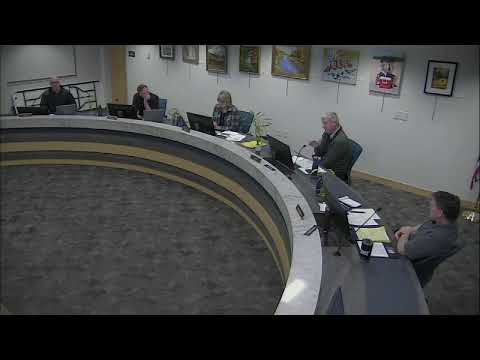
City Manager Dana Hardy presented a decade-long record of downtown parking studies and management actions Wednesday night as the Victoria City Council weighed whether to revisit a city-led parking structure highlighted by recent redevelopment proposals.
Hardy told the council the city's parking strategy is rooted in the 2008 master plan's emphasis on walkability and preserving "the Victoria experience," and that the 2018 parking study found peak utilization around 75% — a level that "just doesn't warrant new supply" in the study team's view. "The consistent finding has been that downtown parking concerns are driven more by proximity than actual capacity," Hardy said.
Hardy summarized the inventory and recent changes: the 2018 analysis counted about 445 spaces within roughly a one-eighth-mile walking radius of the core, of which about 48 were private and some 397 were publicly available. Staff said the city has added 81 spaces since 2018 and expects roughly 90 more from development in the next 12'18 months, which staff said would likely keep capacity stable or improved without a new structure.
Engineering work done in 2019 by an outside firm evaluated two ramp concepts near Rose Street. A two-level concept on the Rose Street lot would yield approximately 167 spaces (a net gain of about 83), while a larger three-level option might reach about 294 stalls. Hardy presented construction-only cost ranges (2019 dollars) of about $5'$6 million for the smaller concept and $7'$8 million for the larger concept, and noted these estimates omit design, permitting, acquisition, inflation and other soft costs.
Hardy also reviewed funding and operating implications. Staff estimated two illustrative bond scenarios: a $3.5 million bond that would add roughly $300,000 a year (about a 3.34% levy increase, to a projected 13.17% levy in 2027) and a $6 million bond adding roughly $510,000 a year (about a 5.68% increase, to 15.51%). Maintenance for an 84-stall ramp was estimated at roughly $10,000 annually (excluding utilities, insurance or elevator costs). Technology and enforcement options previously considered included sensor or camera systems; staff noted earlier order-of-magnitude technology costs in the $100,000'$120,000 range for roughly 300 spaces plus ongoing service fees.
Hardy explained other constraints: rooftop parks and skyway connections would not be eligible TIF costs under state law and would require separate funding, and the city's downtown tax-increment financing districts ("The Flats" and Rose Street) have not yet generated sufficient increment to cover debt without temporary property-tax support, a pattern staff said could extend to the 2030s in current projections.
Timing was a central concern. A proposed Victoria Condos project could be added to a modified TIF district only before permits are pulled; staff said modifying or creating a TIF district requires roughly a 90-day statutory process and $30,000'$40,000 in consultant and legal costs. Hardy told the council the recertification deadline for the RORS district is 04/16/2029, creating a narrow window to act if council wants to capture that increment.
Council members expressed broad agreement on a cautious, data-driven path forward. Mayor McMillan said, "I think it's a proximity problem, and I think it's a time problem," and multiple council members urged updated utilization counts, greater business and resident outreach, and exploring code levers such as employee parking plans and shared-parking policies before committing to large capital investments. Council member Patterson noted that the landscape is changing with several construction projects and cautioned against rushing to bond for a structure that might sit largely unused midweek.
Stakeholders also weighed in. A downtown property owner, Secora, urged the city to capture increment from the condos, saying approximately "$1,200,000 approximately that we can use as taxpayers to fund that bond. If we don't do it, that 1,200,000.0 is gone forever." Staff and council discussed the timing and the risk of spending consultant money when permits might be pulled before a district modification could be completed.
By the workshop's close council members and staff coalesced around near-term actions rather than a structural commitment: staff said an updated utilization study (using the same 2018 methodology) could be done for about $12,500 and that a public listening session and targeted outreach to businesses about employee parking practices should proceed. Hardy said funds exist in the budget for a revised utilization count or the city could use shared-parking funds to cover the work.
The workshop produced no formal direction to build a parking structure; instead the council directed staff to pursue updated data and public engagement so council can weigh whether conditions have materially changed since prior discussions. The body adjourned the workshop and moved on to its regular meeting.