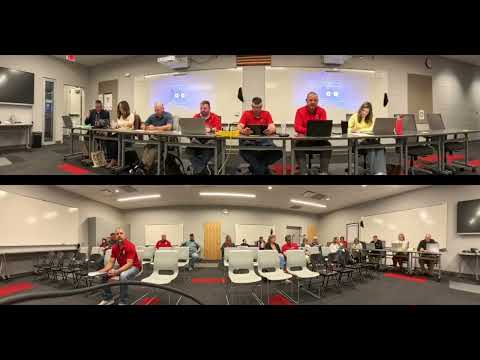
Maintenance head Travis Hayes warns aging HVAC could sideline classrooms; two chillers estimated at $480,000
Loading...
Summary
Travis Hayes, the district's head of maintenance, told the board that much of the HVAC system is past life expectancy, some compressors and refrigerant are unobtainable, and vendor estimates to replace two central chillers are roughly $480,000. Hayes urged proactive replacement to avoid classroom outages.
Travis Hayes, head of maintenance for DAVID CITY PUBLIC SCHOOLS, told the school board that much of the system that heats and cools the district's buildings is at or past its expected life and that component failures are becoming increasingly costly and difficult to repair.
Hayes said several classroom heat-pump compressors are no longer manufactured and "you can no longer get those compressors at once," leaving some units effectively irreparable when a compressor fails. He warned the district faces higher prices and longer lead times because many units still use R-22 refrigerant, which is restricted and harder to obtain since 2020.
"They don't make them anymore," Hayes said, describing failed compressors; "if those compressors go out, those units are irreparable." He pointed to an example at the elementary school in which an energy-recovery unit required custom-fitted electronic fans and a contractor's work that totaled $22,000 for a single repair.
The superintendent summarized vendor estimates for replacing two central chillers that cool the main building at about $480,000. Hayes said the district has seen rising professional repair costs: roughly $28,000 in chiller-specific repairs since the start of last school year and about $68,000 on outside professional HVAC repairs districtwide this past year.
Board members asked about contingency plans if a classroom unit fails in the middle of winter. Hayes said temporary measures such as space heaters are only a last resort and that some classrooms could be out of commission for weeks or months while awaiting parts and installation. He recommended the board consider proactive replacement plans and systems that alternate run-hours between primary and backup units to extend equipment life.
The board did not authorize a capital project at the meeting. Trustees asked the superintendent to include HVAC replacement priorities and up-to-date cost estimates in the district's long-range facility plan so the board can weigh financing options and timing.