Get Full Government Meeting Transcripts, Videos, & Alerts Forever!
Get email alerts on the Tobacco And Vaping Regulation topic
No spam. Unsubscribe anytime.
Senate committee advances bill to tighten e‑liquid rules, ban products from designated foreign‑adversary nations
Summary
The Public Policy Committee passed an amended Senate Bill 185, 9‑0, expanding state regulation of single‑use e‑liquid products, banning e‑liquids manufactured in federal “foreign adversary” nations, creating a wholesale tobacco sales certificate and narrowing certificate renewal windows; the bill was recommitted to Appropriations.
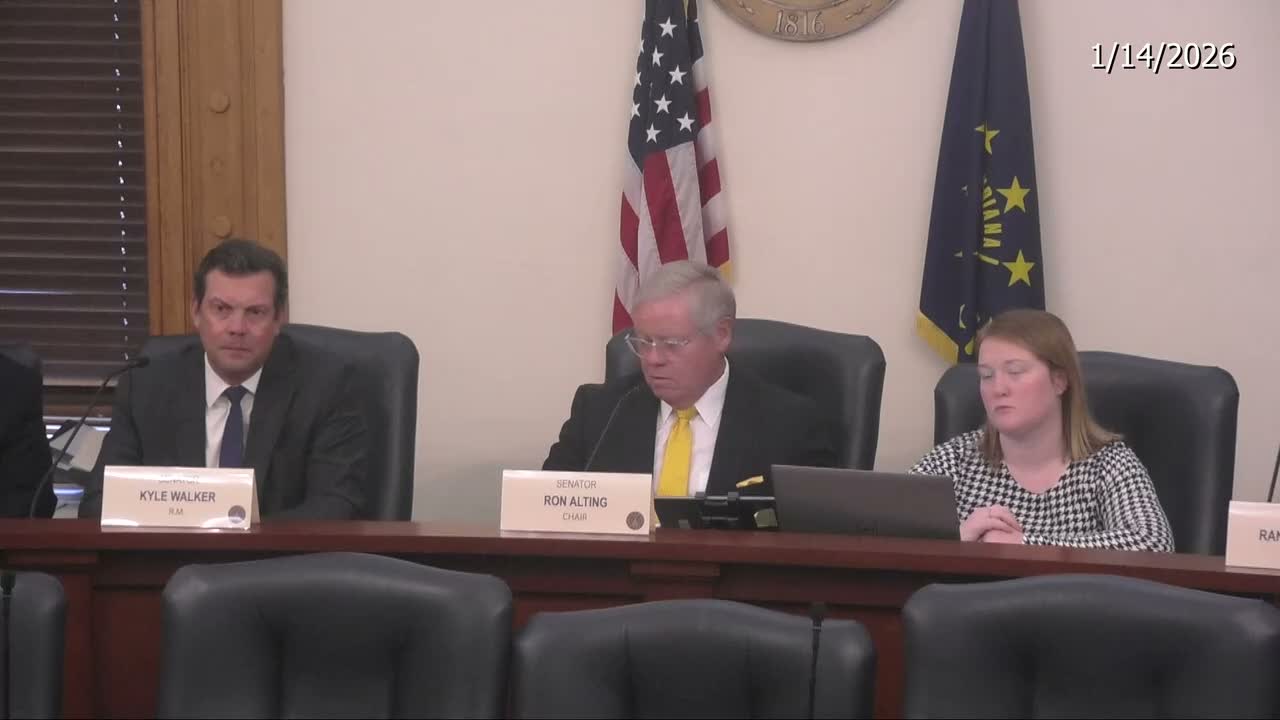
The Indiana Senate Public Policy Committee on a unanimous 9‑0 vote advanced Senate Bill 185 as amended, a measure that would expand state regulation of e‑liquid products, ban imports from countries designated by the federal government as “foreign adversaries,” and give the Alcohol Tobacco Commission (ATC) new authority over tobacco wholesalers.
The amended bill applies manufacturing, labeling and ingredient standards equivalent to FDA requirements to single‑use vape products, a category currently outside state regulation, and clarifies that manufacturers may meet those standards without completing the formal (and costly) FDA approval process, Chris, deputy director of the Alcohol Tobacco Commission, told the committee. “This amendment will modernize Indiana's e liquid statute to catch up with the prevailing marketplace,” Chris said.
Why it matters: Committee members and industry witnesses said the changes aim to protect public health and make enforcement more effective by allowing ATC to vet wholesalers and interdict illicit products at the source. The measure also targets products manufactured or imported from nations designated as foreign adversaries under federal rules (citing 15 CFR 79‑1‑4), a step proponents said will reduce the flow of unregulated, potentially dangerous e‑liquids into Indiana.
Key provisions and clarifications - E‑liquid modernization: The amendment extends state oversight to single‑use vape products and updates statutory terms (it replaces the phrase “vapor product” with “vapor device” to distinguish device from liquid). Chris said the change brings the statute in line with market realities, noting most products today are single‑use. - Foreign‑adversary ban: The bill prohibits sale or importation of e‑liquids manufactured in countries designated by federal authorities as foreign adversaries, language the amendment aligns with the federal citation discussed in committee. - Wholesale tobacco sales certificate: Businesses selling tobacco at wholesale would be required to obtain an ATC wholesale tobacco sales certificate; ATC would gain investigatory authority over wholesalers to identify illicit supply chains rather than chasing products through numerous retail locations. - Enforcement and renewal: The bill allows ATC to suspend a tobacco sales certificate for five days if a certificate holder or its employees violate specified provisions three or more times within a year. It also shortens certificate validity from three years to one, which Chris explained changes the window in which a recent suspension can affect eligibility for renewal.
Industry reaction and concerns Supporters included State Shield (represented by Jackson Aylstock) and retail chain NDE SIGs (represented by Evan Davis), both of whom told the committee the measure balances public safety and support for domestic manufacturers. “We support Senate Bill 185 and the ban on China illiquids,” Jackson Aylstock said on behalf of State Shield.
Mark Webb, an attorney for clients in the alcoholic beverage and retail tobacco sectors, supported the bill’s regulatory thrust but warned that shortening renewal periods could have severe consequences for retailers that receive brief suspensions. He asked whether a short suspension within the one‑year renewal window effectively prevents a permit holder from renewing for a year. Chris acknowledged Webb’s interpretation and explained the amendment’s language would treat revoked or suspended certificates as disqualifying in the prior 12 months; "that what Mr Webb said is an accurate statement," Chris said, prompting discussion about balancing enforcement and fairness.
Vote and next steps The committee approved the amended bill and unanimously voted to recommit it to Senate Appropriations. The roll call showed nine yes votes and no opposing votes; the chair said the measure would go next to Appropriations for further review.
What remains unresolved Committee members pressed the question of fiscal and staffing impact for ATC enforcement; Chris said added investigatory work would create a regulatory cost to the agency, and the chair noted that revenue from shorter renewals would go to the general fund rather than directly to ATC, which committee members said remains understaffed. The committee did not amend the enforcement funding or staffing provisions during the hearing.
The committee adjourned after passage; the bill will proceed to Senate Appropriations for further consideration.