Lifetime Citizen Portal Access — AI Briefings, Alerts & Unlimited Follows
Rules committee advances a package of bills, including doxing, charter-school and vape measures
Loading...
Summary
The Rules and Legislative Procedure committee advanced a slate of conference committee reports and technical fixes to the full chamber by unanimous roll calls, moving bills on doxing, charter-school authorizers, homeowner-association transparency, vaping restrictions and several omnibus fiscal and administrative changes forward.
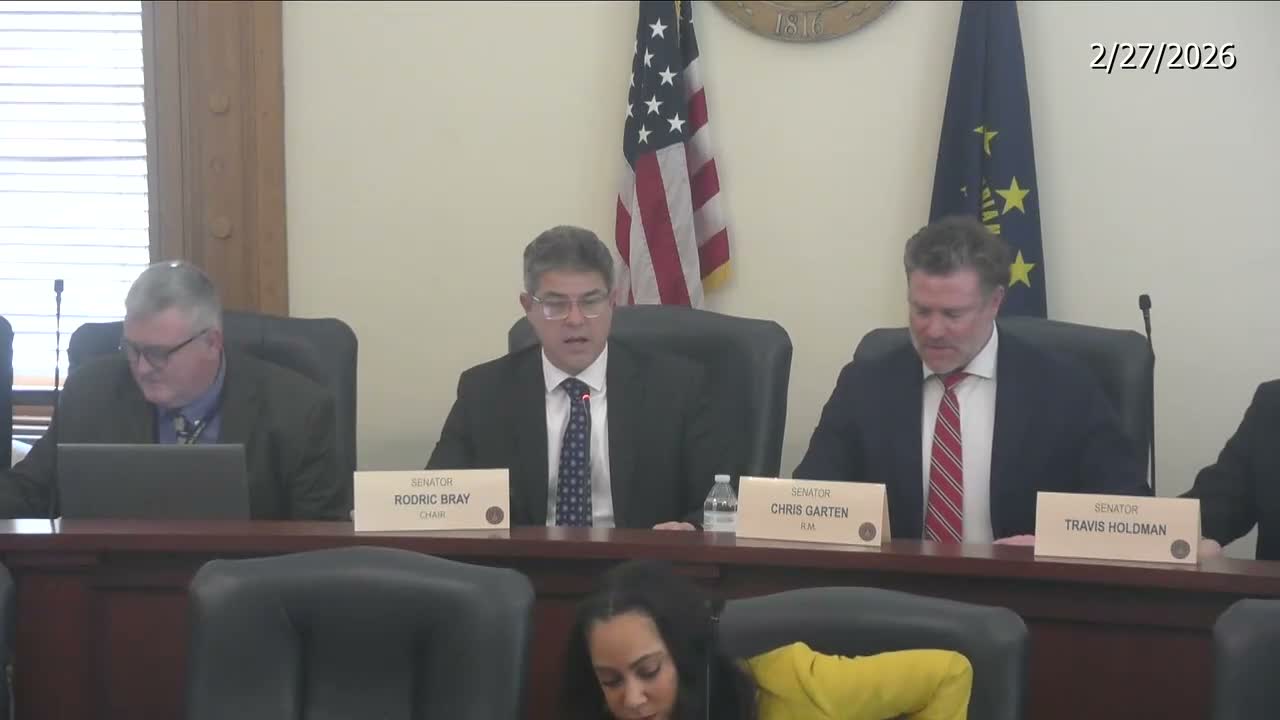
The Rules and Legislative Procedure committee met in its final session to consider conference reports and technical amendments and advanced every item called by unanimous roll calls.
Senator Becker told the committee that Senate Bill 140, described in floor discussion as a "doxing bill," was returned by the conference committee to the Senate text after the House added unrelated drone language and language about railroad‑fatality reporting that the sponsor said belongs in other bills. "It really just returns it back to the provisions that were in it when it left the Senate," Senator Becker said. The committee moved the report and recorded an 11–0 vote to advance the bill.
Senator Rogers presented the conference committee report for Senate Bill 239, which she said clarifies participating innovation network charter school provisions so an organizer may contract with a single governing body or with multiple ones, and prohibits a school corporation's governing body from both being the authorizer and simultaneously entering a participating innovation network charter agreement. Rogers said the change addresses a conflict of interest and that the report also resolves technical conflicts with House Enrolled Act 1423 and restores a county executive appointment requirement to charter boards. After questions about conferee signatories, the committee moved the report and voted 11–0 to advance the measure.
House Bill 1406 was presented as a catchall measure including tax and redevelopment provisions. Senator Holman said the bill adds language to prevent tax credits for entities organized under the laws of certain foreign adversaries, folds in earlier Senate tax language, extends a sales tax exemption for scouting and youth rifle clubs, authorizes an FSSA request for proposals for a SNAP mobile app, and augments a warehouse licensing fund by $300,000. "If there's a bill that was a catch all, for bits and pieces, this is the bill," Holman said. The committee moved and passed the report 11–0.
Senator Freeman summarized House Bill 1249 as containing six provisions: changes to the OWI statute; increased penalties for battery on health‑care and school employees; limitations on publishing personally identifying information about railroad employees involved in accidents; unmanned aerial vehicle provisions; and residency relief allowing prosecutors and public defenders to reside anywhere in the state. The committee moved and passed the report 11–0.
On homeowners associations, Senator Deary described House Bill 1115 as intended to increase transparency around HOA fees and operations and to clarify that some reasonable fees (for example, clubhouse rentals) should still be permitted after conference negotiation narrowed an earlier blanket prohibition. The committee moved and passed the bill 11–0.
Senator Alting summarized Senate Bill 185 (which the senator said had passed the Senate 49–0) as a measure to ban sales of vaping products tied to specified foreign‑adversary countries and to clarify that the vaping statute does not authorize products that contain controlled substances. Alting noted the Alcohol and Tobacco Commission advised the bill would effectively ban many THC vape products that do not meet FDA requirements. The committee moved and passed the report 11–0.
Senator Maxwell outlined House Bill 1003 as a set of technical fixes to boards and commissions: raising experience requirements for certain design professionals, adjusting start dates for the cultural and war-memorials commissions, repealing two boards, clarifying per diem rules, and resizing one professional board. The committee moved and passed the report 11–0.
Senator Rotz presented House Bill 1266, noting it incorporated language from Senate Bill 161 about scholarship‑granting organizations and Pell‑based federal upskilling supports; Rotz said the conference report removed some Department of Corrections provisions and certain transfers of education-related funds. Members asked clarifying questions about training and how federal and state scholarship credits interact; the committee moved and passed the report 11–0.
Finally, the chair described Senate Bill 80 as technical corrections arising from other measures; the committee recorded affirmative votes and adjourned.
The meeting advanced all listed conference reports and technical bills to the chamber by recorded unanimous votes. Where members asked questions, staff or sponsors offered clarifications; the record shows no recorded opposition and no substantive amendments adopted on the floor of the committee. The committee adjourned after completing the listed actions.