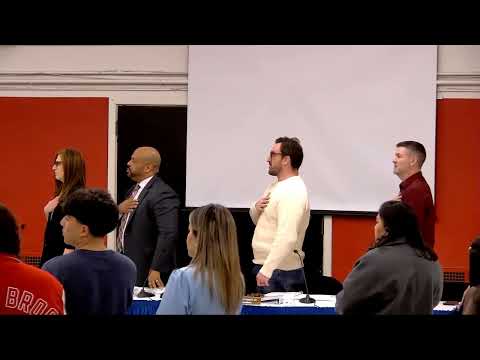
District outlines corrective action plan to curb chronic absenteeism
Summary
District presenter Mr. Ross summarized a corrective action plan triggered when chronic absenteeism reaches 10% (18 days/180), citing data from the Genesys system and a mix of interventions: targeted messaging, a counselor–teacher–mentor 'trifecta' and building-level incentives.
The Bound Brook district presented a districtwide corrective action plan aimed at reducing chronic absenteeism, outlining triggers, data collection and targeted interventions.
Mr. Ross told the board that under New Jersey Department of Education rules a corrective action plan (CAP) is required if 10% or more of students reach 18 days absent in a 180-day year. He described how the district uses its Genesys monitoring system to disaggregate attendance by grade, race and economic status to identify at-risk students and patterns.
Ross identified common barriers to regular attendance including transportation challenges in a walking district for older students, medical absences (and misunderstandings about ‘excused’ days), extended family travel, and noncompulsory pre-K attendance. To address those barriers the district will deploy a combination of tactics: standardized parent-notification letters at 4, 8 and 12 absences; a targeted support model that pairs counselors, teachers and mentors to intervene for students nearing the chronic threshold; campus-level incentives (attendance boards, social events, brag tags); and broader messaging via school signage and social media.
Ross said principals and assistant principals have been working with the assistant superintendent since September to refine building-level plans and that administrators will report back to the board in a few months with progress metrics.
The presentation was followed by the education committee report, which reiterated that the district is preparing staff and students for the new state assessment and that attendance plans vary by grade level and building.
AI generated
The text on this page is AI generated. Summaries, highlights, analysis, and video transcripts are all produced from the original source material.
AI can make mistakes, so if you spot one, and we will fix it for everyone.
Note: the source content is unaltered by us. Any content source we link to, be it a video, an audio recording, or a document, is presented exactly as its publisher released it. That publisher is usually a government body, sometimes an individual official or another organisation.