Get Full Government Meeting Transcripts, Videos, & Alerts Forever!
Get email alerts on the Utility Affordability topic
No spam. Unsubscribe anytime.
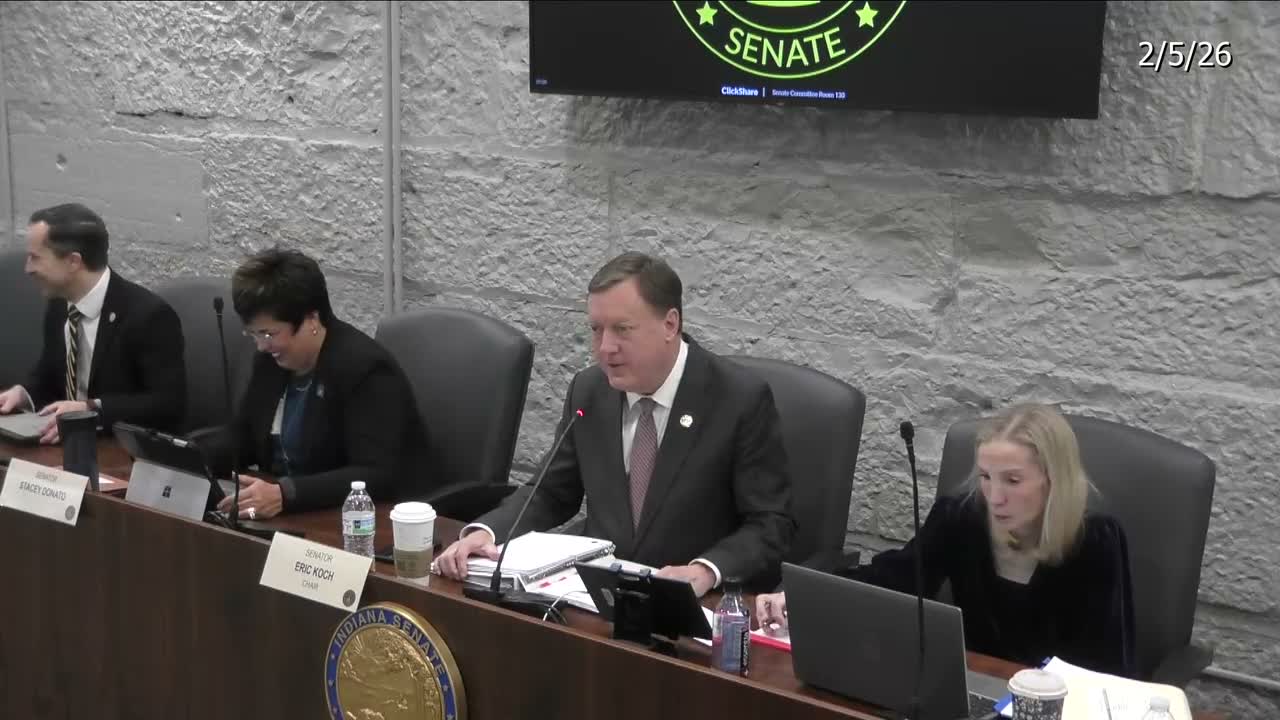
Senate committee advances bill to expand low‑income protections, require billing transparency and pilot performance‑based ratemaking
Summary
The Senate Utilities Committee advanced House Bill 1002 after amending requirements for levelized billing, heat‑related disconnection protections, reporting and a limited performance‑based, multiyear rate framework to encourage affordability and reliability while leaving implementation details to the IURC.
Representative Schonkweiler presented House Bill 1002 to the Senate Utilities Committee as a package aimed at improving utility affordability, transparency and regulatory outcomes for customers. The measure would expand low‑income assistance, standardize billing disclosures, strengthen heat‑related disconnection protections, authorize measured performance‑based rate making (PBR) and permit multiyear rate plans under IURC oversight.
Supporters, including Kerwin Olson of the Citizens Action Coalition, the Sierra Club Hoosier Chapter, Hoosier Environmental Council, Indiana Conservation Voters, Earth Charter Indiana and AARP Indiana, praised HB 1002’s focus on protections for vulnerable Hoosiers and quarterly reporting. "The requirement for electric assistance programs for low‑income ratepayers is desperately needed," testified Kerwin Olson. Several witnesses urged a month‑based moratorium on shutoffs for low‑income households as a clearer, easier‑to‑implement protection than a heat‑index trigger.
Industry witnesses and regulatory staff described the bill’s PBR and multiyear rate components as an "incremental" modernization. Luke Wilson of the Office of Energy Development said the bill ties utility rewards and penalties to metrics such as service restoration and affordability performance. Utilities and trade groups urged careful design of performance metrics and implementation timelines so that major storm or "major event days" do not skew measurements.
Committee members debated two committee amendments in open session. Amendment 28, described by Representative Schonkweiler as clarifying language, exempted certain municipal utilities from some provisions, refined heat‑related disconnection pauses, and streamlined reporting. Amendment 29 narrowed the automatic levelized‑billing opt‑out/opt‑in treatment to LIHEAP‑eligible customers (about 114,000 Hoosiers); the committee adopted Amendment 29 by roll call, 6–2.
Several witnesses warned about continued use of capital trackers if Indiana moves to multiyear rate plans, urging the IURC and legislature to avoid duplicative recovery mechanisms that could raise monthly bills. Testimony also emphasized consumer education and clear notice for any transition to budget or levelized billing to limit surprises from reconciliation "true‑ups." "Levelized billing can produce significant, unexpected true‑ups when monthly set‑asides are insufficient," AARP’s Jason Tomsey said.
After closing remarks from Representative Schonkweiler and committee discussion about taxes, reconnection fees and tracker treatment, the committee moved the bill (as amended) and recommitted it to the Appropriations Committee. The clerk recorded the committee vote as in favor and the measure advanced to the next stage.
The committee did not finalize every implementation detail; sponsors and witnesses said further stakeholder work and IURC rulemaking will be required if the legislation proceeds. The next procedural step is the Appropriations Committee review and subsequent floor consideration.