Get Full Government Meeting Transcripts, Videos, & Alerts Forever!
Get email alerts on the HB 1177 Childcare Credit topic
No spam. Unsubscribe anytime.
Lawmakers hear broad support for expanding employer childcare credit and local tools for childcare funding
Summary
Representative Cash’s HB 11-77 would broaden an existing employer childcare tax credit (raising the employer-size cap and allowing operating expenses) and allow redevelopment commissions to use TIF for childcare projects. Business groups, United Way, county and industry representatives supported the bill as a nonbudget way to expand childcare capacity and help the workforce.
Representative Cash introduced House Bill 11-77, which expands an existing employer childcare tax credit by increasing the employee threshold from 100 to 500, broadening qualifying expenses to include operating costs and contracted services, and adding an optional local tool allowing redevelopment commissions to consider childcare projects as TIF-eligible.
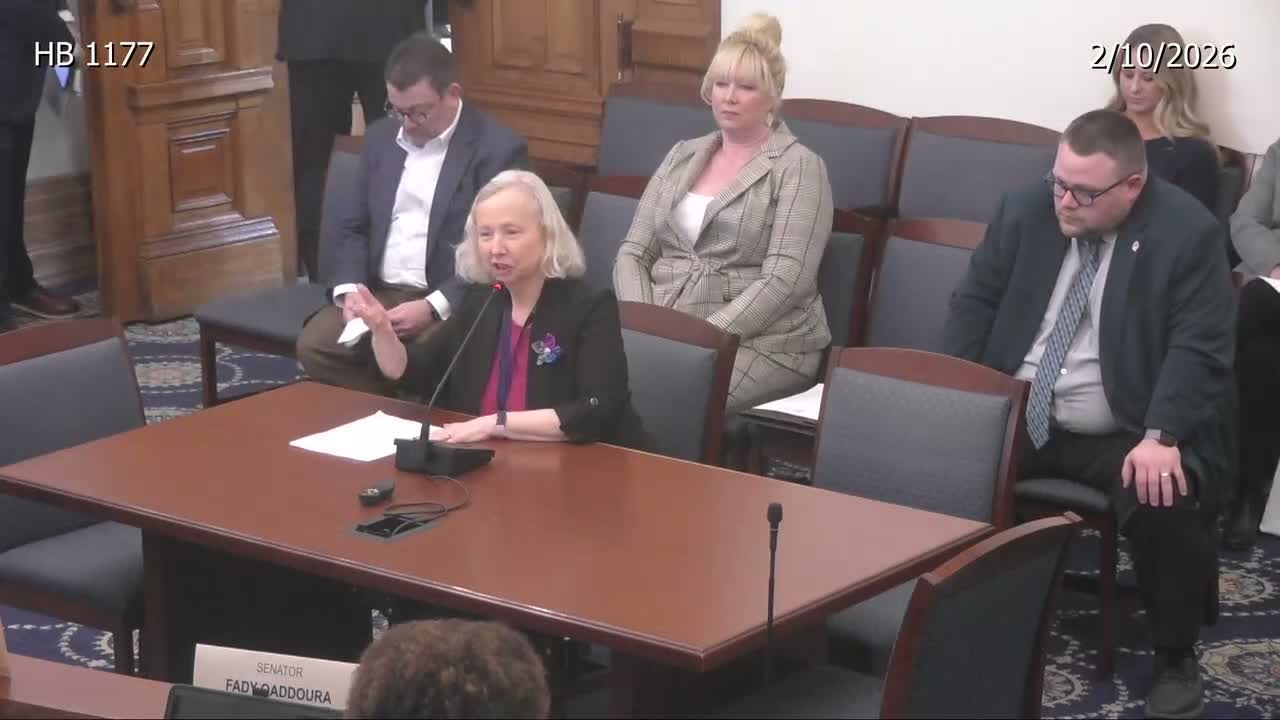
Supporters from across the business and nonprofit sectors urged adoption. Camille Blunt (Indiana Chamber of Commerce) and Natalie Carroll (NFIB) said the expansion would encourage private-sector investment in childcare and help employers retain workers. United Way and local workforce coalitions described the link between childcare access and labor-force participation; one practicum student from United Way said expanding employer participation could help middle-income families who do not qualify for subsidies.
Andrew Berger (Indiana Manufacturers Association) and other industry witnesses supported the change but cautioned that expanding eligible operating expenses could broaden the program’s scope; they asked the committee to monitor whether the credit spurs new investment or simply subsidizes activities that would have occurred anyway. Adam Allison (Office of Early Childhood and Out of School Learning) and other state agency witnesses said the bill provides useful optional tools and is budget neutral in the current form.
Representative Cash said the bill will not increase the program appropriation (about $2.5 million already on the books) and framed it as a nonbudget-year way to increase employer engagement. Several witnesses said the measure should be accompanied by outreach and technical assistance so employers — especially mid-size firms — can navigate the credit and participate.
The committee held HB 11-77 for future consideration and heard dozens of supportive testimonies representing chambers of commerce, United Way, employers, tourism and workforce coalitions, and county and municipal officials.