Get Full Government Meeting Transcripts, Videos, & Alerts Forever!
Get email alerts on the HB 1210 Overview topic
No spam. Unsubscribe anytime.
Committee hears competing views on veterans relief, LIT timing and technical fixes in DLGF omnibus bill
Summary
Lawmakers heard hours of testimony on House Bill 12-10, an omnibus Department of Local Government and Finance bill that includes veterans property-tax relief, changes to local income tax timing and technical corrections. Veterans groups praised expanded relief; some veterans and committee members warned proposed dollar credits could reduce existing benefits and urged percentage-based fixes.
Representative Snow opened the hearing on House Bill 12-10, describing it as a broad Department of Local Government and Finance omnibus measure with roughly 48 provisions, ranging from municipal adviser definitions to timing adjustments for the new local income tax structure and several county-specific tax and exemption changes.
Jake Adams, director of the Indiana Department of Veterans Affairs, testified in support of the bill’s veterans provisions and said the changes “modernize” a program that has changed little in 50 years by eliminating property taxes for disabled veterans and preventing benefit loss when home values rise. “If you think about your house increasing as a disabled veteran … you’re notified by your local assessor that you’re now obligated to taxes and the benefit that you qualify for is no longer eligible,” Adams said.
Not all veteran advocates agreed with the bill as drafted. Jim Bauerly, a retired veteran representing the Military Coalition of Indiana, told the committee that replacing longstanding dollar deductions with relatively small liability credits would reduce benefits for many disabled veterans. Bauerly said the proposal’s $350 liability credit would leave some disabled veterans worse off and urged lawmakers to adopt percentage-based relief — for example, a 10% reduction in the property tax bill with an additional 5% for veterans aged 62 and older — so the benefit keeps pace with home-value growth.
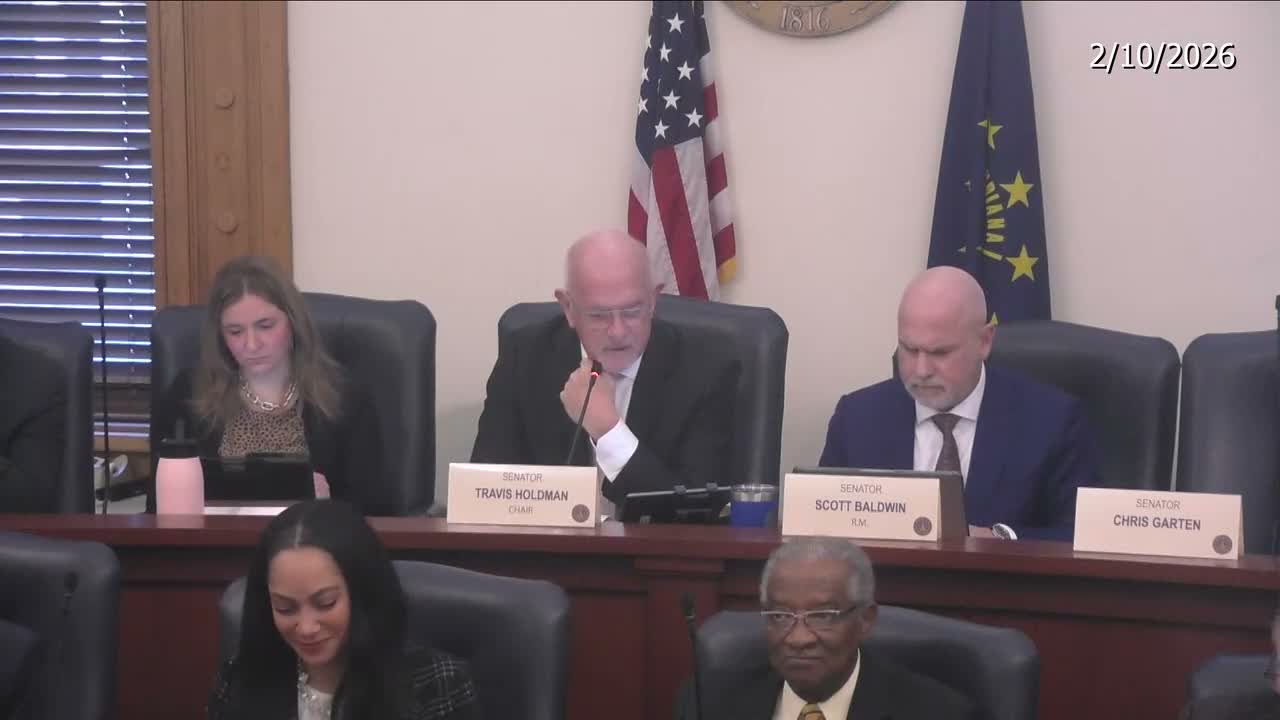
An exchange between Bauerly and Senator Baldwin highlighted the dispute over the bill’s net effect. Baldwin defended existing veteran programs and said the bill “does way more than you’re suggesting,” while Bauerly insisted the dollar-credit approach would reduce the real value of relief for many veterans.
The bill also includes technical and timing changes for property-tax administration. Committee members pressed the authors and department staff on the notice and recertification process for auditors and assessors, asking whether the bill imposes fixed timelines for public notice of recertifications. Staff clarified that subsection D sets a public-hearing notice requirement but does not include a penalty or a fixed notice period; subsection C contains timing constraints tied to certification and department error findings.
Other presenters included county officials and interest groups. John Wilson of the Allen County Board of Commissioners asked for statutory changes to streamline a planned countywide fire-and-EMS consolidation, and the Indiana Association of School Business Officials urged delaying the loss of local income tax revenue for schools from 2028 to 2029 so districts have an extra year to plan.
The committee did not take a vote and held the bill for further work. Next steps flagged by witnesses included clarifying veteran terminology to match Department of Veterans Affairs definitions, resolving how new credits would be priced against existing deductions, and scheduling technical deadlines and electronic data deliveries to local auditors and assessors.