Get Full Government Meeting Transcripts, Videos, & Alerts Forever!
Get email alerts on the SEI Cost Recovery topic
No spam. Unsubscribe anytime.
Committee approves tracker to recover certain water and wastewater costs, with guardrails
Summary
The Utilities Committee passed SB 241 to allow limited cost recovery for water and wastewater utilities for uncontrollable chemical and power costs through an SEI tracker with annual true-ups and consumer protections; amendments raised thresholds and alternative regulation options for rural utilities.
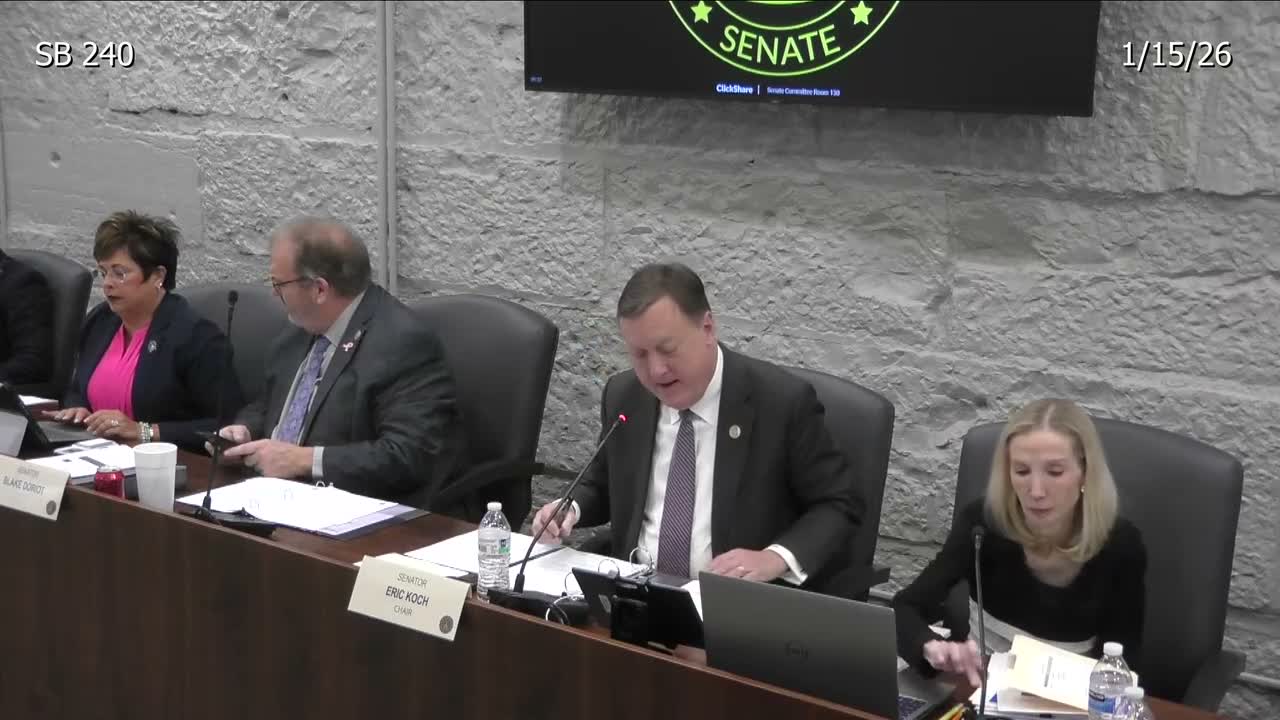
The Senate Utilities Committee approved SB 241, a targeted change to the system enhancement improvement (SEI) statute that would permit water and wastewater utilities to recover two categories of uncontrollable costs — chemical and power — under a tracking mechanism designed to protect ratepayers. The committee adopted three amendments by consent and passed the bill unanimously.
Bridget O'Connor, director of government affairs and regulatory policy for Citizens Energy Group, told the committee the bill is a balanced approach that helps utilities avoid frequent full rate cases while ensuring customer protections. "Since our last water rate case in 2016, chemical costs have increased by over 100% largely driven by inflationary pressures, supply chain challenges, and tariff impacts," O'Connor said, arguing that the bill's true-up and credit requirements protect customers if costs later fall.
Supporters emphasized the bill's narrow scope: it targets costs outside utility control and includes guardrails such as annual true-ups and required customer credits when costs decline. Joe Rompalla of INDIAC (industrial energy consumers) said his group generally distrusts trackers but acknowledged SB 241 is narrowly targeted and remained neutral pending full review; Kerwin Olson of Citizens Action Coalition said the adopted amendment addressed CAC's main concern and allowed CAC to support the measure.
Amendments clarified the conservancy district threshold to allow certain districts to petition IURC withdrawal if they meet a raised customer cutoff, and created an alternative regulation pathway for small rural water/wastewater utilities to negotiate protections for economic development customers subject to commission approval. Committee members asked how "just and reasonable" protections would be evaluated; witnesses pointed to existing IURC practice and case law for that standard.
The committee held the roll call open briefly to accommodate members juggling multiple hearings and then recorded the vote; Chair Cook announced SB 241 passed 10–0.
The transcript records stakeholder testimony from utilities, conservation and consumer groups, and industrial consumers, with a shared focus on protecting ratepayers while giving utilities a narrowly scoped tool to recover unavoidable costs.