Get Full Government Meeting Transcripts, Videos, & Alerts Forever!
Get email alerts on the Surplus Interconnection Service topic
No spam. Unsubscribe anytime.
Senate committee advances bill to let new generators use unused interconnection capacity
Summary
The Senate Utilities Committee unanimously passed SB 240, which would allow new generation and storage to tap unused interconnection capacity at existing plants through 'surplus interconnection service' (SIS); supporters said SIS can speed deployment and lower costs, while stakeholders sought clarifications now included in an amendment.
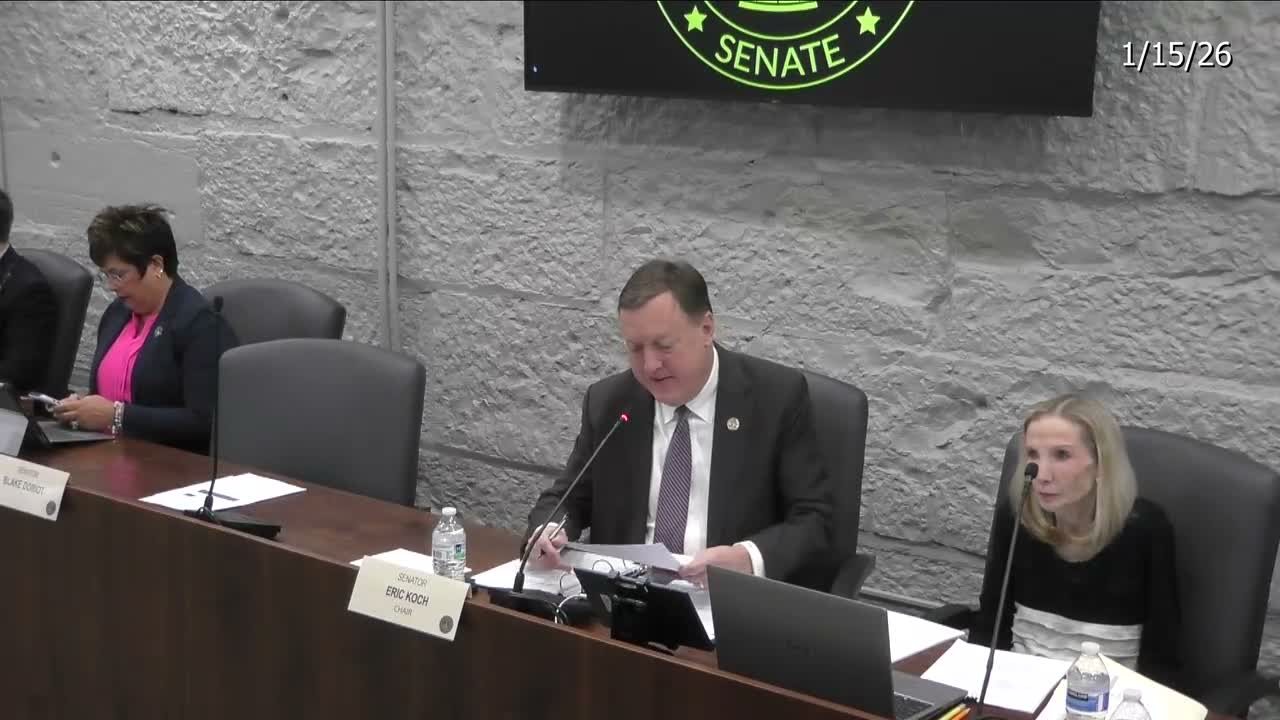
The Indiana Senate Utilities Committee voted unanimously to pass SB 240, a bill that would enable new generators and storage projects to connect using unused interconnection capacity at existing plants, a concept supporters call surplus interconnection service (SIS). Chair Senator Eric Cook introduced the bill and an amendment that the committee adopted by consent.
Proponents described SIS as a faster, lower-cost route to add capacity without building new transmission. "SIS is an underutilized mechanism that allows a new supply resource like energy generation or storage to piggyback off the underutilized interconnection of an existing power plant and skip the interconnection queue process," Pew Charitable Trusts officer Jenny Netherton told the committee in support of the bill. Netherton cited FERC orders and regional transmission operator experience in MISO and PJM and said certain sites could host gigawatts of new capacity.
Why it matters: Committee members heard that electricity demand is rising and that Indiana utilities expect to add between 7 and 12 gigawatts of new load by 2030. Supporters argued SIS can bring projects online faster and more cheaply by using existing infrastructure; witnesses gave examples where SIS projects had low interconnection costs and shorter development timelines compared with standard interconnection processes.
Stakeholders and neutral witnesses largely supported the amended bill but asked for technical clarifications. Ryan Hadley of the Indiana Electric Cooperatives said the amendment respected cooperatives' operational realities and IRP processes. Carol Auslander, representing Advanced Energy United, recommended harmonizing statutory thresholds (noting a mismatch between a 25-megawatt IRP assessment threshold and a 20-megawatt definition) to expand opportunities for smaller projects.
The committee adopted the amendment (which removed certain third-party facility analysis from the IURC study, narrowed study scope, and delayed IRP integration timing) and then moved to pass the bill. Senator Jean Lising moved the motion to pass as amended; the committee completed a roll call and Chair Cook announced the bill passed 10–0.
The record shows broad stakeholder engagement at the committee hearing, with conservation groups, utilities, trade associations, and nonprofit policy organizations testifying in favor or neutral. The committee transcript includes witness testimony citing specific RTO examples, cost comparisons, and data used to justify SIS as a policy tool to add capacity more quickly. The committee did not record any formal amendments beyond the adopted technical amendment, and the vote tally was unanimous.
The committee action leaves SB 240 approved at the committee level; the transcript does not record subsequent floor scheduling or final enactment steps.