Lifetime Citizen Portal Access — AI Briefings, Alerts & Unlimited Follows
Ketchikan school board previews FY27 plan that would close two schools, cut dozens of teaching positions
Loading...
Summary
The Ketchikan Gateway Borough School District on March 28 reviewed a draft FY27 stability plan that would close Fawn Mountain and Point Higgins, eliminate roughly 41 teaching positions and shift central office roles; staff say school‑closure step‑down aid and consolidated “learning hubs” are intended to limit program loss, but teachers and community members raised concerns about CTE, class size and safety.
KETCHIKAN — The Ketchikan Gateway Borough School District Board of Education on March 28 began detailed review of a draft FY27 “stability and sustainability” plan that relies on consolidating students into centrally located learning hubs and closing two outlying schools, officials said.
Superintendent Bullard and business manager Lisa Pierce presented a draft budget framework that assumes roughly $33,000,000 for staff salary and benefits — about 85.53% of the district’s operating fund in the current presentation — and lays out proposed building and personnel changes to balance revenues and expenses.
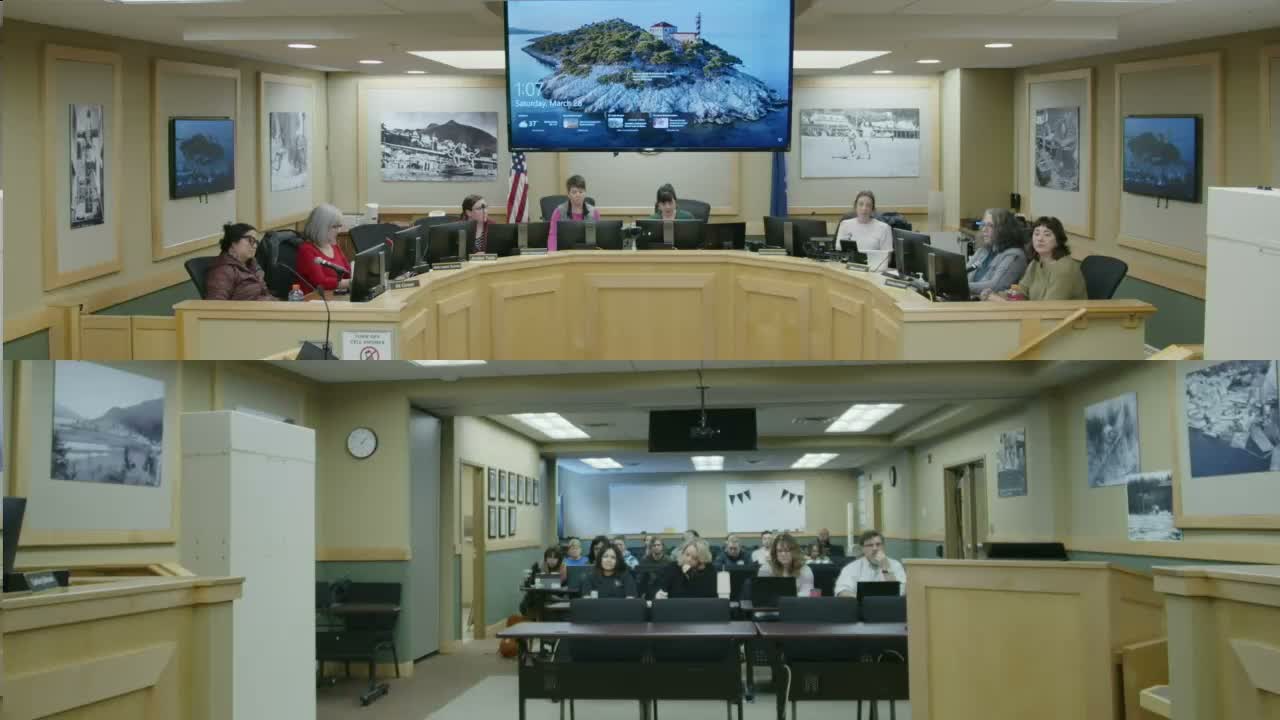
The board has not voted on closures. Member Montgomery moved the board into a work session to review the plan, and the motion passed 6‑0. The draft specifically identifies Fawn Mountain and Point Higgins as closure candidates and lists reductions that would include 41 teaching positions, two principal roles, four library positions, four administrative assistants, two custodians and a move of central office into a school building.
Why it matters: district officials said consolidating students into K‑5, 6‑8 and 9‑12 “learning hubs” would reduce overhead and create staffing efficiencies, and the state provides a four‑year school‑closure step‑down to soften revenue loss. But teachers and community members urged the board to protect Career and Technical Education (CTE), fine arts and safety‑sensitive classes during consolidation.
What administrators told the board
Superintendent Bullard told the board that staff examined site‑by‑site cuts and found that straight cuts at each building would “really impact program integrity” and continuity across the district. “We could not hit our target” without consolidating, Bullard said, outlining a hub model with an early childhood center, elementary center, middle school and high school plus alternate settings for specialized programs.
Pierce reviewed revenue and staffing charts that the packet labeled the operating target: roughly $38.6 million in operating revenues and a detailed “rainbow” staffing page that ties FTEs to locations and function/object codes used in state reporting. She warned that several inputs remain uncertain — notably PERS/TERS rates, insurance premiums and substitute costs — and that the figures will continue to be refined before the board adopts a budget in April.
District staff emphasized the state’s closure funding timeline: for the first year after a closure the district receives full funding for the closed school, then 66% the second year, 33% the third year and the step fully sunsets in year four; staff also described a hold‑harmless ADM provision that could be advantageous in some enrollment scenarios.
Questions from teachers and board members
Community members and teachers pressed the board on how consolidation would affect CTE and specialized programs. Frankie Urquhart, who identified themself during the meeting, asked whether CTE programs would be preserved and argued that “these are jobs … skills that kids can use as adults in this community.”
Mary Miller, a K High teacher who teaches welding and sewing, gave detailed capacity and safety constraints for shop classes: “I have 6 welding booths. For safety, we cap welding at 12. We have squeezed by with 14, but we’re tripping over each other.” Miller presented arithmetic showing projected class sizes under the proposed staffing allocations and urged adding at least five more teachers back at the high school to avoid unsafe or unusable CTE sections.
Sally Stockhausen, the district’s special education director, described how the proposed SPED coordinator would focus on Individualized Education Program (IEP) compliance: “The SPED coordinator, her main focus is compliance for IEPs,” Stockhausen said, adding that targeted review is needed where the district has fallen behind on documentation.
On grants and central positions, Jason House, director of student services, explained that his position has been funded through a SAMHSA mental health grant and that many federal entitlement grants require internal administration and cannot be fully contracted out: “A lot of the grants that I’m currently managing are federal entitlement grants. Those would typically not be given to a contracted grant writer,” House said.
Tradeoffs and next steps
Pierce estimated roughly $250,000 in annual non‑personnel savings for each closed outlying building (utilities and site maintenance), but she said the major savings come from reducing staffed positions. She told the board the district will provide line‑item detail in the packet ahead of the board’s next budget readings.
Board members asked for the closure plan to include clear financial projections (enrollment by grade and specific savings), and for logistics and staff support plans if closures proceed. Linda Bowe (presenting a Howling site map) showed a room‑by‑room diagram to demonstrate how kindergarten and early grades could be organized and where growth capacity exists.
No formal closure vote was taken; the board set an April 1 special meeting and scheduled first and second readings of the FY27 budget in the coming two weeks with a goal of adopting a balanced budget to meet state deadlines.
What to watch next
Board packet materials and additional line‑item detail (including building‑level operational costs, revised benefit estimates and updated enrollment projections) will be posted before the April budget readings. The board requested explicit savings and grade‑level enrollment projections tied to any closure recommendation before any final vote.
Ending: The board recessed and later closed the work session, thanked staff for the presentation and scheduled additional meetings; no public commenters signed up for the formal public comment period that followed the work session.