Get Full Government Meeting Transcripts, Videos, & Alerts Forever!
Get email alerts on the Library Budgets topic
No spam. Unsubscribe anytime.
Bill to shift library budget adoption to elected fiscal bodies draws library opposition
Summary
Senate Bill 8 would require many public libraries with majority‑appointed boards to submit budgets and levies to elected city, town or county fiscal bodies. Library leaders and the Indiana Library Federation opposed the change, saying it would remove 2019 guardrails, destabilize services and duplicate existing oversight; supporters argued elected oversight of taxing power is appropriate.
Senator Byrne told the committee SB 8 aims to ensure that entities that set property tax rates are accountable to voters by requiring libraries with a majority of unelected board members — or with certain geographic footprints — to submit proposed budgets and levies to elected city, town or county fiscal bodies before September 2 each year. "All units with the power to tax should be made by elected officials," Byrne said in justification of the measure.
Supporters of the bill argued that taxation without direct electoral accountability raises concerns and that elected fiscal bodies should have final review over property tax rates. Several committee members expressed a desire for consistency across other appointed or partially appointed entities and asked questions about scope and exceptions.
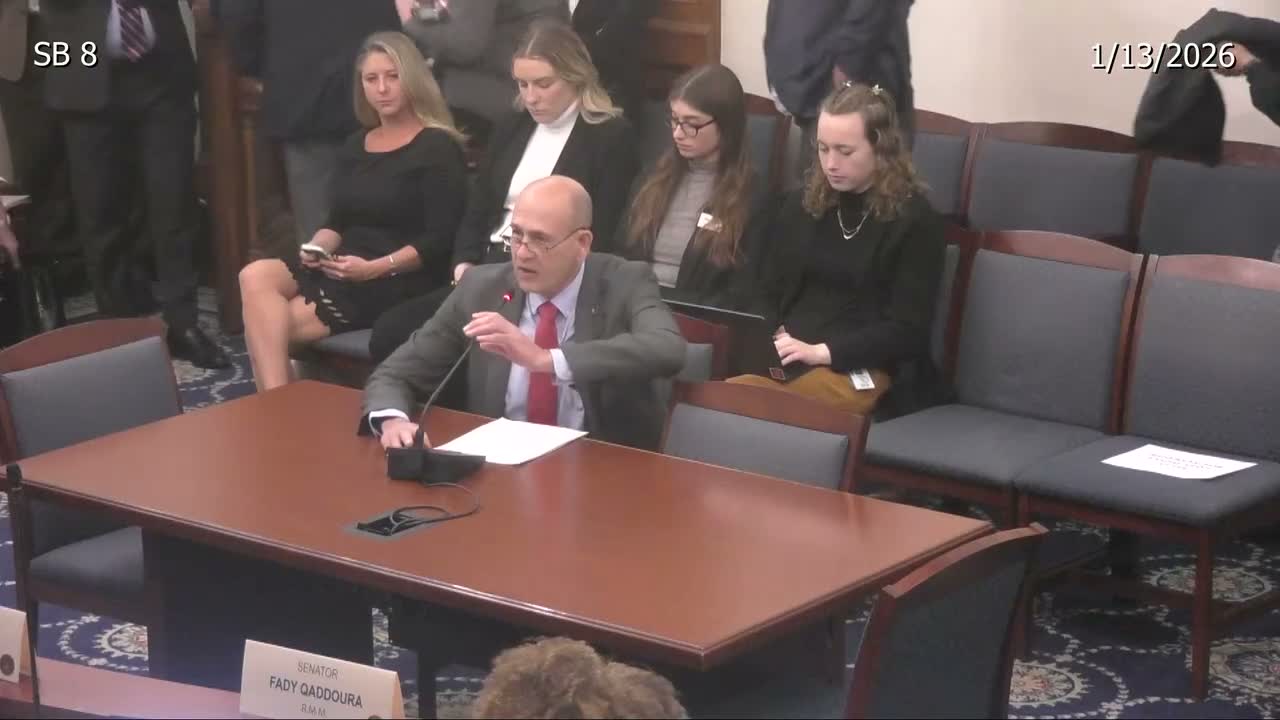
Library representatives strongly opposed the change. Julie Wendorf, director of the Crown Point library and past president of the Indiana Library Federation, testified that SB 8 "places Indiana libraries at risk by removing critical fiscal guardrails" established in 2019 (citing a 150% reserve/binding‑review standard). Vanessa Martin, ILF advocacy co‑chair, called the bill a solution in search of a problem and noted existing transparency and oversight mechanisms including appointments by elected officials, state audits and DLGF review.
Other witnesses including the Indiana Farm Bureau and county representative organizations supported binding review for appointed boards and urged stronger accounting standards for local entities. Questions from the committee focused on how often libraries undergo binding review, the magnitude of library debt and whether elected fiscal bodies would have sufficient expertise to evaluate library operations without disrupting services.
The committee held SB 8 for further work and asked for additional data on library debt, the incidence and outcomes of binding reviews, and proposals for guardrails so that any transfer of budget authority would not abruptly eliminate essential services.