Get Full Government Meeting Transcripts, Videos, & Alerts Forever!
Get email alerts on the Education Budget topic
No spam. Unsubscribe anytime.
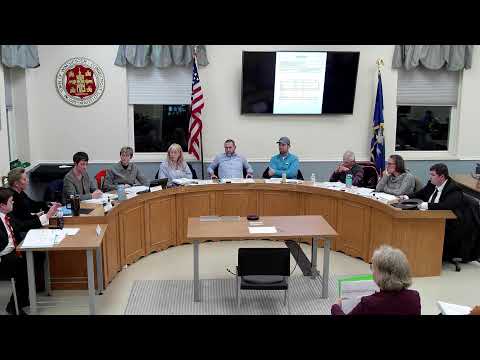
Winchester school board reviews $2.5M budget ask, weighing more behavioral staff and pre‑K expansion
Summary
At a Feb. 12 special meeting the Winchester Public Schools Board reviewed a proposed roughly $2.5 million budget increase, discussed adding a second BCBA and more behavior technicians, and debated expanding preschool seats while planning how to present the taxpayer 'ask' to the town.
The Winchester Public Schools Board of Education on Feb. 12 reviewed a proposed budget increase — about $2.5 million, board members said — that would add behavioral supports and expand preschool capacity as the district grapples with higher behavioral‑health needs among students.
Julie Murphy, presenter for district staff, told the board the budget includes a second board‑certified behavior analyst (BCBA) and additional behavior technicians (BTs) so each building would have more coverage. "We don't have a classroom management problem. We have a youth mental health crisis that teachers are being asked to handle," Murphy said, urging that clinicians and behavior specialists, not classroom teachers, handle escalating needs.
Why it matters: Board members pressed for numbers and legal context as they consider what to ask voters. Murphy explained that preschool expansion and behavior supports are intended to reduce costly out‑of‑district placements over time and to meet special‑education obligations in the least‑restrictive environment.
The presentation covered three linked areas: how out‑of‑district tuition and transportation costs are reported, current behavioral staffing, and preschool enrollment and capacity. Murphy walked members through an alternate budget view that redistributes out‑of‑district special‑education costs across grade bands so per‑pupil comparisons are clearer. On transportation she said the roughly $1,094,000 figure combines regular bus runs and special‑education transport; the district does not transport students attending some magnet or choice placements.
On behavior supports, Murphy described the district's tiered approach (tier 1 handled in the classroom, tier 2 by BTs, tier 3 by administrators) and said current staffing leaves only one BCBA covering three schools. She told the board the proposed budget would fund a second BCBA and additional BTs so each building would have better coverage and quicker responses.
Board members asked whether the BCBA's role is strictly training or also case evaluation. Murphy said the BCBA both trains staff and conducts behavior‑focused evaluations and writes plans: "Once you understand the function of a behavior or its purpose, then you can make a better plan for how to handle it," she said.
Preschool was another focal point. Murphy said the program currently has 51 students (40 general education, 11 special education) with two students under evaluation. She said special‑education law requires a preschool model with typical peers in each classroom, which drives minimum classroom and staffing levels; serving 11 identified students would require splitting into two classrooms, each with a teacher and assistant. Murphy described a proposal to add three classrooms (bringing total preschool capacity to six or seven rooms depending on configuration) and said filling new seats and the timeline (roughly three years to full implementation) remain open questions.
Board members also pressed on how the figures will be presented to voters. Frank Oliver and others asked whether the $27 million gross figure or a lower, taxpayer 'ask' (about $19 million as presented to the town) should be the headline number for referendum materials. Murphy said state accounting shows Education Cost Sharing (ECS) funding as revenue to the town rather than to the board, and she advised the board to frame the number the taxpayer will see instead of the gross cost to the district.
Several members raised possible offsets, including asking the Gilbert School about nonlapsing reserves; one member said Gilbert appeared to have roughly $600,000 available and asked staff to follow up.
The board also received a packet that staff described as a 60‑page list of state mandates with statute references and summaries, which Murphy said illustrates numerous requirements that are effectively unfunded.
The meeting ended without final votes on spending; a member moved to adjourn and the board took a brief recess before its next scheduled session. The board scheduled continued budget work and asked staff to prepare scenarios showing effects of possible cuts or targeted changes before the next workshop.
Next steps: staff will prepare budget scenarios for the board to consider at the next workshop and will follow up on questions about Gilbert's reserves, ECS calculations, and preschool capacity and costs.