Get Full Government Meeting Transcripts, Videos, & Alerts Forever!
Get email alerts on the Education Lcap topic
No spam. Unsubscribe anytime.
Carlsbad Unified presents mixed progress on LCAP goals; elementary interventions show gains, trustees press for secondary data
Summary
District staff reported progress on LCAP goals and site-level gains after a year of targeted interventions: strong elementary improvements tied to MTSS and attendance work, while some middle- and high-school measures lag. Trustees asked for disaggregated, criterion-referenced data and a September follow-up.
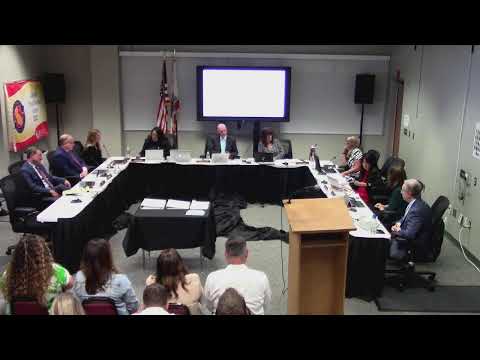
Carlsbad Unified School District presented its 2023–24 Local Control and Accountability Plan (LCAP) progress on June 26, stressing gains at several elementary sites while acknowledging gaps at secondary levels. The board heard detailed site reports and district-level data before voting to adopt the 2024–25 LCAP by a 3–2 margin.
District staff told the board they met three of five targets for the year so far and will finalize several metrics once state data are certified. Doctor Nye (district instructional leader) said districtwide growth measured on STAR assessments showed a 2.4% rise in ELA proficiency and 2.6% growth in math overall, with substantially higher gains at some elementary schools. “We increased 9% from fall to spring at the elementary level in ELA,” Nye said, adding that the district uses multiple measures—STAR percentile rank, Achieve3000, and Lexia—to assess growth in intervention populations.
Principals from multiple sites described how targeted MTSS (multi-tiered system of supports) work and counseling interventions produced measurable gains. Principal Fuentes reported that a positive attendance campaign reduced chronic absenteeism at her site from 22.2% to 10.5% and that students on the attendance watch list showed improved Star percentiles, including a 23% jump in reading for a monitored cohort. At Kelly Elementary, staff reported a 31.2% increase from fall to spring on STAR ELA among intervention students and Lexia progress for English learners.
High school presentations offered a more mixed picture. Principal Wei of Sage Creek described declines earlier in secondary social-emotional metrics but said targeted interventions—grade-level teacher meetings and a full-time intervention counselor—reduced reported distress and increased connectedness at that campus. Staff emphasized that high-school math assessments currently test through Algebra II only and discussed plans to consider MDTP (Mathematics Diagnostic Testing Project) as an alternative to better capture higher-level students.
Trustees pressed staff for clarity about how the district defines ‘‘demonstrated progress’’ and asked for data broken down by instrument and student subgroup. Trustee Ward requested criterion-referenced results for intervention students in addition to the national-norm comparisons already presented; Doctor Nye agreed the district can supply those reports. Trustee Pearson asked the district to dig deeper into areas showing declines and to return in September with itemized analysis by grade, standard, and school site.
The presentation also described the Forward Together plan and student-facing No Place for Hate work that the district says contributed to improved school climate in many schools. Doctor Ecker noted the Forward Together committee included 82 applicants and multiple student panels that informed recommendations.
The board adopted the updated LCAP after discussion, with two trustees dissenting who cited concerns about secondary interventions and the district’s reliance on assessment-driven targets. Staff committed to returning with disaggregated and criterion-referenced data and a more detailed September analysis of middle- and high-school results.
The board requested several follow-ups: site-level disaggregation for No Place for Hate survey responses, criterion-referenced data for intervention students, and subgroup breakdowns for chronic absenteeism counts. The district placed those items on a list for future reports to the board.
The next formal data update is expected when preliminary state assessment scores are finalized in September.