Get Full Government Meeting Transcripts, Videos, & Alerts Forever!
Get email alerts on the Land Use Cannabis topic
No spam. Unsubscribe anytime.
Lake County delays cannabis ordinance changes after hours-long debate; staff asked to return with maps and options
Summary
After hours of testimony from residents and growers, the Board of Supervisors continued consideration of proposed cannabis ordinance amendments to May 12, directing staff to produce maps of potentially nonconforming operations and to consult the treasurer on tax/enforcement thresholds.
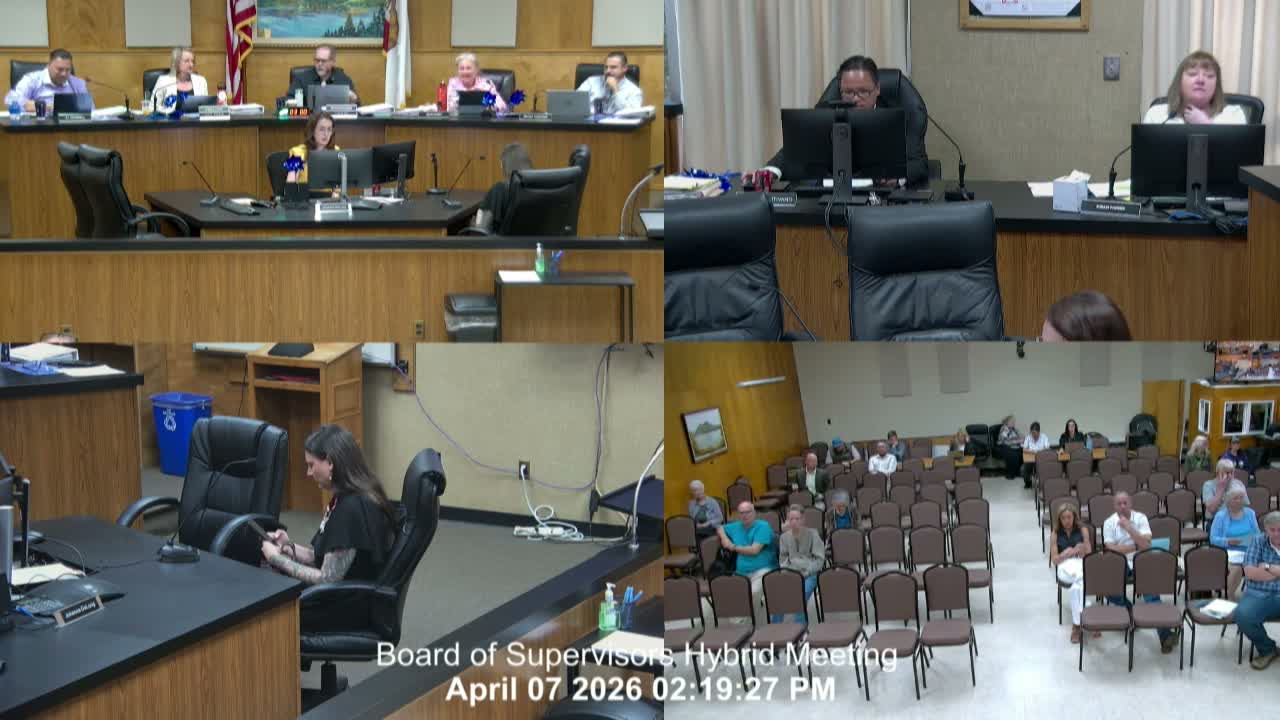
The Lake County Board of Supervisors continued a first-reading discussion of proposed amendments to the county’s commercial cannabis ordinance after a daylong hearing that drew hundreds of minutes of public comment and lengthy staff presentations on odor control, setbacks and nonconforming use rules.
Speakers on both sides of the issue urged the board to either protect existing cannabis investments or to tighten rules to address persistent odor and neighborhood impacts. Farmers and industry representatives argued that cannabis is agricultural and that sudden, large setbacks or new technical requirements would retroactively strip long-invested projects of value. Neighbors and other residents urged larger setbacks, stronger odor mitigation, and enforceable technical standards after citing repeated nuisance incidents.
After extended discussion the board directed staff to refine materials and return on May 12, 2026 at 1:00 p.m. for continued consideration (not a formal first reading). Specific staff tasks and board direction recorded during the meeting include:
- Produce GIS maps that show which existing permitted commercial cannabis projects would be 'nonconforming' under several setback scenarios so supervisors can see the local impacts before adopting new rules. - Work with the Treasurer–Tax Collector’s office to identify a practical minimum-cultivation threshold or other metric that prevents abuse of reduced-canopy rules while minimizing administrative burden. - Consider a set of preliminary setback recommendations for discussion: rural residential (RR) 500 feet from nearest off-site residence, rural lands (RL) 300 feet, and agricultural (AG) 200 feet; the board stressed these are starting points for staff analysis, not final policy. - Make greenhouse/engineered-structure ventilation and filtration requirements clearer in the draft and explore air-quality permitting coordination for filtration systems. - Continue tribal consultation and ensure tribal representatives are incorporated in further reviews.
Board members emphasized zoning distinctions — that agriculture-designated parcels and rural residential areas pose different trade-offs — and asked staff to show how any change would affect permitted operations. The board also recorded strong public concern about enforcement and noted several legal and case-law developments in other counties about odor-related lawsuits.
Public opponents and proponents provided extensive testimony. Angie Shannon (speaker 49) said cannabis "is agriculture" and urged equal treatment with other crops; other speakers (including farmers and community members) described personal experiences of odors, public-health complaints, and concerns about economic impacts of sweeping changes. Staff advised the board that some elements of additional mitigation (for example, filtration in greenhouse processors) may be tied to other permitting and air-quality requirements.
The board did not vote on ordinance language. Staff will return on May 12 with the requested maps, technical clarifications, and a recommended schedule for any ordinance first reading and subsequent public hearings.