Get Full Government Meeting Transcripts, Videos, & Alerts Forever!
Get email alerts on the School Discipline topic
No spam. Unsubscribe anytime.
Stockton Unified reports decline in suspension days and students suspended; staff point to MTSS and behavioral training
Summary
District data presented March 25 show suspension days and suspended students down compared with last year; the director said the district is expanding MTSS, PBIS and CPI training and adding behavior specialists to reduce repeat suspensions and racial and special-education disparities.
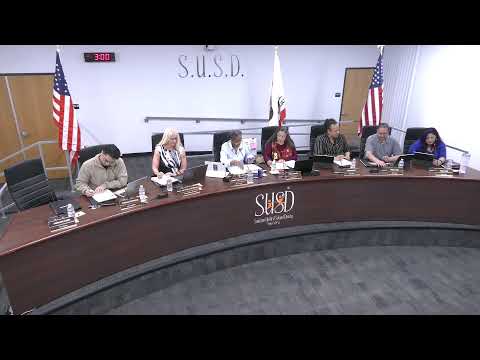
Ryan Hesse, Stockton Unified’s director of admissions, child welfare and attendance, told the school board on March 25 that the district’s days of suspension and the number of students suspended have fallen compared with the previous year.
Hesse said the district recorded 4,076.9 days of suspension last February and 2,870.77 days this February and that suspended students fell from 2,215 to 1,569 — 646 fewer students. He said the district’s suspension rate is 5.3% this year, down from 6% the previous year, and described the shift as progress driven by data-informed interventions.
The presentation outlined Stockton Unified’s discipline and behavior matrix and a set of interventions grouped by grade cluster (K–3, 4–6, 7–8, 9–12) and by offense type, ranging from classroom interventions for minor incidents to reentry plans and behavior contracts for more serious cases. Hesse and other staff emphasized the district’s use of multi-tiered systems of support (MTSS), PBIS, CPI de-escalation training and behavior specialists (BCBAs) to keep students in class and prevent repeated suspensions.
Trustees pressed staff about racial and disability disparities. One trustee noted suspensions of Black/African American students fell from about 15% to 11% but observed that Black students make up roughly 10% of the district population; another trustee said special-education students represented about 25% of suspensions while making up about 15% of enrollment. Hesse and district staff said those gaps are being addressed by targeted interventions, culturally and linguistically responsive teaching, and expanded training and supports at school sites. Staff committed to providing deeper, disaggregated data, including how often restorative practices are used and the number of students suspended multiple times.
District staff also described planned staffing and systems changes to sustain the work: a new MTSS coordinator to implement site-level MTSS plans and an MTSS module in the Synergy student information system, a restructured CPI coordinator role and the addition of 2–3 BCBAs and technical staff to improve data entry and BER (behavior emergency report) compliance.
The board did not take an action vote on this presentation; staff said they would return with additional data and follow-up reporting.