Planning commission postpones Southeast Denton overlay vote after community concerns
Loading...
Summary
After extended public comment on proposed Southeast Denton overlay districts, the Planning & Zoning Commission voted 4–2 to postpone its recommendation so staff can hold one more targeted outreach meeting to address resident concerns about parking, drainage, hours and neighborhood boundaries.
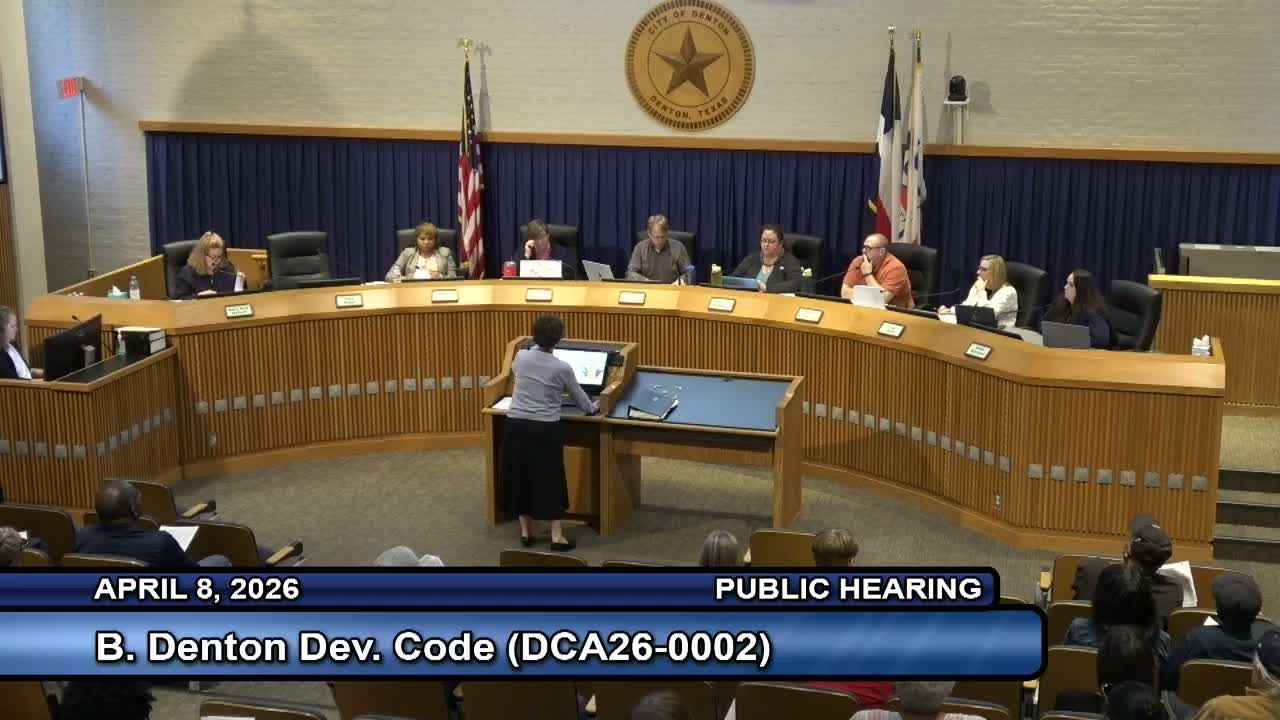
The Denton Planning & Zoning Commission on April 8 postponed recommending proposed zoning overlays for Southeast Denton after residents raised questions about parking, drainage, business hours and potential neighborhood impacts.
Julie Wyatt, the city’s principal planner, told the commission the package would create three overlay districts — a residential overlay to preserve neighborhood scale, a height overlay to cap buildings adjacent to housing, and a Live‑Work overlay intended to allow small, neighborhood‑scale businesses. Wyatt and senior planner Mia Hines described roughly 40 engagement events and about 529 participants during the Southeast Denton area‑plan process and said staff had drafted design and operational standards in response to community input.
Residents pushed back at the public hearing. Donald McDade, who lives on East Prairie Street and served on the area‑plan steering committee, asked that the stand‑alone business zone along East Prairie be shifted away from homes and closer to the railroad tracks to avoid placing business uses immediately next to single‑family properties. Frances Punch, a steering‑committee member who said she had helped shape the plan, asked what would happen if homeowners could not afford required façade changes and raised questions about short‑term rentals.
Willie Sellers said the neighborhood already struggles with tight streets and on‑street parking and warned small retail or restaurants would exacerbate congestion. "We're gonna have a parking problem with anything that you bring in," Sellers said. Public participants also pressed staff on stormwater maintenance: Willie Hudspeth said a creek that was widened years ago has silted in and floods back into his property.
Staff acknowledged the concerns. Mia Hines said the Live‑Work provisions would include operational limits (weekday hours generally proposed as 8 a.m.–8 p.m., later on weekends) and required on‑site parking; she said new nonresidential uses would have to meet minimum on‑site parking and a 15‑foot landscape buffer where adjacent to residences. Julie Wyatt said drainage and infrastructure items are part of the broader area‑plan implementation but not part of the zoning text itself and would require coordination with Public Works and a funding plan.
Commissioners debated how best to balance residents' preservation concerns with the plan’s aims to encourage small‑scale neighborhood businesses and housing options. After hearing public comment, the commission voted to postpone action and directed staff to hold one additional, targeted community meeting and return the ordinance to Planning & Zoning and then City Council. The motion to postpone passed 4–2.