Get Full Government Meeting Transcripts, Videos, & Alerts Forever!
Get email alerts on the Election Guidelines topic
No spam. Unsubscribe anytime.
School board delays approval of revised election guidelines after residency concerns
Summary
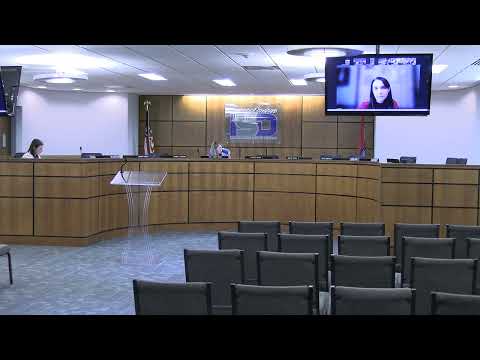
At a Dec. 1 special meeting, the school board tabled approval of revised election guidelines for the April 7, 2026 school board race after members raised questions about a residency provision and requested legal clarification; the board said the posted guidelines had contained an incorrect earlier draft.
The school board voted to table final approval of revised election guidelines for the Independent School District’s April 7, 2026, school board election after members raised concerns about a residency requirement and the board sought formal legal clarification.
Chair (S2) introduced the guidelines and moved to approve them, and Committee member (S4) seconded, but discussion quickly focused on language in the first change that appeared to address how long a candidate must have lived in the district. Committee member (S3) said her understanding of state law is that a candidate must be a registered voter residing in the district but that the statute does not impose a minimum residency period. “You could literally move into the district and run for school board, like, the next day,” Committee member (S3) said, calling that possibility “problematic.”
Committee member (S4) and other members asked whether the change reflected a recent statutory amendment or an earlier failure to follow state law. Chair (S2) said legal counsel had recommended the wording to align the district’s posted guidelines with state statute and that the district had been inadvertently working from the wrong copy that had been posted in the minutes. Chair (S2) said legal advised removing district-specific language from the posted guidelines; as a result, the corrected guidelines were not online and candidates lacked access to the final version.
Several members asked the board to obtain precise legal citation and to be prepared to explain the timing and reasoning publicly. Committee member (S4) said the board should gather the history of the change before announcing it to the community. Committee member (S3) asked whether state law sets only a minimum (allowing localities to add stricter rules) or instead prohibits additional local requirements; members agreed that legal guidance was needed on whether the board could impose a one-year residency requirement.
To allow time for attorneys to review the statute and for the board to repost corrected documents, Committee member (S5) moved to table the item to the next special meeting; the motion was seconded and the board voted in favor. The meeting adjourned following the vote. The board did not adopt the revised guidelines at this meeting and did not provide a formal roll-call tally of individual votes in the record.
Next steps: the board said it will consult legal counsel to identify the applicable statute and to clarify whether districts may impose a residency period beyond statutory minimums, then reconvene in open session to act and repost the corrected guidelines so candidates have accurate filing information.